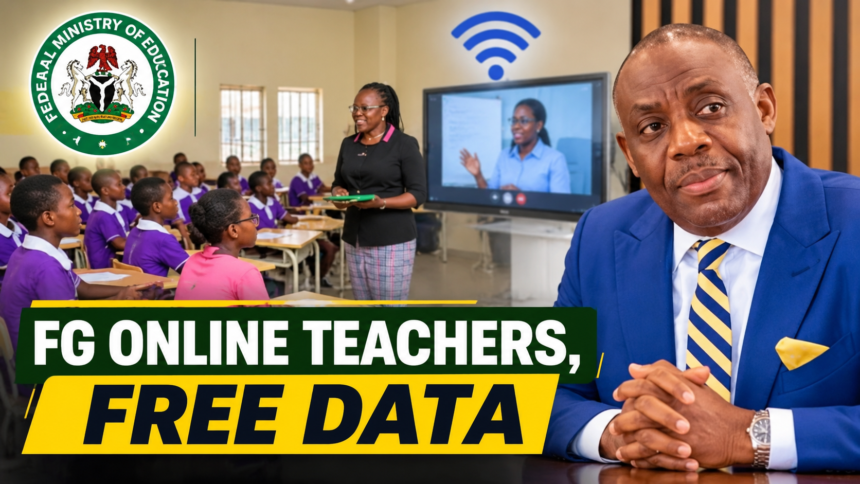
The FG online teachers initiative is expanding access to education across Nigeria, with the Federal Government extending its Inspire Live programme to more schools while introducing free internet access for students using approved educational platforms.
The initiative is designed to address teacher shortages, particularly in underserved communities, where some schools struggle to find qualified instructors for important subjects. It will allow pupils to participate in live, interactive lessons delivered remotely by qualified teachers, reducing the limitations created by the uneven distribution of teaching personnel.
Minister of Education, Dr Tunji Alausa, disclosed the latest developments during an interview on Channels Television’s Politics Today, explaining how technology is being used to improve teaching and learning across the country.
FG Expands Inspire Live Online Teaching Programme

The programme, known as Inspire Live, connects pupils in primary, junior secondary and senior secondary schools with teachers through scheduled online classes.
Under the arrangement, schools that lack teachers for particular subjects can connect their pupils to instructors teaching remotely from other locations.
For instance, a school in Kaura Namoda, Zamfara State, without an English Language teacher can participate in lessons conducted by a qualified instructor elsewhere in Nigeria.
This approach is expected to reduce the disruption caused by subject-specific teacher shortages, particularly in rural communities where recruiting and retaining qualified educators can be difficult.
The Federal Ministry of Education’s official Inspire Live platform confirms that the programme is expanding beyond its earlier coverage of Federal Unity Colleges to include primary schools, junior secondary schools and senior secondary schools nationwide.
The lessons are designed to follow Nigeria’s approved curriculum, covering subjects such as English Language, Mathematics, Social Studies, Civic Education, Nigerian History, Physics, Chemistry and Biology.
The programme also provides recorded lessons, allowing students to revisit topics or catch up on classes they were unable to attend.
Students to Access Educational Platforms Without Data Charges

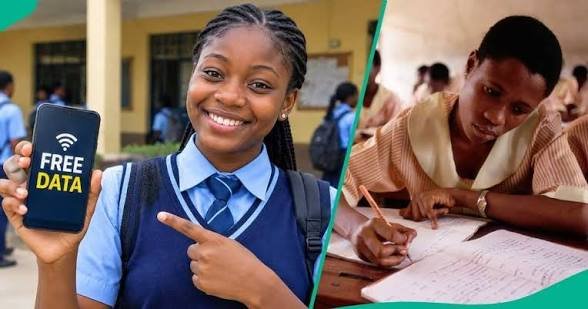
One of the most significant aspects of the announcement is the provision of free internet access for educational purposes.
According to Alausa, the Federal Government has collaborated with the Nigerian Communications Commission (NCC) to provide zero-rated data access for students using the educational platform.
This means eligible users can access designated educational content without paying the usual internet data charges for that usage.
The arrangement builds on the government’s Zero-Rated Data Access to Approved Educational Platforms and Content initiative, which commenced on October 1, 2026.
Under the initiative, eligible users receive up to 100 megabytes of free daily data to access approved educational websites and platforms.
The NCC explained that the allowance could provide approximately 700MB weekly, 3GB monthly and up to 36.5GB annually for learners receiving the full daily allocation.
However, the free access is restricted to designated educational platforms. It should not be confused with unlimited free internet access for general browsing, social media or other online activities.
The commission is implementing the initiative in collaboration with the Association of Licensed Telecommunications Operators of Nigeria (ALTON), with participating telecommunications operators providing connectivity support.
Recorded Lessons and Interactive Classes
Beyond connecting students with remote teachers, Inspire Live offers additional learning features intended to make online education more accessible.
Students can participate in real-time lessons, interact with instructors, ask questions and access recorded sessions.
These features provide opportunities for learners to revisit difficult topics instead of relying entirely on what they remember from a single classroom session.
The platform also has registration requirements for participating schools. According to its official guidelines, school principals are responsible for registering their institutions.
The minimum requirements include a 3G internet router, a laptop, a battery-powered projector, a projection screen and a public address system.
The programme also provides for battery-powered equipment, meaning a constant electricity supply is not listed as a requirement for operating the specified classroom equipment.
These requirements are important because the availability of free data alone cannot guarantee that every school has the facilities needed to participate.
FG Also Introduces Digital Support for Teachers

The government’s digital education strategy also focuses on improving the capabilities of teachers already working in schools.
The Federal Ministry of Education identifies Ignite as one of its educational technology platforms, providing digital resources that support teaching and learning.
The ministry’s Information and Communication Technology Department also lists Inspire Live among its key digital education programmes.
According to the ministry, the 2025/2026 academic session saw the Inspire Live programme deliver curriculum-aligned lessons from JSS1 to SSS2, with 41 schools maintaining uninterrupted learning during regional security and weather-related closures.
More than 150 teachers were also trained in digital teaching methods, while virtual continuous assessments and computer-based examinations were conducted.
These developments demonstrate how online instruction can complement conventional classroom teaching rather than simply replace physical teachers.
Challenges That Could Determine the Programme’s Success
Despite its potential, the expansion of online teaching will depend on more than the availability of qualified instructors and free internet access.
Schools will need functional devices, reliable network coverage and teachers capable of supporting students during digital lessons.
The quality of instruction, consistency of internet connectivity and effective monitoring will also determine whether pupils benefit meaningfully from the programme.
There is also the question of how the government will ensure that schools in remote communities can meet the technical requirements for participation.
Nevertheless, the combination of remote teaching, recorded lessons and subsidised educational connectivity represents an important step towards reducing some of the inequalities affecting access to quality education in Nigeria.
If properly implemented and sustained, the initiative could help students in schools with limited teaching personnel access lessons that might otherwise be unavailable to them.