



The Lagos State Government has commissioned 294 new housing units in Ogombo and Abraham Adesanya, with Governor Babajide Sanwo-Olu announcing plans to deliver more than 2,000 additional homes before the end of his administration in 2027.
The announcement followed the inauguration of two residential developments on Friday, November 20, 2026, comprising Treasure Estate in Ajiwe, Ogombo, and Brooks Habitat at Abraham Adesanya, Ajah.
The projects were delivered through partnerships between government housing agencies and private developers as the state intensifies efforts to expand its housing supply and provide more homeownership opportunities for residents.
Beyond the 294 completed units, Sanwo-Olu identified several other housing developments across Lagos that are ready for commissioning, including projects in Sangotedo, Egan, Ibeshe and Epe.
Lagos Housing Projects: Details of the 294 New Homes
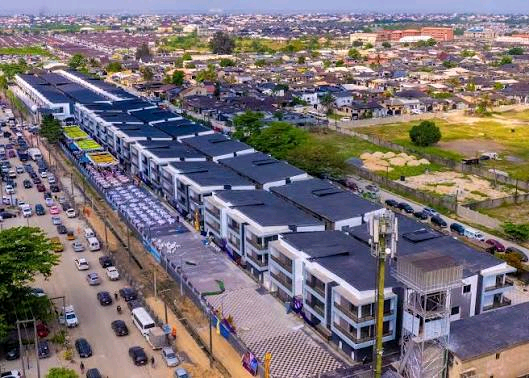
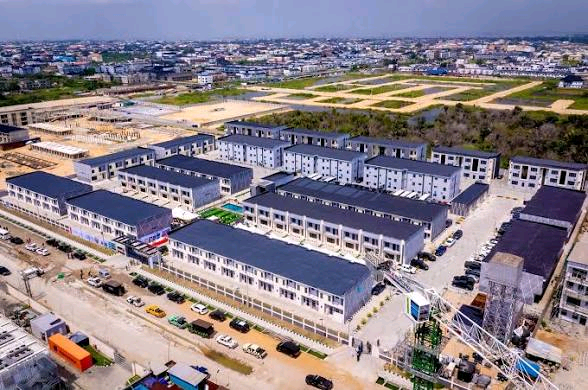
The newly commissioned developments comprise 165 residential units at Treasure Estate, Ajiwe, Ogombo, and another 129 units at Brooks Habitat, Abraham Adesanya.
Treasure Estate was developed through a joint venture between the Lagos State Development and Property Corporation (LSDPC) and AKF Properties Limited.
The development offers different residential options, including two-bedroom terrace houses, three-bedroom flats and three-bedroom terrace houses.
Beyond the residential buildings, the estate features recreational and supporting facilities such as a swimming pool, gymnasium, five-a-side football pitch, jogging space and parking areas.
It also has water treatment infrastructure and drainage systems designed to support the estate’s daily operations.
Meanwhile, Brooks Habitat was facilitated by the Lagos State Ministry of Housing in partnership with Brook Assets and Resources Limited.
Located on approximately 2.3 hectares of land, the development comprises 129 housing units distributed across 20 residential blocks.
Its housing arrangement includes 42 two-bedroom flats, 42 three-bedroom flats with service quarters and 45 three-bedroom terrace houses.
The estate also features internal access roads, security infrastructure, solar-powered streetlights, a healthcare clinic, a gymnasium and recreational facilities.
The two developments therefore offer different housing configurations, providing options for residents seeking apartments and terrace houses.
Sanwo-Olu Announces Over 2,000 Additional Housing Units

Speaking during the commissioning ceremonies, Sanwo-Olu disclosed that his administration was preparing to inaugurate more than 2,000 additional housing units across Lagos before leaving office.
The governor identified Ibeshe, Sangotedo, Egan in Alimosho and Itamaga in Epe among the locations where further developments are ready for commissioning.
The figures disclosed for these locations include approximately 140 units in Ibeshe, more than 1,000 in Sangotedo, nearly 600 in Egan and about 150 in Itamaga.
These figures amount to approximately 1,890 units, based on the rounded estimates provided for the individual locations. The governor, however, stated that the administration’s wider target was to commission over 2,000 additional homes.
He also highlighted ongoing housing developments being undertaken by LSDPC in Shogunro, Ogba, Apapa and Ogudu.
The projects form part of the administration’s broader housing programme, which seeks to extend residential developments beyond a few locations and create opportunities for different income categories.
Why Lagos Is Relying on Private Developers
An important aspect of the latest housing delivery is the government’s emphasis on public-private partnerships.
Sanwo-Olu acknowledged that the state could not independently meet the housing demands of its growing population through government funding and construction efforts alone.
Explaining the administration’s approach, the governor said: “Government cannot do it alone. We need the private sector to come in and invest.”
Under the partnership arrangement, the government provides land, regulatory oversight and an enabling environment, while private developers contribute investment and construction expertise.
The Treasure Estate and Brooks Habitat projects demonstrate how the arrangement is being applied through different government housing agencies.
The approach is particularly relevant to Lagos, where population growth, urban expansion and increasing demand for residential accommodation continue to put pressure on available housing.
However, increasing the number of completed buildings is only one part of the challenge. The cost of acquiring homes and the availability of accessible financing remain important considerations for prospective homeowners.
How Much Do the New Lagos Houses Cost?
The cost of purchasing the newly commissioned properties is another important consideration for residents interested in the developments.
During the inauguration, LSDPC Managing Director and Chief Executive Officer, Ayodeji Joseph, disclosed that the two-bedroom terrace units at Treasure Estate were priced at ₦65 million.
He also explained that prospective buyers could explore mortgage financing through the Federal Mortgage Bank of Nigeria and the Mortgage Refinancing and Infrastructure Fund.
This financing arrangement is intended to provide additional pathways for eligible buyers who may not be able to pay the full purchase price immediately.
However, the disclosed ₦65 million price relates specifically to the two-bedroom terrace units at Treasure Estate. It should not be treated as the confirmed price for every property across both developments.
Ogombo Road Expansion Also Announced

Beyond the housing developments, Sanwo-Olu announced plans for additional road and drainage improvements around the Ogombo axis.
One of the proposed interventions is the expansion of Ogombo Road into a four-lane carriageway.
The governor said the infrastructure improvements would complement the growing residential developments in the area, while appealing to residents to cooperate with contractors during construction activities.
The announcement highlights another consideration in housing development: providing residential buildings must go alongside improving access roads, drainage and other essential infrastructure.
As the administration approaches the end of its tenure in 2027, attention will also be on the delivery of the additional housing projects already identified across the state.
For Lagos residents, the next major question is how many of the announced homes will be commissioned within the promised timeframe and how accessible the properties will be to different income groups.