
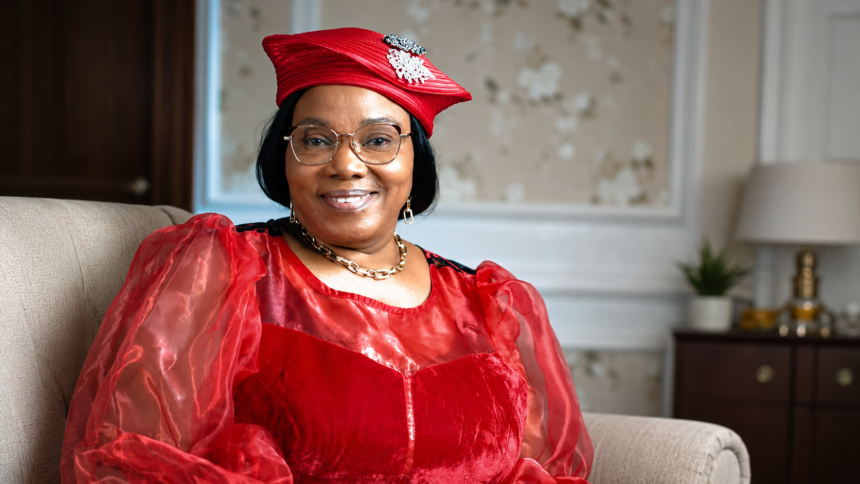
Who Was Toun Soetan? The Inspiring Life and Lasting Legacy of Nigeria’s Gospel Music Icon
The Nigerian gospel music community lost one of its most treasured voices with the passing of veteran gospel singer, songwriter, teacher, and evangelist Toun Soetan, who died on March 13, 2026, at the age of 73.
For more than four decades, Toun Soetan dedicated her life to spreading the Christian faith through music and evangelism. Her heartfelt songs became an integral part of worship services in churches across Nigeria and beyond, inspiring millions with messages of hope, gratitude, faith, and total devotion to God.

Although many younger gospel artists have emerged over the years, Toun Soetan’s music has remained timeless. Songs such as “Darling Jesus,” “Baba E Se,” “Thank You Jesus,” “I’m Born Again,” “Iye Ree,” “Gbe Jesus Ga,” and “Train Up Your Child” continue to be sung by worshippers across different generations.
Other Songs she composed
Alpha Omega
Baba fagba rare o n
On the mountain
I will praise the lord with my whole heart (and Yoruba version)
At the mention of your name
Glory glory halleluyah
Higher, higher, higher, Jesus higher.
Jesus is a mighty God (Ghana version)
My lifetime, I will God my lifetime (Yoruba version)
Baba wa ba mi se oh
In addition to these, she released several albums containing numerous Yoruba and English gospel songs, many of which remain available only on cassette tapes, CDs, or church archives. Because those recordings were never fully digitized, a verified song-by-song discography is not currently available.
Click to watch her live performance with Nigerian music minister Yetunde Are
A Humble Beginning
Born around June 18, 1953, in Lagos State, Toun Soetan, originally named Alimat Sadia, spent much of her childhood in Beere, Ibadan, where she was raised in a large Muslim family. Reports indicate that her father had 28 children, making her upbringing both unique and challenging.
Growing up, she was exposed to Islamic teachings and traditions. However, her life took a remarkable turn in 1974 after attending a revival programme at Oritamefa Baptist Church in Ibadan. During the service, she made the life-changing decision to embrace Christianity.
That decision came at a high personal cost. According to accounts she shared over the years, her conversion led to rejection from some members of her family. Despite the emotional difficulties, she remained steadfast in her newfound faith, believing that her calling was greater than the challenges she faced.
From the Classroom to the Pulpit
Before becoming widely known as a gospel minister, Toun Soetan built a career in education. She worked as a teacher for about 16 years, a profession that reflected her passion for nurturing and mentoring others. She also furthered her education at the University of Ibadan, where she continued to develop academically while deepening her Christian faith.
Although teaching was fulfilling, she gradually felt called to full-time ministry. That calling eventually led her away from the classroom and into a lifetime of evangelism and gospel music.
The Birth of Timeless Gospel Songs
Toun Soetan became one of the pioneering voices of contemporary Nigerian gospel music. Her songs stood out because they focused less on entertainment and more on sincere worship and personal encounters with God.
Perhaps her most famous composition, “Darling Jesus,” written in 1987, has become one of the most enduring worship songs in Nigerian gospel history. Decades after its release, it continues to be performed in churches, gospel concerts, crusades, and prayer gatherings.
Beyond “Darling Jesus,” she composed several other songs that encouraged believers to trust God, remain thankful in every situation, and live lives dedicated to Christ. Her music crossed denominational boundaries and became a source of encouragement for countless Christians.
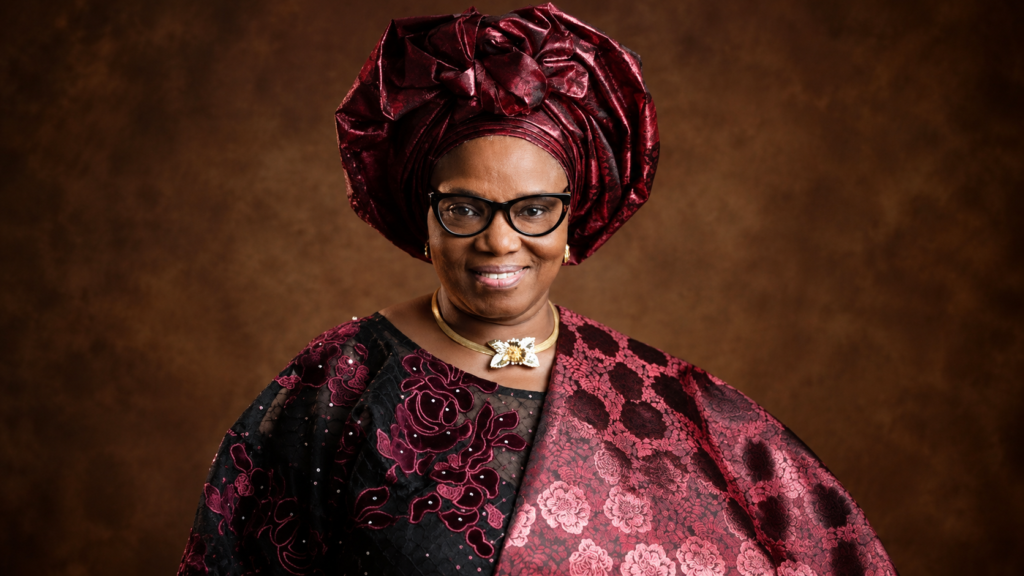
A Ministry Built on Service
Beyond music, Toun Soetan founded Trinity World Evangelical Ministry, where she devoted herself to preaching the gospel, mentoring young believers, and teaching about worship, prayer, and spiritual growth.
She was widely admired for her humility and conviction that ministry should never become a commercial enterprise. Throughout her years in ministry, she repeatedly emphasized that the gospel should be preached freely and that worship should always point people toward God rather than personal gain.
Her teachings, conferences, and mentorship helped shape many younger ministers and gospel musicians who today continue to build on the foundation she laid.
A Legacy That Lives On
The passing of Toun Soetan marks the end of an extraordinary chapter in Nigerian gospel music, but her influence remains very much alive. Her songs continue to echo through churches, homes, schools, and Christian gatherings, touching hearts just as they did decades ago.
To many believers, she was more than a singer. She was a teacher, an evangelist, a mentor, and a woman whose entire life reflected unwavering faith and devotion to God.
As tributes continue to pour in from across Nigeria and beyond, many remember Toun Soetan not only for the beautiful songs she left behind but also for the life she lived—a life marked by sacrifice, service, humility, and an unshakable commitment to sharing the message of Christ.
Click to watch her tribute program on X.
Though she is gone, her music and ministry remain an enduring testimony that will continue to inspire generations of worshippers for years to come.
COMMENTS ON X
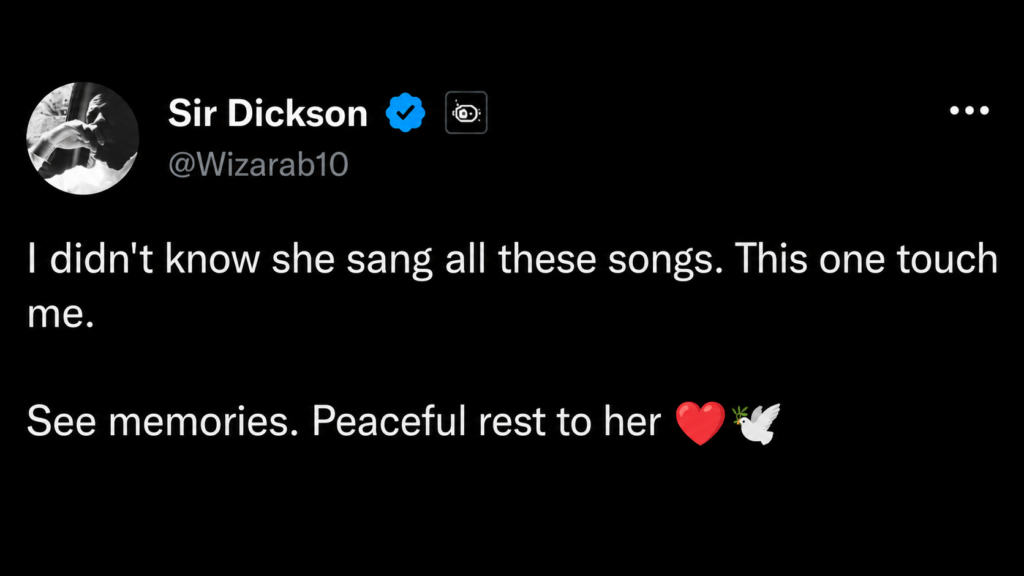
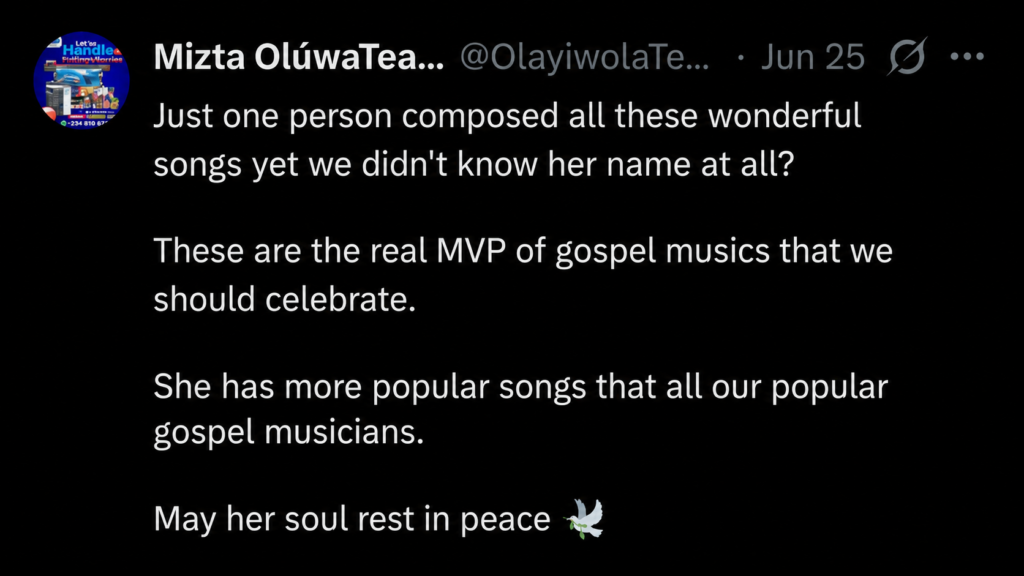
Comment on social media made the world ask many questions, such as whether we are really celebrating the original composers of a song, as we see many uprising gospel ministers resinging some songs. It looks like there is no maximum credit to the original composers of these songs? Kindly share your thoughts in the comment section.