


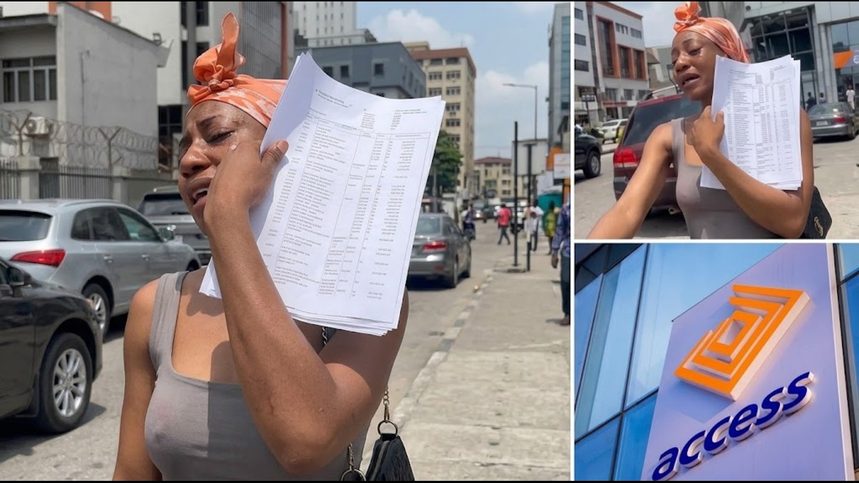
The woman said she had saved the money since 2022, only to discover on her return that she “cannot find even ₦1,000” in an account that should have held approximately ₦3 million. The bank did not move to resolve the matter until VeryDarkMan’s intervention drew national attention online.

Access Bank informed her that ₦20,000 had been withdrawn from the account repeatedly from 2024, despite her insisting she did not carry out the transactions. Those incremental debits, she said, emptied the account entirely before she landed back in Nigeria.
She also alleged that her SIM card had been reassigned to someone else, and that person had been making withdrawals. The claim raises questions about how a customer’s linked SIM was reportedly transferred without triggering any bank-side alert or account freeze.
Suspicious withdrawals had occurred on the account since October 2025, gradually reducing the balance from approximately ₦3 million to zero, with the customer repeatedly visiting the bank to lodge complaints but being told the matter was under investigation. Those visits, she said, produced no action and no timeline for resolution.
VeryDarkMan shared confirmation of the full ₦3 million refund on his social media platforms, telling his followers the bank had resolved the matter. The activist did not disclose the timeline between his intervention and the bank’s decision to pay.
In sharing the resolution, VeryDarkMan also flagged a pattern he described as wider than this single case. He noted similar issues with dormant accounts, where bank staff allegedly debit funds from deceased customers. Access Bank has not publicly responded to that specific allegation.
Supporters who followed the case online celebrated the outcome, with many pointing to the speed of the resolution as evidence that the bank had the capacity to act quickly but chose not to until public pressure forced the issue. The bank had not commented publicly before VeryDarkMan’s posts.
One banking commentator, quoted during the controversy, said, “The bank, in whatsoever circumstances, owes its customers full disclosure,” and advised the woman to escalate to the Central Bank of Nigeria if she could not get a satisfactory explanation. That escalation proved unnecessary after the activist’s involvement produced the refund.
The case has reignited a debate about what ordinary Nigerians must do to recover their own money from financial institutions. Multiple visits to a bank branch, in this case, produced no resolution. One viral post by a public figure did.
The controversy erupted after a video showing the woman accusing the bank of failing to resolve the alleged disappearance of her savings went viral on social media. By that point, she had already exhausted the formal complaint channels available to retail customers.
Access Bank is one of Nigeria’s largest commercial lenders by assets, with a published dormant accounts portal maintained in compliance with a Central Bank of Nigeria mandate. The bank has published a list of dormant accounts currently held within it, saying the information is provided to promote transparency and assist rightful account holders or their beneficiaries in reactivating those accounts.
That published transparency process, however, did not prevent this customer’s funds from disappearing while her account sat inactive during her time abroad. The gap between policy and practice is now a live question that the bank has not publicly addressed or explained.
No charges have been filed in connection with the alleged unauthorized withdrawals. No bank staff member has been named, suspended, or publicly linked to the debits. The woman’s SIM card allegation also remains unresolved by any named authority.
What the case leaves behind is a straightforward fact: a Nigerian woman got her ₦3 million back from Access Bank not through a regulator, not through a court, and not through the bank’s own complaint process, but through VeryDarkMan.