



Bamanga Tukur, former National Chairman of the Peoples Democratic Party and former governor of Gongola State, died on Saturday at the age of 90. His death came three days before what would have been his 91st birthday on September 15.
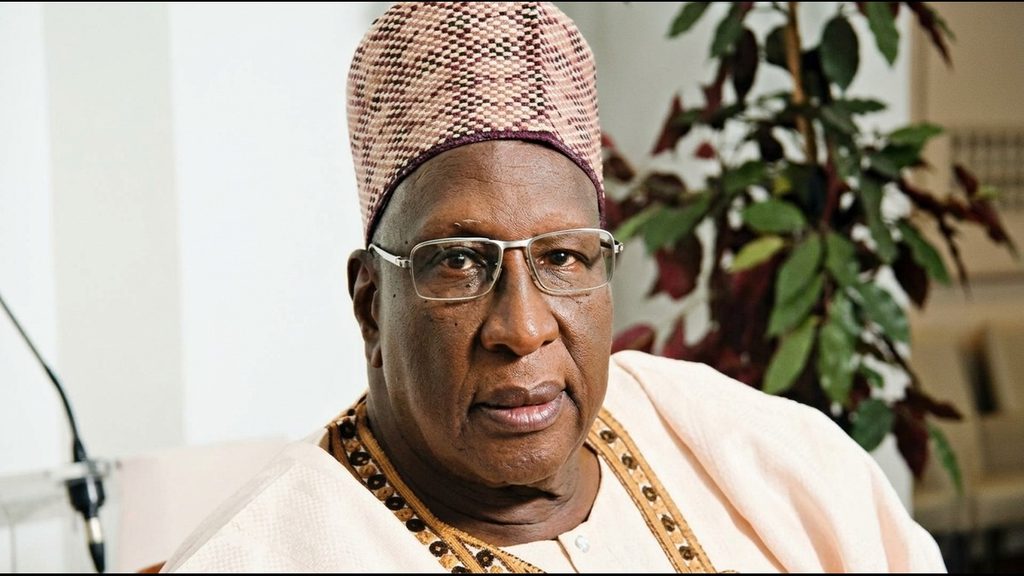
Family sources confirmed the death on Saturday, though details surrounding the circumstances of his passing were not immediately made public. Sympathisers have since been trooping to his country home in the Old GRA, Jimeta, to condole with the family.
Born on September 15, 1935, Tukur began his public service career at the Nigerian Ports Authority, where he served as general manager from 1975 to 1982. That appointment placed him at the center of one of Nigeria’s most strategic federal institutions during a pivotal decade for the country’s oil economy and maritime trade.
He moved into elective politics and won the Gongola State governorship election in 1983. His tenure lasted only from August to November of that year before the military coup in December cut it short, denying him the opportunity to implement much of his governance agenda.
After leaving office, Tukur pivoted to the private sector and founded BHI Holdings, widely known as the DADDO Group of Companies. The business grew to give him a foothold in continental economic affairs well beyond Nigeria’s borders.
Between 1993 and 1995, he returned to government as Minister of Industries under the military administration of General Sani Abacha. That posting added another layer to a career that had already moved between ports management, elected office, and private enterprise.
Tukur also served as Executive President of the African Business Roundtable and as Chairman of the NEPAD Business Group, according to information confirmed by family sources. He held advisory positions with several international trade organizations during that period, reinforcing his standing as one of Nigeria’s most prominent voices in continental economic diplomacy.
In March 2012, he was elected National Chairman of the PDP with the backing of then-President Goodluck Jonathan. His return to partisan politics came at a moment when the PDP was the dominant force in Nigerian federal politics.
His chairmanship, however, was overshadowed by prolonged internal disagreements within the party. Those tensions culminated in his resignation as national chairman in January 2014, less than two years into the role.
Tukur had also been a presidential aspirant during the Third Republic and held the traditional title of Tafidan Adamawa. The Federal Government, for his contributions to public life, honored him with the title of Commander of the Order of the Niger, CON.
The Republic of Togo conferred on him the title of Commander of the Order of the Mono, COM. He had taken ill in 2023, according to disclosures from within his circle, though he remained a reference point in discussions about Nigeria’s northern political establishment.
Adamawa State Governor Ahmadu Fintiri, reacting on Saturday, described the death as a loss not only to Adamawa but to Nigeria as a whole. “He made significant contributions to the political, socio-economic, and industrial development of Nigeria,” Fintiri said.
In a statement issued by his Chief Press Secretary, Pastor Humashi Wounishikou, Fintiri declared three days of mourning in honor of the former governor. The declaration signals the weight attached to Tukur’s passing within the state’s political class.
Tukur is survived by his wives, children, and grandchildren. No official date for burial rites had been announced by the family as of Saturday.
His death closes a chapter that stretched across military and civilian administrations, continental boardrooms, and the fractious internal politics of the PDP. Bamanga Tukur’s career covered more than five decades of Nigerian public and private life, from the ports to the presidency of a continental business body.