


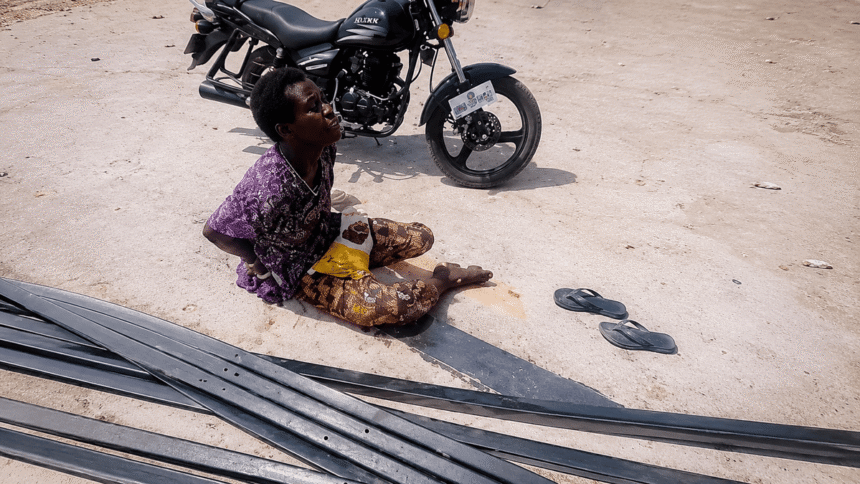
The Coastal Highway Guards have made their first arrests of suspected vandals caught stealing and destroying fence sections along the Lagos Coastal Road, in what supporters described as a swift and visible demonstration of the unit’s enforcement mandate.
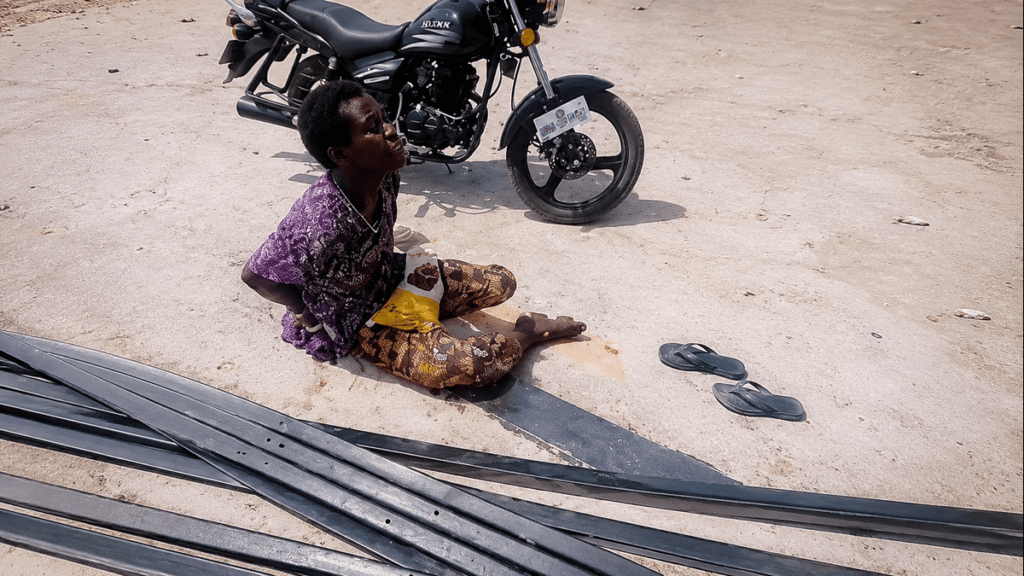
Officers detained the suspects on the Lagos Coastal Road and subsequently handed them over to the Lagos State Police for further processing, marking the first law enforcement action carried out by the security unit since its formation under the Federal Ministry of Works.
Videos that circulated following the operation showed piles of matching metal bars stacked near a pickup truck and a motorcycle at the scene, providing visual documentation of materials the guards said were taken from fence sections along the highway corridor.
The Coastal Highway Guards operate under Minister of Works David Umahi and are commanded on the ground by retired General Adekunle Shodunke, who leads a unit composed of 40 officers deployed specifically to monitor and protect the Lagos Coastal Road from theft and destruction.

The operation against the fence vandals represents the unit’s first publicized detention and handover since Umahi launched the guards, signaling the beginning of active enforcement rather than a purely monitoring posture along the highway corridor.
Beyond the vandalism arrests, the Coastal Highway Guards also moved to clear unauthorized shanties that had been established along the highway, an action the unit took as part of protecting the road from repeated incidents of theft and structural interference that have undermined the infrastructure.
The clearing of the shanties followed the same rationale applied to the vandal arrests, with the guards treating encroachments and thefts as connected threats to the integrity of the public infrastructure running along the Lagos coastline.

Supporters of the unit praised the operations, characterizing both the vandal arrests and the shanty clearances as necessary steps to safeguard a public investment through visible security presence and strict on-ground enforcement by the guards.
The guards’ mandate, as established under Minister Umahi, places retired General Shodunke’s 40-man team in charge of maintaining order along the Lagos Coastal Road, with the authority to detain suspected offenders and transfer them to state police command for formal legal proceedings.
The video evidence showing metal bars near the pickup truck and motorcycle at the arrest scene gave supporters and observers a direct record of the kind of material theft the Coastal Highway Guards were specifically constituted to prevent and prosecute.
The handover of the detained suspects to the Lagos State Police established the procedural chain between the highway guards and conventional law enforcement, with the guards acting as the detaining authority and the police assuming custody for formal processing.
The clearing of unauthorized shanties alongside the vandal arrests placed two distinct enforcement actions within the same operational period, indicating that the unit moved on multiple fronts during its initial active phase along the Lagos Coastal Road.
Retired General Shodunke’s leadership of the 40-officer unit places a military background at the head of a civilian highway security operation working within Umahi’s ministry, with the guards functioning as a dedicated protection force rather than a general policing body assigned to the broader region.

The arrest operation, the seizure of the metal bars documented in circulating videos, and the removal of unauthorized shanties collectively represent the unit’s opening enforcement actions since Minister Umahi stood up the Coastal Highway Guards to address persistent theft and vandalism along the corridor.
Supporters continued to frame the Coastal Highway Guards’ early operations as proof that visible, dedicated security and strict enforcement can protect public investment along the Lagos Coastal Road from the vandalism and structural theft the unit was created to stop.