


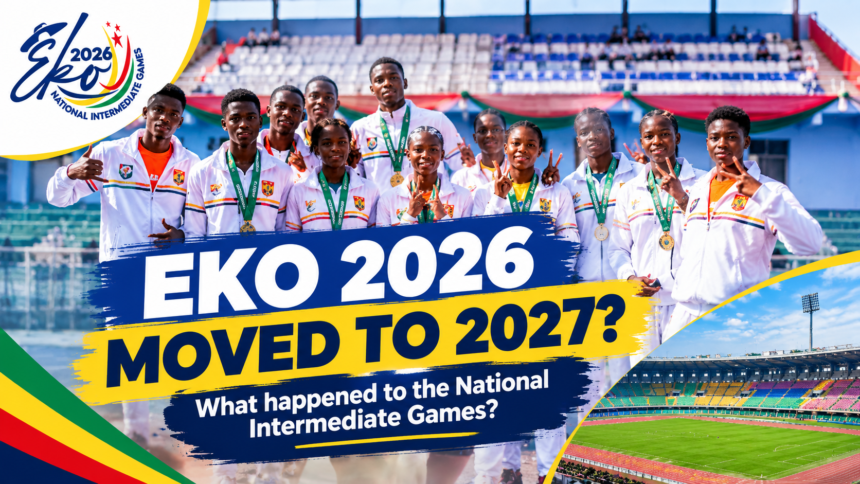
Eko 2026 National Intermediate Games will not begin in Lagos today, October 1, as originally planned. The inaugural competition has been postponed to the first quarter of 2027 following a review of preparations for the event.
The Games were initially scheduled to run from October 1 to 15, 2026, with Lagos selected as the host city. No exact new date has been announced yet, the Games are expected to take place between January and March 2027.
The decision came after a Joint Technical Meeting held from September 3 to 6 involving the National Sports Commission, the Local Organising Committee and other stakeholders. The assessment examined proposed venues, sporting events, technical requirements, rules and regulations and other operational areas connected with hosting the Games.
Why Eko 2026 was postponed in Lagos
According to the National Sports Commission, the technical assessment found that the Games could technically proceed in October. However, stakeholders concluded that the time remaining was not sufficient to deliver the inaugural edition at the standard expected of an event of national importance.
The Lagos State Sports Commission formally communicated the decision to the National Sports Commission after the review. The NSC said the move was intended to protect the quality, credibility and long-term success of the National Intermediate Games rather than rush the first edition with limited preparation time.
Lagos remains the host, and preparations are expected to continue while the organisers work towards a new date in the first quarter of 2027.
The postponement does not mean the entire programme has been abandoned. The National Sports Commission said activities within its responsibility, including accreditation, zonal elimination for team sports and other technical and operational preparations, would continue.
What Eko 2026 National Intermediate Games are about
The National Intermediate Games were created to address an important stage in Nigeria’s sports development system: the transition between youth competitions and senior-level elite sport.
The Games are intended primarily for young athletes, with organisers previously projecting participation of about 15,000 athletes aged between 15 and 18. Earlier plans involved athletes from Nigeria’s 36 states and the Federal Capital Territory, while the official Games portal also lists a Nigerian diaspora delegation.

Rather than being designed simply as another medal competition, the organisers have presented Eko 2026 as a talent-identification and development platform.
The Local Organising Committee said the Games would strengthen the connection between school sports, grassroots participation and elite competition. The stated aim is to identify promising athletes, monitor their development and create clearer pathways towards higher-level competitions.
That makes the postponement particularly significant because the inaugural edition is expected to establish a model for future National Intermediate Games.
Eko 2026 will feature dozens of sports
The scale of the planned competition is another reason the Games have attracted attention.
The official National Intermediate Games portal lists 43 sports and 469 event categories, with 38 delegations comprising the 36 states, the FCT and the diaspora. The programme covers a wide range of traditional and less conventional sporting disciplines.
The venue plan spreads competitions across several locations in Lagos.

The University of Lagos is listed as a major competition and accommodation hub, while other venues include the National Stadium Complex, Teslim Balogun Stadium, Rowe Park Sports Centre, Mobolaji Johnson Arena, Tafawa Balewa Square, Lagos Lawn Tennis Club and Yaba College of Technology.
The planned sports include athletics, football, basketball, volleyball, swimming, boxing, wrestling, judo, taekwondo, badminton, table tennis, tennis, cricket, gymnastics, weightlifting, handball, rugby, cycling, chess and scrabble, among others.
The official programme also includes para-sports and deaf sports categories in several disciplines, widening the scope of participation.
Age verification is a major part of Eko 2026
One of the issues the organisers have specifically targeted is age cheating in youth sports.
Ahead of the planned October Games, the Local Organising Committee and Main Organising Committee announced plans to use the National Identity Management System to verify athletes’ biodata and help ensure that competitors fall within the approved age bracket.

The organisers described the system as part of an effort to improve fairness and prevent older athletes from competing against younger participants in intermediate competitions.
For a competition built around talent identification, accurate age verification is particularly important. Athletes competing against others outside the intended age category could affect results and the opportunity for younger competitors to gain recognition.
Lagos remains central to the Games
Although the October opening has been cancelled, Lagos remains firmly attached to the first edition.
The state has been preparing facilities across different parts of the city, with organisers highlighting upgrades and inspections at several sporting venues. The Games also give Lagos an opportunity to showcase its sporting infrastructure while hosting athletes and officials from different parts of Nigeria.
The organisers have described the competition as more than a two-week sporting event. Their stated ambition is to create a continuing system through which promising young athletes can move from school and grassroots competitions towards national and international opportunities.
For now, however, the immediate focus is on preparation.
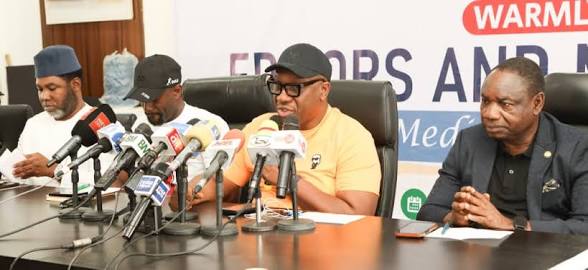
The National Intermediate Games will no longer open on October 1, 2026, as previously announced. Instead, Lagos is expected to host the historic maiden edition between January and March 2027, although the organisers have not yet announced the exact new date.
Until then, Eko 2026 remains a Games in preparation, not a competition beginning today.