


Nigeria marks its 66th Independence Day on October 1 2026, commemorating the country’s independence from British colonial rule in 1960.
Nigeria Independence Day is observed every October 1, making the date one of the most important milestones in the country’s political history.
But why October 1?, What happened in 1960, who led the country at independence, and how did Nigeria become independent from Britain?
The answers go back to Nigeria’s transition from British colonial rule to self-government and, three years later, a republic.
Why is October 1 Nigeria’s Independence Day?
October 1 was chosen because it was the day the Federation of Nigeria formally became independent from British rule in 1960.
Before independence, Nigeria was under British sovereignty and had gone through several constitutional changes that gradually increased the participation of Nigerians in government. The transition was therefore the result of years of political negotiations, constitutional development and nationalist movements rather than a single event.
On October 1 1960, the new independent Nigerian state came into existence under an independence constitution. The British flag was lowered and Nigeria’s green-white-green flag became the national symbol of the newly independent country.
The United States formally recognised Nigerian independence on the same day, while diplomatic relations between the two countries were established.
That is why October 1 remains Nigeria Independence Day more than six decades later.
What happened on October 1, 1960?
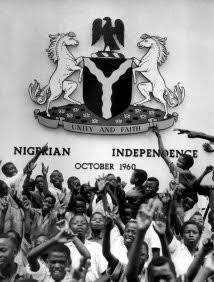
Nigeria entered independence with a parliamentary system of government.
Abubakar Tafawa Balewa became the country’s first Prime Minister and headed the federal government. Nnamdi Azikiwe became Governor-General, representing the British monarch, who remained the formal head of state under the 1960 constitutional arrangement.
This distinction is important because Nigeria was independent in 1960 but was not yet a republic.
The country’s independence constitution created a federal system in which legislative powers were divided between the federal government and the regions. At the time, Nigeria was organised around three major regions: the Northern Region, Western Region and Eastern Region.
Independence therefore marked the beginning of Nigerian control over the country’s government, even though some constitutional links with Britain remained.
How Nigeria became independent from Britain
Nigeria’s independence did not happen overnight.
Political movements demanding greater Nigerian participation in government had grown considerably during the colonial period. Nationalist politicians and organisations pushed for constitutional reforms, greater representation and eventually self-government.
Among the prominent figures associated with the independence era were Nnamdi Azikiwe, Abubakar Tafawa Balewa, Obafemi Awolowo, Ahmadu Bello, Anthony Enahoro, Funmilayo Ransome-Kuti and several other political and nationalist figures.
Constitutional negotiations gradually expanded Nigerian participation in government and prepared the country for independence.
By 1960, Britain and Nigerian political leaders had reached the constitutional arrangements that transferred sovereignty to the new independent state.

The process also reflected Nigeria’s regional and political diversity. Different political leaders represented different parts of the country and held varying political positions, but the constitutional transition ultimately produced an independent federation.
The Federal Ministry of Information describes October 1, 1960, as the date Nigeria gained independence from Britain, while the Senate Committee on Constitution Review records the constitutional framework under which the country entered independence.
Who was Nigeria’s first Prime Minister?
Abubakar Tafawa Balewa was Nigeria’s first Prime Minister.
Balewa became head of the federal government at independence and remained Prime Minister until the military coup of January 1966.
He was already a prominent political figure before independence and played a central role in the negotiations that preceded the transfer of power.
Because Nigeria adopted a parliamentary system at independence, the Prime Minister was the head of government, while the Governor-General served as the constitutional head of state.
This arrangement is one reason Nigeria’s political system in 1960 looked very different from the presidential system used today.
Who was Nigeria’s first President?
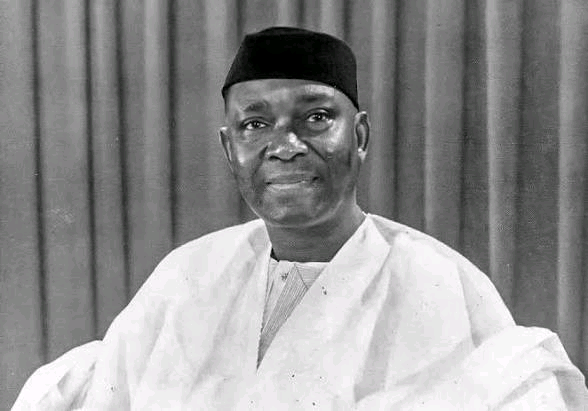
Nnamdi Azikiwe became Nigeria’s first President when the country became a republic in 1963.
At independence in 1960, Azikiwe was Governor-General rather than President. The 1960 constitution still recognised the British monarch as the formal head of state, with Azikiwe representing the monarch in Nigeria.
That changed three years later.
On October 1, 1963, Nigeria became the Federal Republic of Nigeria under a new Republican Constitution. The British monarch ceased to be the country’s head of state, and the presidency became the office of Nigeria’s head of state.Azikiwe subsequently became the country’s first President.
This means October 1 has two major constitutional meanings in Nigerian history: independence from British sovereignty in 1960 and the establishment of the republic in 1963.
Why did Nigeria become a republic in 1963?
Independence did not immediately remove every constitutional connection with Britain.
Under the 1960 Independence Constitution, the Queen remained Nigeria’s head of state and the Governor-General represented her in the country. The Judicial Committee of the Privy Council in Britain also remained the highest court of appeal.
The Republican Constitution that came into force on October 1, 1963, changed this arrangement.
The Senate Committee on Constitution Review states that the Queen ceased to be Nigeria’s head of state and that the President became the country’s head of state under the new constitutional order.
So, while Nigeria became independent in 1960, becoming a republic in 1963 represented another important stage in the country’s constitutional development.
Who were the major leaders of Nigeria’s independence era?
Nigeria’s independence story involved many political leaders rather than one individual.
Azikiwe was one of the most influential nationalist figures and later became the country’s first President. Balewa became the first Prime Minister and led the federal government after independence.

Obafemi Awolowo was a major political leader in the Western Region, while Ahmadu Bello was the dominant political figure in the Northern Region and served as Premier of the region.
Other nationalists, including Anthony Enahoro, Funmilayo Ransome-Kuti, Herbert Macaulay, Margaret Ekpo and Michael Okpara, also played important roles in Nigeria’s political development.
Their political organisations, campaigns and constitutional activities formed part of the wider movement that eventually produced independence.
What was Nigeria like when it became independent?
Nigeria entered independence as a federation made up of three regions with considerable regional political autonomy.
The country was already highly diverse, with numerous ethnic groups, languages, cultures and political interests. The constitutional system attempted to accommodate this diversity through a federal structure.
The newly independent government inherited institutions and systems developed during British colonial rule, while Nigerian political leaders faced the task of building a functioning independent state.
Independence therefore represented both an achievement and the beginning of a much larger nation-building process.
What happened to Nigeria after independence?
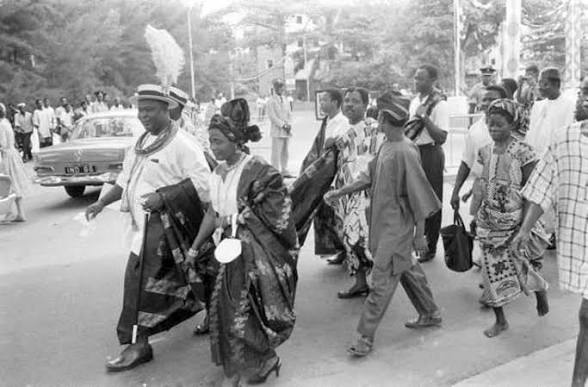
Nigeria’s post-independence history has passed through several major political phases.
The First Republic was interrupted by a military coup in January 1966. Political instability eventually contributed to the Nigerian Civil War, which lasted from 1967 to 1970.
Military rule followed for extended periods, interrupted by periods of civilian government. Nigeria returned to democratic civilian rule in 1999, beginning the Fourth Republic.
The country’s modern political system is based on the 1999 Constitution, which defines Nigeria as a federal republic and establishes the separation of powers among the executive, legislature and judiciary.
As a result, the meaning of October 1 has evolved. It is no longer only a reminder of the end of British colonial rule; it is also a date on which Nigerians reflect on the country’s political journey, achievements and continuing challenges.
How do Nigerians celebrate Independence Day?
Nigeria Independence Day is marked across the country and among Nigerians living abroad.
Celebrations can include official ceremonies, religious services, cultural events, public lectures, school activities, concerts, patriotic displays and other community gatherings.
The Nigerian flag is particularly visible around October 1, appearing on public buildings, streets, businesses, vehicles and private homes.
For many Nigerians, the day is also an opportunity to reflect on the country’s history and the contributions of those who helped establish an independent Nigerian state.
What is happening for Nigeria’s Independence Day in 2026?
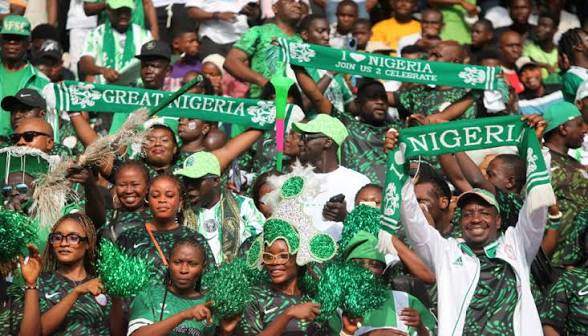
In 2026, Nigeria is marking 66 years since independence.
The Federal Government announced that the anniversary theme is “From Reforms to Stability: Consolidating Nigeria’s Renewed Hope for Shared Prosperity.” Official activities include a World Press Conference, religious services, an Independence Day Public Lecture and a nationwide presidential broadcast on October 1.
The Federal Government also declared Thursday, October 1, 2026, a public holiday to commemorate the 66th Independence Anniversary.
These 2026 events form the latest chapter in a tradition that began when Nigeria became independent on October 1, 1960.
Nigeria Independence Day facts at a glance
Nigeria became independent from Britain on October 1, 1960.
Abubakar Tafawa Balewa became the first Prime Minister.
Nnamdi Azikiwe was Governor-General at independence and later became Nigeria’s first President.
Nigeria became a republic on October 1, 1963.
The country experienced civilian and military periods before returning to democratic civilian rule in 1999.
In 2026, Nigeria marks 66 years of independence.
Why October 1 still matters
More than six decades after independence, October 1 remains one of the defining dates in Nigerian history.
For Nigerians, it marks the moment the country emerged from British sovereignty as an independent state. For anyone learning about Nigeria from outside the country, the date provides a starting point for understanding its modern political history.

The story of Nigeria Independence Day is therefore bigger than a single public holiday.
It connects the end of colonial rule in 1960 with the establishment of a republic in 1963 and the political changes that followed.
Every October 1, the date brings that history back into public attention, while also providing an opportunity to consider how far the country has travelled since the lowering of the British flag in 1960.