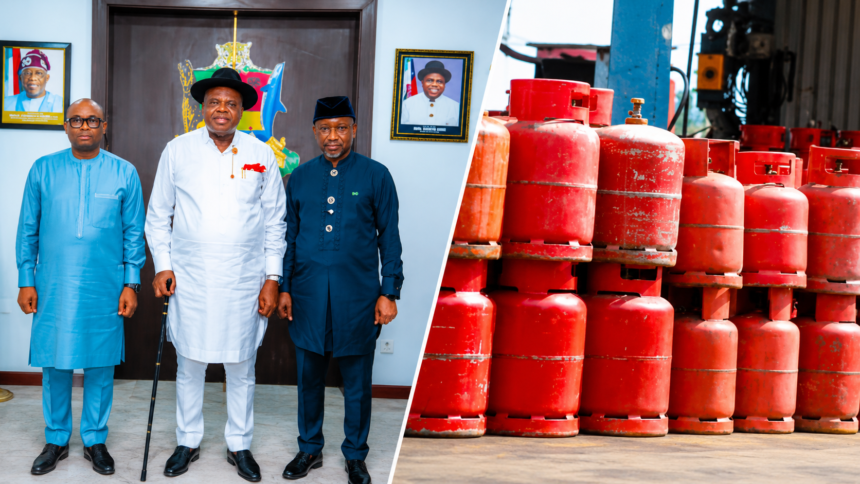
The Federal Government has launched a major push to move Nigerian households away from firewood and kerosene, unveiling a nationwide Liquefied Petroleum Gas, LPG, penetration programme that targets distributing five million cylinders by 2030.
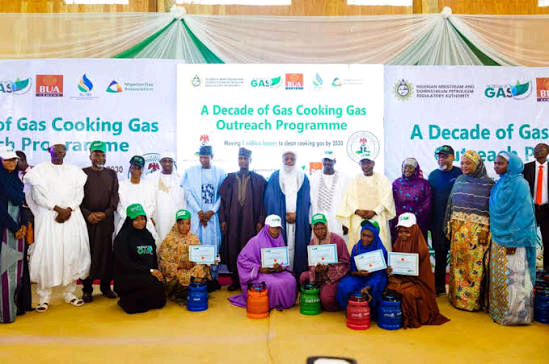
Minister of State for Petroleum Resources, Gas, Ekperikpe Ekpo, announced the revised target during the flag-off of the North West zone grassroots LPG penetration and cylinder distribution initiative in Sokoto. The new goal scales up the earlier plan of converting one million homes by 2030, and now aims for one million households per year over the next five years.
A Presidential Directive Anchored on Gas
According to Ekpo, the clean cooking agenda is backed by a clear presidential directive and sits at the heart of President Bola Tinubu’s Decade of Gas initiative.“We are revising the target upwards to distribute five million LPG cylinders by Year 2030, with an average of one million households being converted per annum over the next five years,” Ekpo said at the Sokoto event.
He described the programme as a cornerstone of government’s commitment to inclusive development, energy security and economic empowerment. Speaking later at the 2026 International Energy Agency Ministerial Meeting in Paris, the minister said the plan is also central to reducing energy poverty, improving public health, empowering women and youth, and advancing climate and forest conservation goals.
Health, Jobs and the Environment in Focus
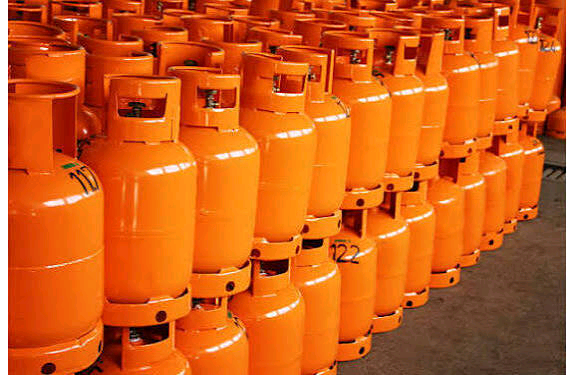
Government officials say the LPG scheme is more than cylinder distribution. It is designed as a health, economic and environmental intervention. Millions of Nigerian households still rely on firewood, charcoal and kerosene, which contribute to indoor air pollution, respiratory illness and deforestation. By switching to LPG, the government expects to cut carbon emissions and protect the health of women and children who bear the brunt of cooking smoke.
The programme is also expected to create jobs across the LPG value chain, from cylinder manufacturing and filling plants to distribution, retail and maintenance. Local manufacturers and distributors are set to benefit from increased demand, while youth and women are being targeted for training and enterprise opportunities.
“This programme isn’t just about gas, it’s about health, opportunity, and environmental responsibility,” Ekpo noted.
Grassroots Rollout Across All Zones
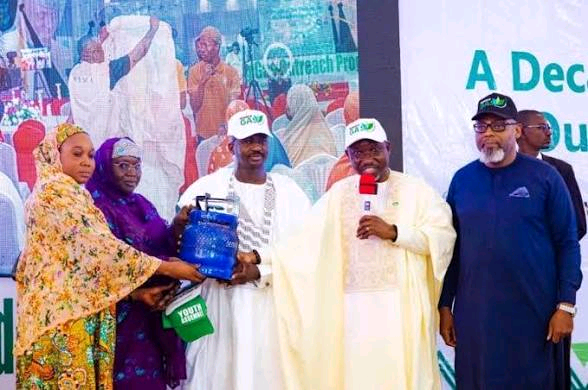
Implementation is already underway. The North West launch in Sokoto follows earlier rollouts in the South West, South, North East and the Federal Capital Territory. The South East is expected to join in the next phase.
The strategy is grassroots-focused: take LPG closer to rural and underserved communities through zonal penetration programmes that build a sustainable domestic cooking gas ecosystem. State governors, traditional rulers and community leaders are being mobilised as partners. In Sokoto, Governor Ahmad Aliyu and the Sultan of Sokoto, Alhaji Muhammad Sa’ad Abubakar III, were acknowledged for their support.
Financing and Policy Backing
To fund the expansion, the government is seeking strong global financing support and private sector investment. Ekpo made the pitch at the IEA meeting in Paris, urging development partners to back a structured financing framework.
Domestically, the Midstream and Downstream Gas Infrastructure Fund, MDGIF, established under the Petroleum Industry Act, is positioned as a key vehicle to catalyse investment in gas infrastructure and expand access nationwide.The PIA and Decade of Gas reforms, according to the minister, have strengthened regulatory certainty and improved investor confidence across the gas value chain.
At the 2026 Nigeria Oil and Gas Conference, Ekpo reiterated that gas is Nigeria’s transition fuel.“Gas is essential because its utilisation cuts across power generation, industrialisation, fertiliser production, household energy and transportation. Gas is the solution for Nigeria,” he said.
From One Million to Five Million
The scale-up reflects growing ambition. The earlier target was to convert one million homes to clean cooking by 2030. The revised target of five million cylinders by 2030 means about one million households will be converted each year.
Officials say the shift is necessary given Nigeria’s abundant gas reserves and the urgent need to address energy poverty. As of 2026, government reports note that cylinders have already been distributed across most zones, with efforts intensifying to reach the five million mark.
Why It Matters Now
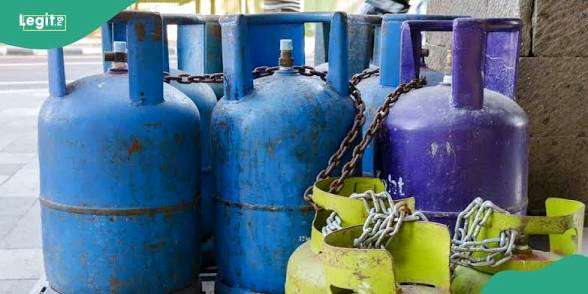
With rising fuel costs and climate pressures, clean cooking has moved to the top of Nigeria’s energy agenda. Beyond emissions, the government is framing LPG as a tool for public health and economic inclusion.Women spend hours daily gathering firewood. Children are exposed to smoke. Forests are cleared. By providing affordable, accessible LPG, the scheme aims to free up time, improve health outcomes and protect the environment, while also growing a new domestic market for Nigerian gas.
Ekpo urged beneficiaries to use the cylinders responsibly and to become ambassadors for clean energy in their communities.“We have identified key projects that will bring gas closer to Nigerians. We are targeting about five million homes to switch from firewood, kerosene and biomass to LPG. This will improve household health while reducing carbon emissions,” he said.
As the North West rollout gathers momentum, all eyes will be on delivery: can the government hit one million new households a year, build the infrastructure to support them, and ensure cylinders remain affordable and safe? For millions of Nigerian families, the answer could mean cleaner air, healthier homes, and a new energy future.