


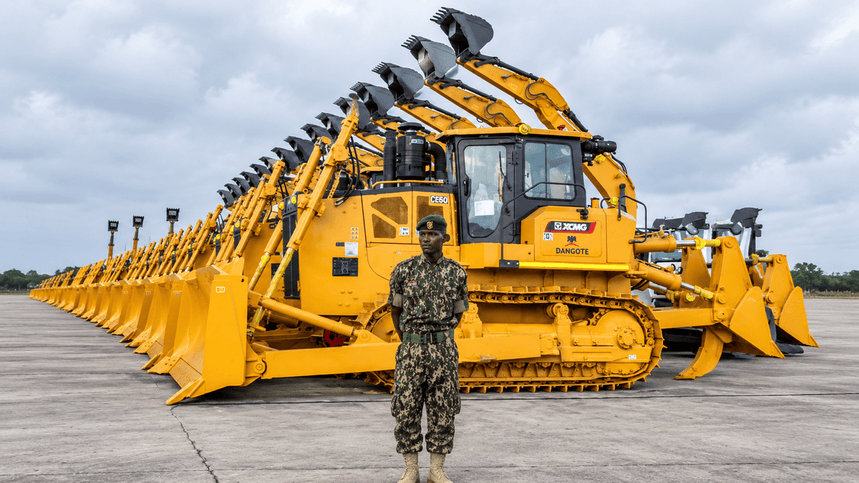
Construction of a $16 billion oil refinery began Wednesday in Lamu, with Dangote and Kenyan President William Ruto breaking ground on the project aimed at meeting growing demand for petroleum products across East Africa.

The region has been hit hard by surging fuel prices resulting from the Iran war, sparking deadly protests in nations such as Kenya over rising pump prices. That is the context Westtrybe readers need before the headline figure. Annual demand for petroleum products across East Africa is estimated at between 20 million and 30 million metric tons, said David Ndii, chief economic adviser to President Ruto.
Meeting that demand would require refining capacity of more than one million barrels per day, according to a financier involved in African refineries. The Lamu plant, as currently designed, falls below that threshold. The proposed refinery is expected to have a processing capacity of 700,000 barrels per day and is targeted for completion by 2030.
Dangote says the East African plant will have a capacity of 700,000 barrels per day, larger than any refinery in Europe. That comparison matters because European supply chains have long dominated the refined petroleum market that East African countries depend on. “When you look at East Africa, not only East Africa, most of all the 54 countries in Africa, they import petroleum products,” Dangote told reporters in Nairobi.
Dangote has offered regional governments a combined 30% stake in the refinery. The engineering contract has already moved. A $450 million engineering contract has been awarded to Engineers India Limited, according to the source report from Reuters.
Dangote and Kenyan President William Ruto were joined at the ceremony by regional leaders, including Ethiopian Prime Minister Abiy Ahmed and Ugandan President Yoweri Museveni. Local people at the site read the machinery differently from the diplomats. “I am very hopeful when I see these machines lined up here because I know I have a chance to work and change my life from my menial jobs,” said Evans Hundo, a local resident at the ceremony.
Officials say the job number is significant. The facility is expected to create more than 50,000 jobs and spur industries, including petrochemicals and bitumen production. Lamu itself is positioned to absorb part of that economic activity. Lamu Port, which welcomed its first cargo ships in 2021, is central to Kenya’s bid to open a new transport corridor linking its northern region and neighboring countries to the sea.
The refinery will include a 1,000-megawatt power plant, with half of its output going back into the Kenyan grid, Dangote confirmed. That detail did not lead to most coverage of this story on Wednesday. Tanzania and the Kenyan port city of Mombasa had been considered as possible locations before Dangote said Lamu was “much better,” citing cleaner water, solid land, and a deep-sea area.
There have been questions about where the refinery will source its crude, as East African countries are only just starting to find and develop significant reserves. Dangote addressed that directly. He said the plant would buy crude from several sources, including the Middle East and the United States, and would be ready as countries such as Kenya, Tanzania, and Mozambique increase production.
The project is also emerging alongside a rival $20 billion refinery and energy hub announced by Uganda and Tanzania at the Tanzanian port of Tanga in August, although details of that venture remain limited. Competition between the two projects has not been resolved. Most of the crude to be refined at Dangote’s Kenyan refinery will have to come by ship from other regions, at least initially.
Environmental campaigners have opposed the project, fearing it could affect Lamu Old Town, a World Heritage site hosting fragile marine life. A court ruling this week did not stop the ceremony but did not end the legal threat either. A court ruling published Monday said the groundbreaking could go ahead, but the case will continue.
Dangote did not treat those objections as legitimate regulatory concerns. He attributed the opposition to traders and businesses whose profit models would be threatened by the refinery. Oil industry analysts were less dismissive. Analysts say it is not a given that the new Kenyan project can replicate the Nigerian model, which turned West Africa’s largest economy from a major fuel importer into a growing exporter.
Dangote has disclosed plans to invest an additional $50 billion across Africa after committing more than $25 billion to existing businesses. The Lamu refinery sits inside that broader ambition. “By 2030, the majority of African countries will be self-sufficient. It does not matter where it is refined, but it should be on the African continent, on the soil of Africa,” he said.
What the Dangote refinery groundbreaking in Kenya does not yet answer is whether the crude supply chain, the legal challenges, and the regional infrastructure will align fast enough to meet that 2030 target. The project faces questions about whether adequate crude supplies and supporting energy infrastructure will be available to sustain the refinery at the scale Dangote has promised. The machines are in the ground at Lamu. The $16 billion Dangote refinery has now moved from announcement to construction.


