



Oby Ezekwesili has demanded the resignation of INEC Chairman, Professor Joash Amupitan, over the alleged compromise of Nigeria’s voters’ register ahead of the 2027 general elections, warning that the controversy has severely damaged confidence in the electoral process.
The former Minister of Education made the demand on Monday, November 16, during an appearance on Arise Television’s Prime Time, where she questioned the credibility of the Independent National Electoral Commission (INEC) following revelations of irregularities involving voter registration records and alleged misconduct by some commission personnel.
Her intervention comes amid growing public scrutiny of the preliminary voters’ register, particularly following reports of suspected AI-generated photographs, duplicate registrations and other questionable entries.
Why Oby Ezekwesili Wants Amupitan to Resign

Ezekwesili argued that the voters’ register is one of the most important foundations of a credible election and that any compromise of the document raises serious questions about the legitimacy of the entire electoral process.
According to her, the number of questionable entries should not determine how seriously the matter is treated.
She said:
“The moment that the foundational document on which an election is based is compromised, it wouldn’t really matter whether it is 10 people that should not be on that register that were put in that register. The election is not credible. It doesn’t matter how you cut it.”
She further maintained that she had lost confidence in INEC’s current leadership and believed Amupitan should accept responsibility by voluntarily stepping aside.
“I will not regain confidence in the current leadership, because in a normal society, the INEC chairman would have himself thrown in the towel and said, ‘I owe this society better. I have failed,’ and he would resign. He wouldn’t need anybody calling for his resignation,” she stated.
Her criticism goes beyond the existence of questionable voter records. She is challenging whether an electoral institution can independently investigate allegations involving its own personnel and convincingly restore public confidence.
How 54 Persons Were Linked to the INEC Register Controversy

The controversy intensified after INEC Chairman Joash Amupitan disclosed the findings of the commission’s examination of its preliminary voters’ register.
On November 9, Amupitan announced that INEC had removed 1,608,660 confirmed invalid registrations from its 2025/2026 Continuous Voter Registration exercise.
An additional 873 records belonging to verified deceased persons were removed, bringing the combined number of deleted records to 1,609,533.
More significantly, the chairman disclosed that 54 persons across 10 states had been identified as complicit in registration irregularities.
He said: “Fifty-four persons across 10 states have been identified as complicit and necessary disciplinary action will be taken against them, including possible prosecution.“
INEC’s investigation examined suspected multiple registrations, unusual registration patterns, substituted photographs and irregularities involving registration transactions.
Amupitan also explained that some registration personnel had deliberately circumvented established procedures, including safeguards designed to accommodate exceptional registration circumstances.
The commission said those connected with the identified infractions had been subjected to administrative investigation.
AI-Generated Photos and Questions Over the 2027 Elections
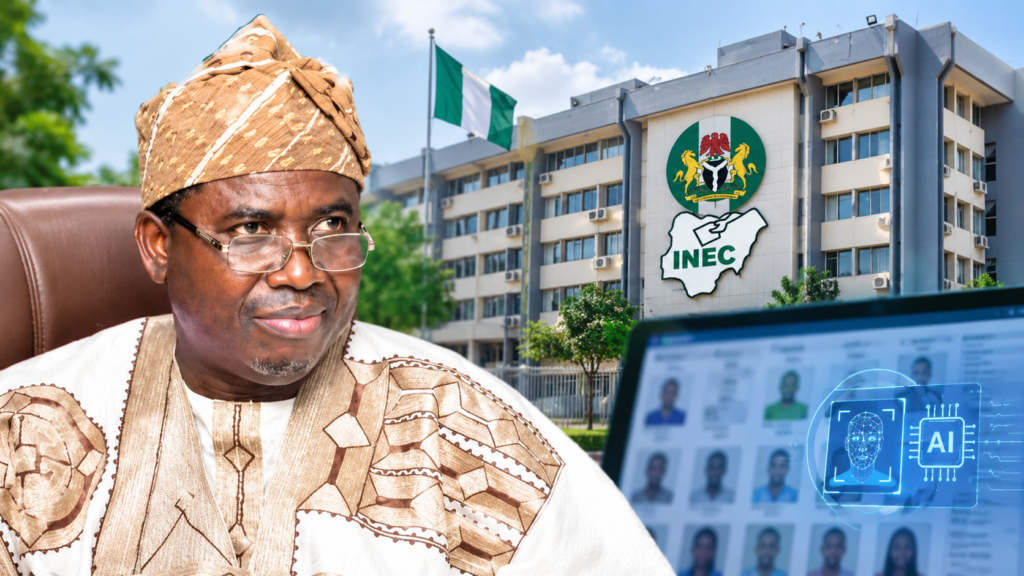
Another major aspect of the controversy involves photographs suspected to have been artificially generated or manipulated and subsequently found in the preliminary voters’ register.
The issue attracted public attention after Nigerians began sharing screenshots of questionable entries, including unusual photographs, names and suspected duplicate registrations.
INEC acknowledged the concerns and said it was examining how the photographs and other irregularities entered the database.
During her television appearance, Ezekwesili questioned the possible implications of the development, suggesting that the alleged infiltration could point to a broader attempt to manipulate the eventual outcome of the 2027 elections.
She raised the possibility that questionable registrations could form part of a process designed to produce a predetermined election result.
However, this remains her expressed suspicion and has not been established as a proven plot to rig the election.
INEC’s Response and the December Deadline

Amupitan has maintained that the commission is taking corrective measures to address the problems identified in the preliminary register.
INEC explained that its Automated Biometric Identification System was used to screen registration records and identify suspicious entries requiring further examination.
The chairman also clarified that being flagged by the automated system did not automatically mean a registration was invalid. Each case had to undergo further assessment before a final decision was reached.
He acknowledged that cleaning up the latest registration exercise would not resolve every historical problem, as some questionable records and duplications originated from registration exercises conducted between 2011 and 2023.
The commission subsequently said the final reconciliation and quality assurance processes would be completed before publication of the final voters’ register on December 15, 2026.
INEC has also maintained that its existing verification procedures, biometric screening and statutory complaints process remain important safeguards against electoral irregularities.
What Ezekwesili’s Demand Means for the 2027 Elections

Ezekwesili’s demand comes at a particularly sensitive period for Nigeria’s electoral preparations, with the 2027 general elections approaching.
The presidential and National Assembly elections are scheduled for January 16, 2027, while governorship and State Houses of Assembly elections are scheduled for February 6.
With the final voters’ register expected in December, the commission faces the task of demonstrating that questionable entries have been properly addressed and that eligible Nigerians have not been wrongly excluded.
Beyond removing invalid registrations, the controversy has placed renewed attention on accountability within INEC, the security of its registration systems and the independence of investigations into alleged internal misconduct.
For Ezekwesili, however, corrective measures alone are not enough to restore confidence in the current leadership.
Her position is that Amupitan should resign over the failure that allowed the controversy to emerge.
Whether the INEC chairman will accept that demand remains to be seen. What is increasingly clear is that the credibility of the 2027 elections will depend not only on the final voters’ register but also on whether Nigerians believe the institution responsible for managing it can be trusted.


