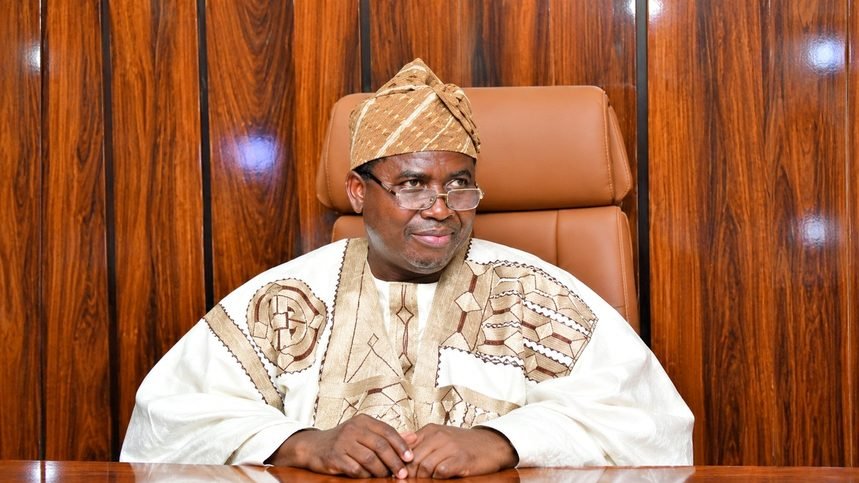
Prof. Joash Ojo Amupitan, Chairman of the Independent National Electoral Commission, said Tuesday he has surrendered the weight of organizing the 2027 general election to God, telling critics who question his composure that divine trust is the reason he appears unbothered.
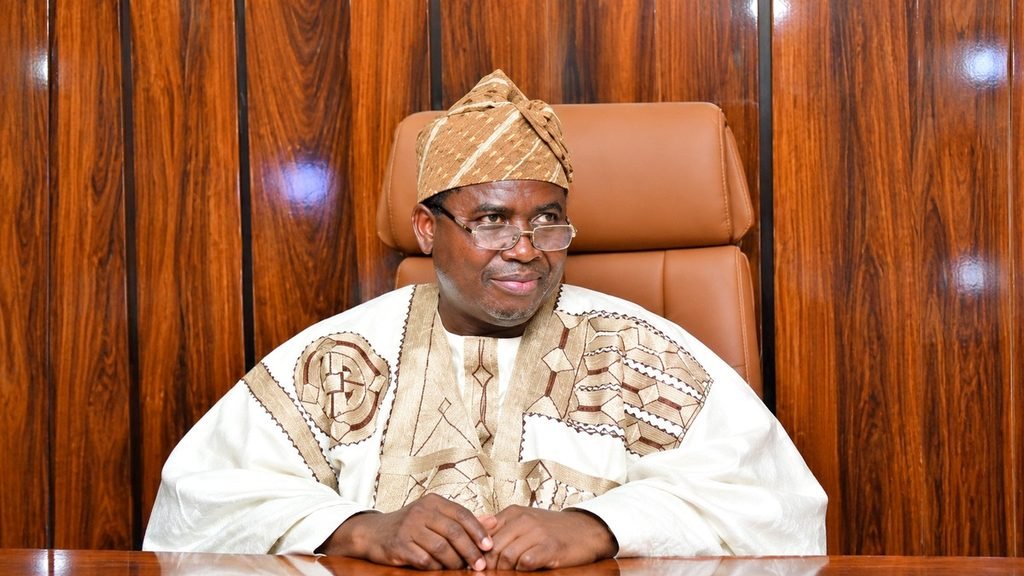
Amupitan spoke at the Artificial Intelligence and Democracy Forum 2026 in Abuja, hosted by Yiaga Africa under the theme “Safeguarding the 2027 General Election in the Age of Artificial Intelligence.” The forum drew national commissioners, diplomatic corps members, political party leaders, civil society groups, and international development partners.
“I’m being reminded of the enormity of the task on me,” the INEC chairman told participants. He quoted scripture as the source of his steadiness, saying, “I’ve handed over everything to God.”
INEC Chairman Rejects AI Role in 2027 Election Results
Beyond matters of faith, Amupitan drew a sharp line on the role of artificial intelligence in determining election outcomes. He declared that no algorithm would decide who governs Nigeria. “Algorithms will not decide the vote because the choice of who leads Nigeria belongs exclusively to the Nigerian people,” he said.
He acknowledged that AI would shape the information environment voters navigate, influence electoral logistics, and alter the tactics of both democratic actors and anti-democratic disruptors. But the commission’s position, he said, is that AI must remain a tool in service of democracy, not its decision-maker.
Amupitan also raised alarm about the growing use of generative AI to create deepfakes, manipulate digital content, and spread disinformation. “The greatest threat we face is not the hacking of a ballot box, but the hacking of the voter’s mind,” he warned. He called on political parties to adopt an ethical AI code of conduct and urged security agencies to build capacity in cybercrime investigations and digital forensics. He asked the judiciary to prepare for disputes involving AI-generated evidence and synthetic media.
2027 Election Scale and INEC Operational Milestones
The scale of the task confronting Amupitan is not small. The 2027 general election will cover more than 103 million registered voters across 176,846 polling units spread across 774 local government areas in all 36 states and the Federal Capital Territory. Presidential and National Assembly elections are scheduled for January 16, 2027, while governorship and state assembly contests follow on February 6.
Amupitan said INEC has completed ten of the fourteen major operational milestones set under the Electoral Act 2026. The commission has digitized its candidate nomination process through the INEC Candidate Nomination Portal, which has processed more than 15,000 nominations across 22 political parties. INEC has also introduced online voter registration for the first time in Nigeria and has begun a decentralized, multi-phase permanent voter card collection exercise nationwide.
The commission has procured additional Bimodal Voter Accreditation System devices to strengthen technological capacity ahead of the polls. Amupitan said AI could support election logistics through predictive modelling and geospatial analysis, helping to determine optimal routes for transporting electoral materials and providing early warnings of weather-related disruptions.
He also said biometric voter accreditation and electronic transmission of polling-unit results had already addressed vulnerabilities linked to manual accreditation. AI, he added, could assist in auditing uploaded result sheets by identifying mathematical inconsistencies and unusual entry patterns. However, he stressed that human collation remained the statutory standard for declaring results.
Amupitan took office on October 23, 2025. Since then, INEC has conducted the Anambra, Ekiti, and Osun governorship elections, the FCT Area Council polls, and several federal and state bye-elections. The chairman has repeatedly said those off-cycle contests provided useful operational experience for the main event in 2027.
With 92 days to the first ballot as of Tuesday, Amupitan said the commission had moved decisively from planning into execution. Election materials are in production, technology systems are undergoing quality assurance testing, and the voter register is ready for public display. Ad hoc personnel recruitment and training are also progressing nationwide.
The INEC chairman said the 2027 election must not only be free and fair but must set a continental standard. “Our success in 2027 must be more than a national victory. It must be a continental standard,” he said at an earlier briefing in January. On Tuesday, as pressure mounted and the polls drew closer, he returned to the same source of calm: faith.