
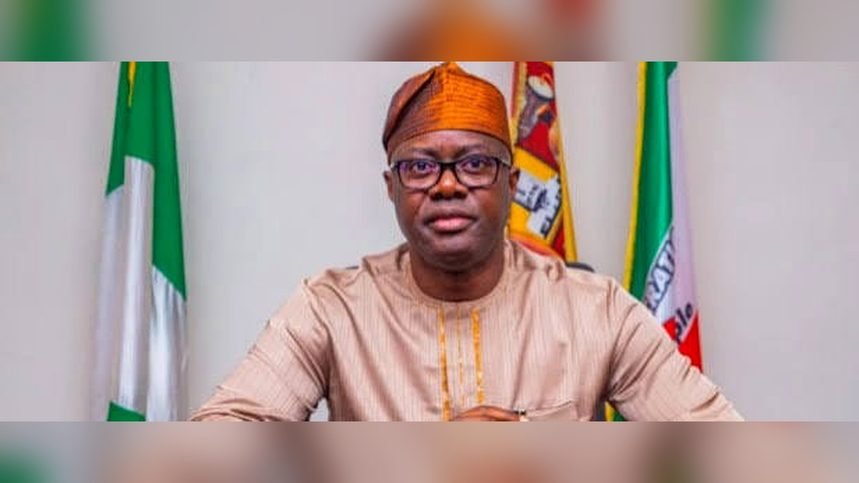
Makinde, who is also the presidential candidate of the Allied Peoples Movement, said the funds were collected but not remitted to the states. “Each state should get ₦250bn from NLNG dividends, but FG has spent it,” he said, adding a condition that makes the timeline pointed: the administration reportedly told governors payment would not come until after the 2027 general elections.
That sequencing is what makes the accusation significant. Development funds being delayed to the other side of a federal election raises a question. Makinde put plainly: “Are elections more important than development?” No response has been issued by the federal government or the presidency.
The NLNG has paid over $47.2 billion in dividends to shareholders since it began operations, the company’s Managing Director Adeleye Falade confirmed in July 2026. The federal government holds 49 percent of NLNG through NNPC Limited, meaning billions in dividends flow to Abuja before any portion reaches state governments via the Federation Account.
The controversy over NLNG dividends and the Federation Account is not new. Nigeria’s Extractive Industries Transparency Initiative, known as NEITI, found in a 2015 audit that NNPC could not show evidence of remitting $16.8 billion in dividends to the Federation Account across a 16-year period. “While the NNPC has always confirmed receipt of the payments, it has never shown evidence of remittance,” NEITI said in that report.
More recently, a NEITI audit found that $722.6 million paid by NLNG to NNPC in 2021 as dividends and interest was never remitted to the Federation Account, according to a This Day Live report in August 2026. The Finance Ministry’s Permanent Secretary, Raymond Omachi, told a Senate committee the ministry lacked direct involvement in the transactions and faced severe challenges getting NNPCL to cooperate.
Separately, a report by the Centre for Journalism Innovation and Development noted that NLNG dividends, which by statute belong to the Federation Account, were linked in reports to accounts connected to the Renewed Hope Ambassadors, the main vehicle coordinating President Bola Tinubu’s 2027 re-election bid. Those reports have not been independently verified.
Makinde disclosed his accusation as part of his “Reset Nigeria” presidential campaign, through which he has attacked what he calls “voodoo economics” at the federal level. He told a town hall meeting in Lafia, Nasarawa State, on Monday that the 2027 election would not be decided by billionaires or campaign spending. ” This election will be determined by the people of Nigeria,” he said.
The Kano State government had previously made a similar demand, formally requesting the release of NLNG dividends it said were owed to the state for 25 years, from January 1999 to the present. A letter read before the Kano State House of Assembly said a lawmaker’s resolution would facilitate “the necessary process for the review, reconciliation, and recovery of the accrued funds.”
NEITI’s most recent finding, disclosed this week, is that NLNG has not remitted about $11.6 billion, equivalent to roughly ₦18.6 trillion at current rates, to the Federation Account. NLNG challenged that figure, saying it “is meeting all its applicable obligations to the federation and other shareholders in dividend payments,” according to Daily Trust. The dispute between NLNG and NEITI over the numbers remains unresolved.
What Makinde has added to this long-running dispute is a specific figure ₦250 billion per state and a specific condition: that payment is being held back until after 2027 polls. Neither claim has been confirmed or denied by the federal government, NNPC Limited, or the Finance Ministry at the time of this report.
For Nigeria’s 36 states, the stakes are concrete. The cumulative sum Makinde described, ₦250 billion multiplied by 36 states, amounts to ₦9 trillion. That figure sits outside any Federation Account Allocation Committee distribution table seen publicly, and no federal official has explained the calculation or timeline for disbursement.
NLNG itself has generated $149.6 billion in total revenue since inception, Falade confirmed in July, with the company holding a 49 percent federal stake through NNPC Limited, a 25.6 percent stake by Shell, 15 percent by TotalEnergies, and 10.4 percent by Eni. Dividends paid to shareholders total $47.2 billion across the company’s operational lifetime.
The question hanging over Makinde’s accusation is the same one NEITI has been asking for over a decade: where, exactly, does the federal government’s share of those dividends go once NNPC receives them and who decides when states are paid?