


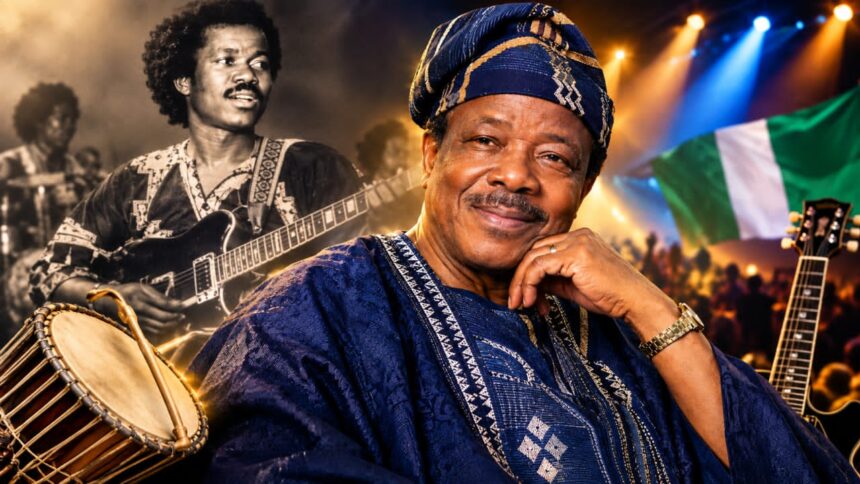
King Sunny Ade turns 80 today, September 22, 2026, as Nigeria celebrates one of its most influential jùjú musicians and cultural ambassadors. Born Sunday Adeniyi Adegeye in Osogbo, the music icon has spent more than six decades building a career that carried Yoruba musical traditions from local stages to international audiences.
The milestone has drawn tributes from fans, fellow musicians, traditional leaders and public figures, with many reflecting on the enduring influence of the man widely known as King Sunny Ade.
President Bola Tinubu also congratulated the musician, praising his contribution to Nigerian music and describing him as an important cultural ambassador.
King Sunny Ade’s Six-Decade Music Journey
King Sunny Ade’s professional music journey began in the 1960s. He initially performed with Moses Olaiya’s Federal Rhythm Dandies before forming his own band, the Green Spots, in 1967. He later became associated with the African Beats, the group through which he rose to national prominence during the 1970s.
His career developed during a period when Nigerian popular music was drawing heavily from indigenous traditions while absorbing influences from highlife and Western music. Ade became one of the musicians who helped push jùjú into a more expansive, modern sound.
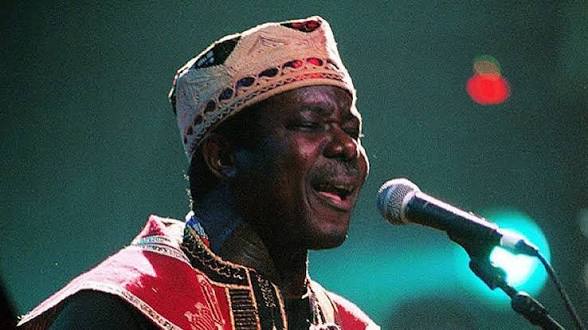
His performances were particularly distinctive. He incorporated electric guitars, talking drums, percussion and other instruments into elaborate arrangements while giving his bands a more energetic stage presence. His approach helped make jùjú performances not only listening experiences but also major live spectacles.
How King Sunny Ade Took Jùjú Music Global
By the early 1980s, King Sunny Ade had moved beyond being a major Nigerian star and had begun attracting international attention.
His albums Juju Music and Synchro System, released internationally through Mango Records, introduced wider audiences to his distinctive combination of Yoruba musical traditions, electric instrumentation, percussion and dance-oriented rhythms. His international breakthrough placed Nigerian jùjú music within the growing global world-music scene.
The Recording Academy records two Grammy nominations for King Sunny Ade. Synchro System was nominated for Best Ethnic or Traditional Folk Recording at the 26th Grammy Awards in 1984, while Odu received a Best World Music Album nomination at the 41st Grammy Awards in 1999.
Those nominations became part of a broader international recognition of Nigerian music and helped establish Ade among the African artists whose work was reaching audiences well beyond the continent.
King Sunny Ade’s Cultural Influence
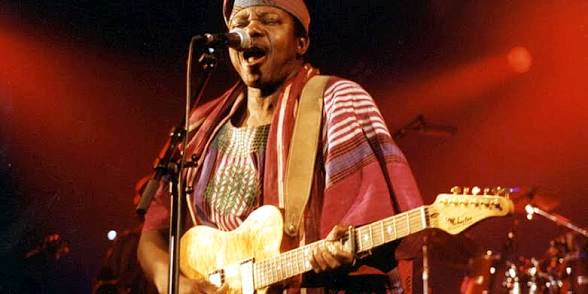
For many listeners, King Sunny Ade’s importance goes beyond his catalogue of songs. His music has remained closely connected to Yoruba cultural expression, with jùjú itself drawing on intricate rhythms, percussion, guitars, talking drums, call-and-response traditions and Yoruba oral culture.
That cultural connection has remained central to the way his legacy is discussed. President Tinubu, in his birthday message, said Ade’s creativity and long-standing dedication helped turn jùjú music into a globally recognised Nigerian cultural treasure.
The president also highlighted the musician’s distinctive use of guitars and talking drums, as well as his stage performances and innovative approach to music. According to Tinubu, Ade’s career demonstrated how Nigeria’s cultural heritage could reach audiences across borders.
Tributes Pour In as King Sunny Ade Celebrates 80
The 80th birthday has prompted celebrations across Nigeria, with fans taking to social media to honour the veteran musician.
Fellow music legend Ebenezer Obey-Fabiyi also celebrated Ade ahead of the milestone, describing their decades-long musical journeys and wishing his longtime colleague renewed strength and many more fruitful years.
The birthday celebrations have also included gatherings involving veteran musicians. A September 20 event in Lagos, tagged “Celebrating KSA @ 80,” brought together figures from Nigeria’s older generation of popular music, with Ebenezer Obey, Kollington Ayinla, Obesere and others among those associated with the celebration.
Other tributes have come from traditional and cultural figures, including the Elerinmo of Erinmo-Ijesa, who praised Ade’s influence across generations and borders.

A Legacy That Still Resonates
At 80, King Sunny Ade’s career represents a remarkable chapter in Nigeria’s musical history. He emerged during an era when indigenous sounds were competing for space in a rapidly changing entertainment industry and went on to become one of the artists most closely associated with taking Nigerian music to international audiences.
His journey also reflects the evolution of jùjú itself. Through his bands, recordings and performances, Ade helped give the genre a sound and stage identity that could connect traditional Nigerian musical elements with modern instrumentation and international listening habits.
Decades after his breakthrough, his name remains closely tied to jùjú music and Nigeria’s cultural identity.
As King Sunny Ade celebrates his 80th birthday, the tributes are therefore about more than reaching another milestone. They mark a career that has lasted for more than 60 years and continues to occupy an important place in the story of Nigerian and African music.