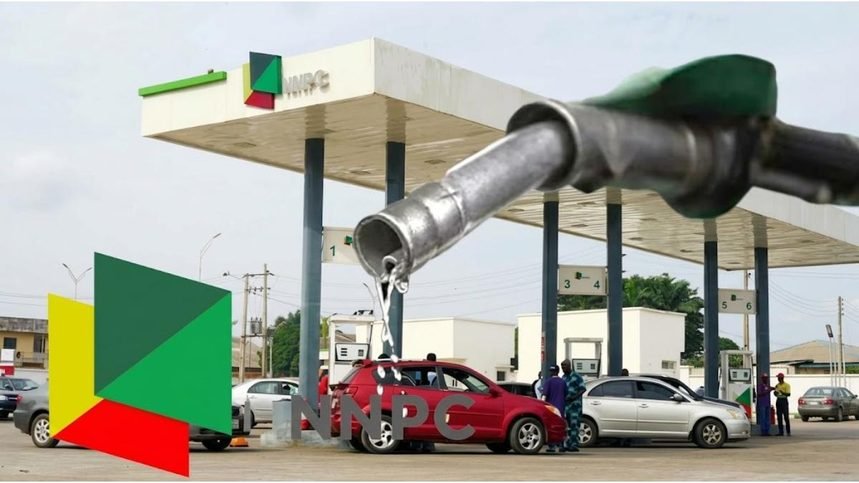
The state-owned oil company raised its premium motor spirit pump price on Friday, confirming a price swing that has moved in the same direction twice within seven days. No official explanation was given for the adjustment.
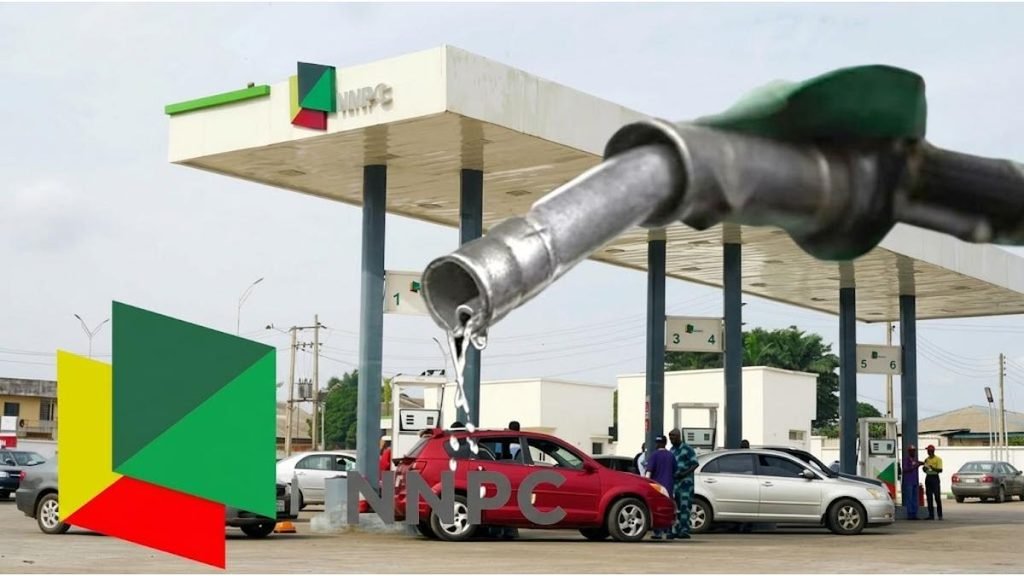
Pump attendants at multiple filling stations, who spoke on condition of anonymity, said the new price was communicated on Thursday and took effect at the pump on Friday. Attendants at stations in Lagos, Abuja, and Port Harcourt all reported receiving the same instruction from management. NNPCL had not issued a public statement on the reason for the increase as of the time of reporting.
The N35-per-litre jump brings the price back to exactly where it stood before Monday, when the company reversed an earlier increase and returned to N1,370 per litre. That reversal lasted less than a week.
Thursday’s announcement by Finance Minister Taiwo Oyedele of a proposed fixed petrol gantry price of N1,375 per litre ahead of the January 16, 2027 presidential election now sits at odds with Friday’s pump reality. Motorists are paying N30 per liter above that proposed ceiling.
Oyedele, who addressed a news conference in Abuja earlier in the month, said a price ceiling on the ex-gantry or landing cost of petrol was intended to smooth prices over time rather than suppress them. The ceiling, he said, “is neither a subsidy nor a price control.” He added that the measure formed part of a broader set of cost-of-living interventions under review by the Federal Executive Council.
But the gap between announced policy and actual pump prices has deepened the confusion at NNPCL filling stations. Attendants interviewed Friday were unable to explain the discrepancy between the government’s stated target and the price displayed on their dispensers.
The discount program, announced by the government for a 30-day period with priority for public transporters, was also absent at stations checked on Friday. Only customers able to access the NNPCL fuel app, according to an earlier company spokesperson response reported by the Nigerian Tribune, would receive a reduced rate of N1,339 per liter.
That condition effectively locks out millions of Nigerians without smartphone access or data to navigate the application. The National Bureau of Statistics estimated in its most recent report that fewer than 40 percent of Nigerians in rural areas have reliable internet access, underscoring how narrow the app-based discount channel remains. The full pump price of N1,405 per liter applies to everyone else.
Transport operators and commercial drivers, who were cited by Oyedele as the primary beneficiaries of the discount arrangement, continue to absorb the higher cost. Fares in major cities have not come down since the discount was announced.
Oyedele, at his earlier briefing, said the government expected transporters “to pass the savings on to passengers in lower fares.” No savings have reached the pump for most users as of Friday.
The price trajectory shows three movements within a single week: N1,370 at the start of the week, a brief return to that rate on Monday after a prior hike, and a confirmed return to N1,405 on Friday. Each cycle has left motorists and transport businesses absorbing the difference with no formal notice.
NNPCL has not released a public schedule for future price reviews or confirmed whether Friday’s price reflects a new floor. The company’s silence on the adjustment follows a pattern observed in previous price changes, where increases are implemented at the pump before any official communication.
The N1,375 gantry price proposed by the finance minister on Thursday is a separate figure from the pump price. The gap between the two, if the proposal holds, would represent the cost of transportation, margins, and other downstream charges added before the product reaches the consumer.
Petrol prices at NNPCL stations have now moved upward for the third time in recent weeks, and the disputed discount program has yet to produce a verified reduction in the price Nigerians pay at the pump.