
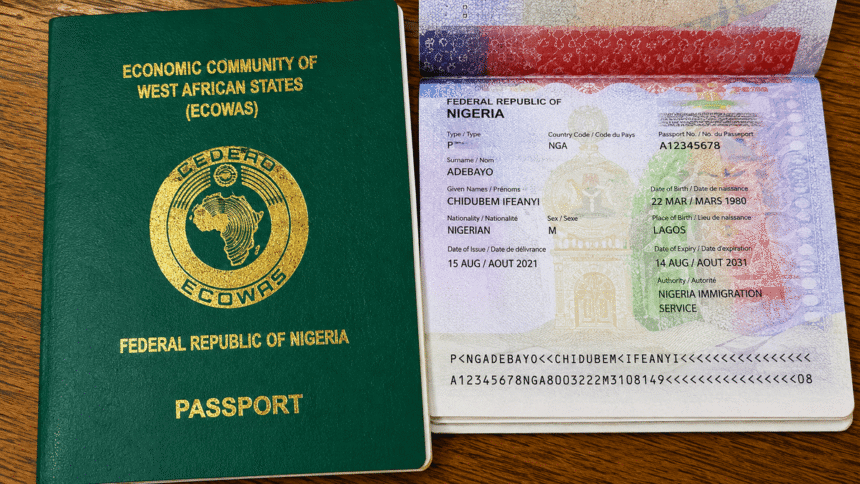
The US Department of State has outlined seven common reasons a visa application may be denied, ranging from missing documents to criminal history.
Applying for a United States visa does not guarantee approval, as every application is assessed based on requirements established under U.S. immigration law. The Department of State disclosed the grounds in a blog post published on its official website, reviewed on Saturday.
Visa applicants are generally required to attend an interview with a consular officer at a U.S. Embassy or Consulate, where their eligibility is assessed before a decision is made. The consular officer holds authority over whether an application proceeds to approval or refusal, and applicants are expected to be truthful and prepared during this process.
While most visa applications are approved, some are denied for reasons ranging from incomplete documentation to failure to meet immigration requirements or other grounds of ineligibility. The Department of State listed seven of the most common denial grounds in its blog post.
The first ground is insufficient information or supporting documents. A visa application may be refused if the consular officer does not have enough information to determine whether the applicant qualifies for the visa category being sought.

Applicants are expected to provide complete, accurate information and all required supporting documents. Missing, inconsistent, or unclear information may result in a denial, according to the Department of State’s published guidance.
The second ground is failure to qualify for the visa category. Every U.S. visa category carries specific eligibility requirements, and applicants seeking student, work, tourist, or other visas must demonstrate that they meet the conditions for that category. Failure to do so can lead to a refusal.
The third ground is inability to establish eligibility. An application may be denied if the applicant cannot provide sufficient evidence to support the purpose of the trip or prove eligibility under U.S. immigration law, the Department of State stated.

Criminal history is the fourth ground listed. Past or current involvement in certain criminal activities may make an applicant ineligible for a U.S. visa. The U.S. government considers criminal records and other relevant background information during the application review process.
Fifth on the list are drug-related offenses. Drug-related activities are among the grounds that may render an applicant ineligible for a visa, and individuals with a history of involvement in illegal drug activities may be refused under U.S. immigration law.
The sixth ground covers other grounds of inadmissibility or ineligibility. U.S. immigration law outlines several other reasons an applicant may be deemed ineligible, including specific security, legal, and immigration-related concerns identified during the review process, the Department of State noted.
The seventh and final ground is failure to qualify for a waiver. Some applicants found ineligible may be informed by a consular officer that they can apply for a waiver, but obtaining a waiver is not automatic and does not guarantee that a visa will ultimately be approved. The decision remains at the discretion of the reviewing authority.

On the question of next steps after a denial, the Department of State advised applicants whose visas are denied to carefully review the reason provided by the consular officer and determine whether they are eligible for a waiver or any other available remedy.
Visa applications are assessed individually, the Department of State stated, and applicants are encouraged to provide complete, truthful, and accurate information throughout the process. No single application is treated as a blanket case for any category of applicant.
The Department of State’s guidance applies across all visa categories, covering tourist, student, and work visas, among others. Consular officers conduct assessments at U.S. embassies and consulates in the applicant’s country before any decision is communicated.
The US visa denial reasons were confirmed in the Department of State blogpost, as reported by Punch correspondent Hannah Johnson on Saturday, August 1, 2026, drawing directly from the agency’s own published guidance on its official government website.