
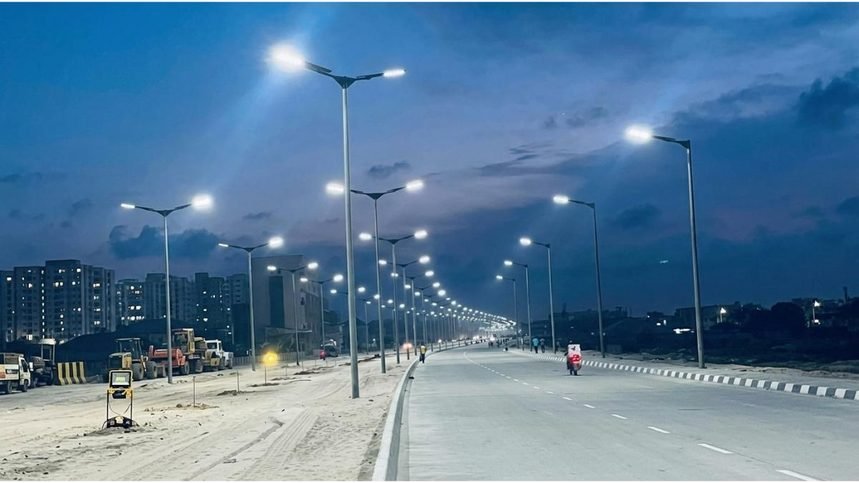
The controversy centers on the Federal Ministry of Works’ reported decision to realign the Lagos-Calabar Coastal Highway to pass through parts of Edo State, bypassing Ondo State’s approximately 100-kilometer coastline. The detour has triggered protests from lawyers, traditional rulers, and community groups who say the change strips their people of direct economic access.
The new alignment runs from Oke-Upare in Ondo State through Ovia North and Ovia West in Edo State to Gelegele before connecting to Warri in Delta State.
“It is not in dispute that Edo State does not have a single coastal community that abuts the sea,” Dr. Benson Enikuomehin said, questioning why the route should leave the Ondo coastline to accommodate a community farther inland.
The communities excluded from the revised alignment include Ugbonla, Ilowo, Ilepete, Obe-Enikanoselu, Obe-Rewoye, Ikorigho, Jinrinwo, Awoye, and Igho. These are not names in an administrative memo. They are fishing and oil-producing communities whose residents had anticipated the highway would connect them to broader economic networks.
Minister of Works David Umahi said the Federal Government has no regret over decisions taken on the Ondo section of the highway, disclosing this in Abuja on Wednesday during an update on the project and maintaining that the decisions were based on sound engineering considerations.
Umahi explained that the construction process involved removing pits of more than 10 meters deep and filling them with sharp sand before actual road construction could proceed.
He said President Tinubu had approved the continuation of the coastal highway through the existing East-West Road rather than creating a new alignment from Ondo into Edo. The minister described that decision, according to the source material, as “a wonderful engineering decision by Mr. President.”
The Ilaje Omuro Community Connect alleged that the route had been diverted from Oke-Upare inland through Ovia North and Ovia West in Edo State to Gelegele, approximately 10 to 20 kilometers from the sea, and that the alternative alignment could span between 130 and 190 kilometers, passing through swampy terrain that would require extensive bridge construction.
The group argued that the proposed inland route could increase construction costs, extend the distance covered, and undermine the original coastal objectives of the highway.
It also questioned why the terrain of Ilaje Local Government Area was being cited as a major obstacle when road projects had previously been undertaken in the area, specifically referencing construction along the Igbokoda-Ugbonla axis by the Ondo State Oil Producing Areas Development Commission.
Leaders from Ilaje communities in Ondo State and Itsekiri communities in Delta State agreed at a joint meeting in Lagos on Saturday, September 19, 2026, to work together to oppose the rerouting of the highway from the coastal corridor to inland communities.
The resolution called on the Itsekiri Nation to issue a statement rejecting what both groups described as an alteration of the original coastal alignment by the Federal Ministry of Works, insisting that the highway should retain its coastal character and pass through the coastal communities of Ondo and Delta states.
Senior Advocate of Nigeria Ebun-Olu Adegboruwa warned that diverting the road inland would defeat the core purpose of the coastal highway. His position tracks with the concerns of the Ilaje committee: that a road branded coastal but built inland is, functionally, a different project.
Umahi disclosed that Section One of the highway, covering 47.47 kilometers, had been fully completed and was ready for commissioning, while Section Two, covering 55 kilometers, would have its pavement completed by November.
Dr. Enikuomehin called on President Tinubu to intervene personally and review the alignment of the highway in Ondo State. That request has so far drawn no public response from the presidency. The Ministry of Works, through Umahi, has confirmed there are no plans to reverse the inland detour.
The minister described the Lagos-Calabar Coastal Highway as President Tinubu’s first legacy project, running from Victoria Island in Lagos through Ogun, Ondo, Edo, Delta, Bayelsa, Rivers, Akwa Ibom, and Cross River. For the communities of Ugbonla, Awoye, and Igho, a project that lists their state but skips their shoreline remains, on the ground, no project at all.