
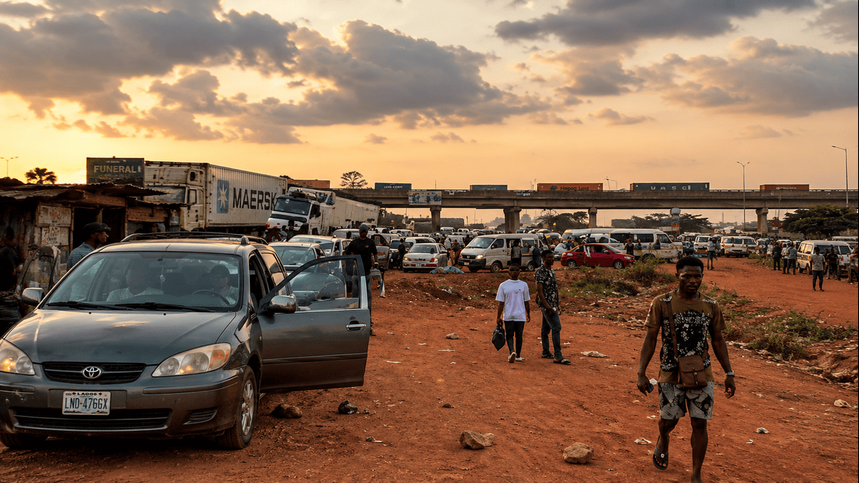
Heavy rain and deteriorating road sections have triggered days-long gridlock on Nigeria’s Benin-Edo Expressway, trapping commuters, vehicles, and an ambulance along the Benin bypass and the Agbor-Benin route and forcing travelers to abandon their cars and continue on foot.
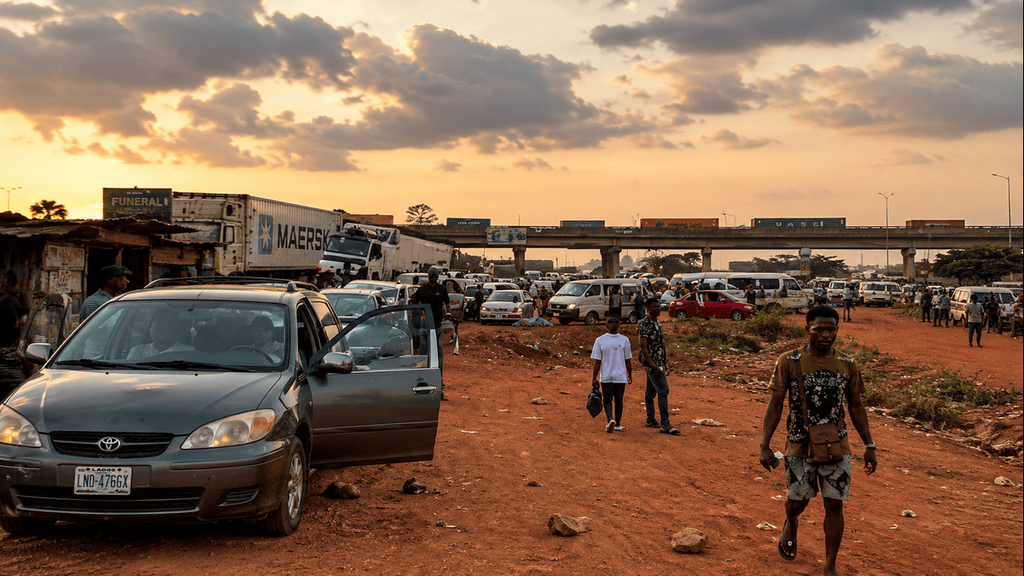
The gridlock, which stretched across multiple days, affected both the Benin bypass and the Agbor-Benin route, two key corridors that handle significant traffic volumes connecting communities across the region and linking travelers to broader destinations within Nigeria.
Videos circulating online showed stranded travelers voicing frustration at conditions on the expressway. The footage documented commuters walking away from stationary vehicles as rain continued to worsen the state of already dilapidated road sections along the affected corridors.
Among the concerns raised in the videos was the presence of an ambulance caught in the gridlock. Travelers expressed worry over the trapped emergency vehicle, highlighting the potential consequences of extended traffic immobility on roads that serve as critical transit routes for people and essential services.
The deterioration of the Benin bypass and the Agbor-Benin route has been attributed to a combination of factors, including potholes, mud accumulation, and poor drainage infrastructure. These conditions, compounded by heavy rainfall, routinely trap motorists for extended periods on the highway.
Commuters in the videos directed criticism at Minister of Works David Umahi, stating that the minister had prioritized the construction of new coastal highways over the repair of existing damaged roads. The criticism focused on the allocation of government attention and resources to new projects rather than maintenance of roads already in use.
Public anger over the Benin-Edo Expressway conditions reflects wider concerns about infrastructure maintenance on key Nigerian highways, where poor drainage systems, accumulated potholes, and heavy vehicle use combine with seasonal rainfall to create recurring gridlock situations affecting thousands of road users.
The Benin bypass forms part of a network of routes that connect travelers across Edo State and beyond. Sections of the bypass have been described in the source videos as dilapidated, with the road surface offering little resistance to water accumulation during periods of sustained rainfall.
The Agbor-Benin route, which links Delta and Edo states, has similarly been affected. Travelers on both corridors faced conditions that made vehicle movement either extremely slow or entirely impossible during the period of heaviest rain and road deterioration captured in the footage.
Commuters who spoke in the videos did not indicate when they expected the situation to improve. Their statements focused primarily on the duration of the gridlock, the physical state of the road surface, and their frustration at having no viable alternative to abandoning their vehicles and proceeding on foot.
The presence of an ambulance in the gridlock drew particular attention from road users featured in the footage. Emergency vehicles require unobstructed passage to fulfill their function, and travelers noted the ambulance’s inability to move freely through the stationary columns of traffic on the expressway.
Criticism of Minister Umahi centered on what travelers described as a mismatch between government infrastructure priorities and the needs of existing road users. The minister has been publicly associated with proposals for new coastal highway projects, which commuters contrasted with the unrepaired state of the Benin-Edo Expressway.
The pattern of deterioration on the Benin-Edo Expressway is not isolated. Travelers and observers have noted that poor drainage and potholes affect multiple key Nigerian highways during the rainy season, with conditions worsening as rainfall intensifies and road surfaces absorb sustained water damage over days.
No official response from the Federal Ministry of Works or from Minister Umahi’s office appeared in the source material reviewed for this report. The ministry had not issued a public statement addressing the Benin-Edo Expressway gridlock at the time the footage circulated.
The Benin-Edo Expressway gridlock, driven by heavy rain, dilapidated road sections, poor drainage, and the absence of timely repairs along the Agbor-Benin route and Benin bypass, continued to draw public attention to Nigeria’s broader highway maintenance challenges.