

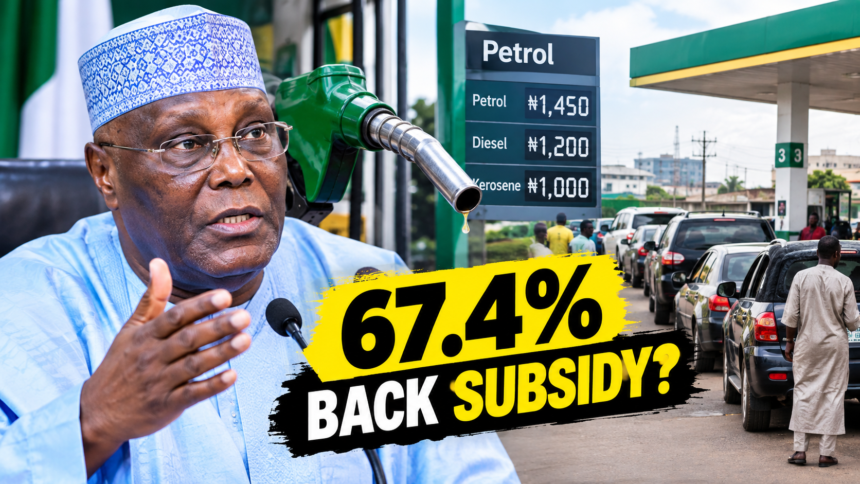
Petrol subsidy support has become a major issue after Atiku Abubakar cited an SBM Intelligence survey showing 67.4% of respondents favour restoring petrol subsidy amid concerns over fuel and transport costs.
Petrol subsidy is back at the centre of Nigeria’s economic debate after former Vice President Atiku Abubakar cited a new SBM Intelligence survey showing that 67.4 per cent of respondents support its restoration.
Atiku used the finding to argue that Nigerians are feeling the pressure of petrol prices and transportation costs and that the Federal Government should take steps to provide relief.
The figures come from the second wave of SBM Intelligence’s Nigeria 2027 Voter Sentiment Tracker, released on September 21, 2026. The research organisation surveyed 1,103 respondents across 12 states and the Federal Capital Territory, covering Nigeria’s six geopolitical zones.
SBM Intelligence survey puts petrol in focus
According to SBM Intelligence, petrol has emerged as one of the major issues shaping public sentiment ahead of the 2027 election.
The report said petrol was the second-most cited national problem, mentioned by 18.2 per cent of respondents. It also received the lowest performance rating among the issues tested for the current administration, with a score of 1.69 out of four.
On the question of the petrol subsidy policy, 67.4 per cent of respondents rejected the current approach and favoured restoration, while 19.2 per cent supported the existing position.
The survey also showed that concerns about petrol differed significantly according to where respondents lived.
Among rural respondents, 32.4 per cent identified petrol as their primary concern, compared with 11.7 per cent of urban respondents. Petrol was also the leading concern among respondents in the South-West, where it recorded 30.5 per cent, and the South-South, where it stood at 29.1 per cent.
These figures place fuel costs alongside broader concerns about the economy, jobs, insecurity and other issues Nigerians want addressed before the next presidential election.

Atiku links subsidy debate to rising living costs
Reacting to the findings, Atiku argued that the survey reflects the financial pressure facing households, workers, farmers and businesses.
In a statement issued by his Senior Special Assistant on Public Communication, Phrank Shaibu, Atiku said the survey showed that Nigerians were looking for relief from the effects of higher petrol and transportation costs.
He argued that the removal of petrol subsidy had contributed to higher transport expenses and increased pressure on household purchasing power.
Atiku also criticised the way the subsidy policy was implemented, saying the government should have put stronger measures in place to protect households, businesses and domestic production.
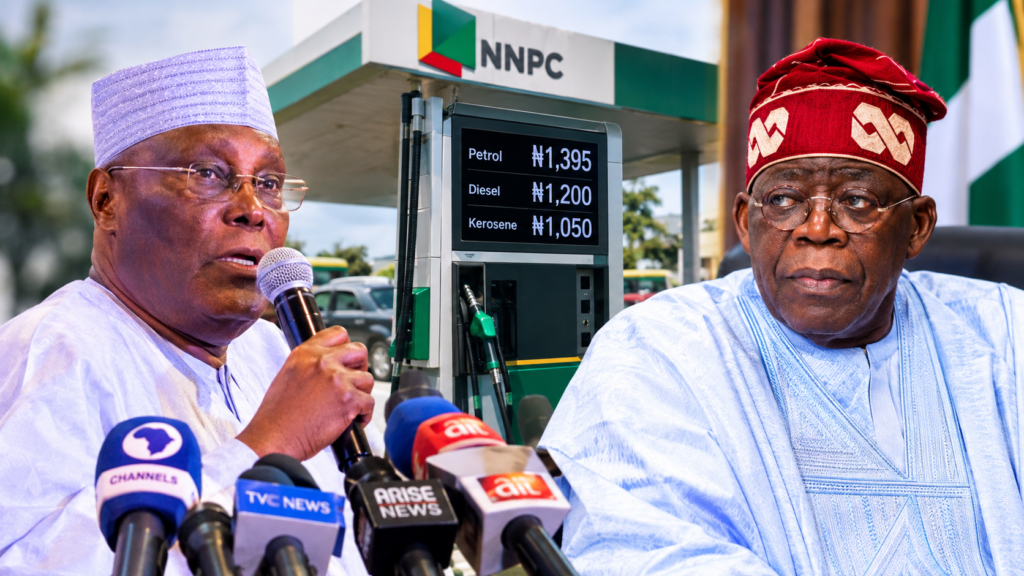
His comments come as petrol prices have risen above ₦1,400 per litre in several parts of the country. Premium Times reported that the recent increase followed an ₦85 adjustment in the gantry price of petrol by Dangote Petroleum Refinery, from ₦1,265 to ₦1,350 per litre, amid higher international crude oil prices.
Petrol prices remain a major economic concern

The latest debate is taking place within a deregulated petroleum market.
The Nigerian Midstream and Downstream Petroleum Regulatory Authority said on September 19 that it does not determine or fix petrol pump prices under the Petroleum Industry Act 2021.
The regulator pointed to Section 205(1) of the Act, which provides for wholesale and retail petroleum prices to be determined under unrestricted free-market conditions. It added that government intervention is subject to specific conditions and said no formal market-failure declaration had been made.
NMDPRA, however, acknowledged the financial pressure caused by recent petrol price increases and said it was working with other agencies to monitor issues including price-gouging, collusion, under-dispensing and compromised product quality.
The regulator also said it was working with the Nigeria Customs Service and security agencies to strengthen surveillance along border corridors and tackle the illegal diversion of petroleum products.
Atiku proposes a different subsidy model
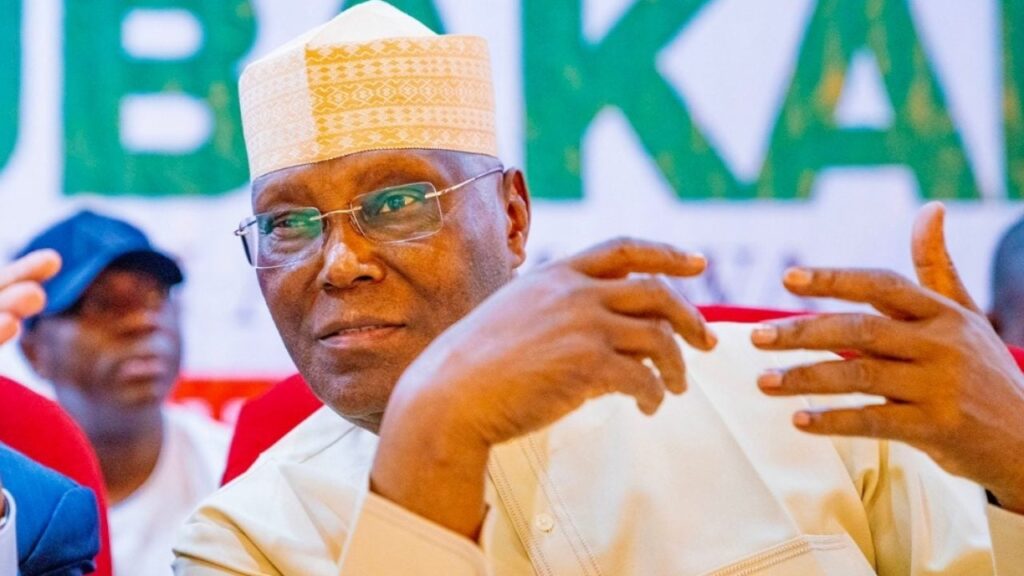
Atiku’s position is not simply a call to return to the previous subsidy arrangement.
He has proposed what he describes as a transparent production subsidy for petroleum products refined in Nigeria and sold domestically. Under his proposal, imported petroleum products would not qualify.
Atiku said the proposed system would have a fixed spending limit, require National Assembly approval and be subject to independent audits. He argued that such an approach could help reduce petrol prices while supporting local refining, employment and purchasing power.
The proposal has already drawn a response from the Presidency.
In a September 20 statement, the State House questioned the legal, fiscal and practical basis of Atiku’s proposal, pointing to the existing provisions of the Petroleum Industry Act governing petrol pricing. The Presidency also raised questions about how a new subsidy arrangement would avoid problems associated with the previous system.
The State House noted that President Bola Tinubu announced the removal of petrol subsidy in his May 29, 2023 inaugural address, arguing at the time that the subsidy regime had become too costly and that funds should instead be directed towards infrastructure, education, healthcare and jobs.
What the SBM survey actually shows

The SBM findings provide a snapshot of the views of the 1,103 people surveyed rather than a direct measure of every Nigerian’s position.
SBM Intelligence itself described the second wave as a survey of respondents across 12 states and the FCT, covering all six geopolitical zones. The findings show that petrol has become a significant political and economic issue, but the results also reveal major differences across regions and settlement types.
For Atiku, the 67.4 per cent figure strengthens his argument that government policy should focus more directly on reducing the pressure Nigerians face from fuel and transportation costs.
For the Federal Government, the debate remains tied to the broader question of how Nigeria can keep petrol affordable while maintaining a deregulated market and avoiding the fiscal and structural problems associated with the former subsidy regime.
As petrol prices continue to affect transportation and household expenses, the subsidy debate is likely to remain an important part of Nigeria’s economic and political conversation ahead of 2027.