

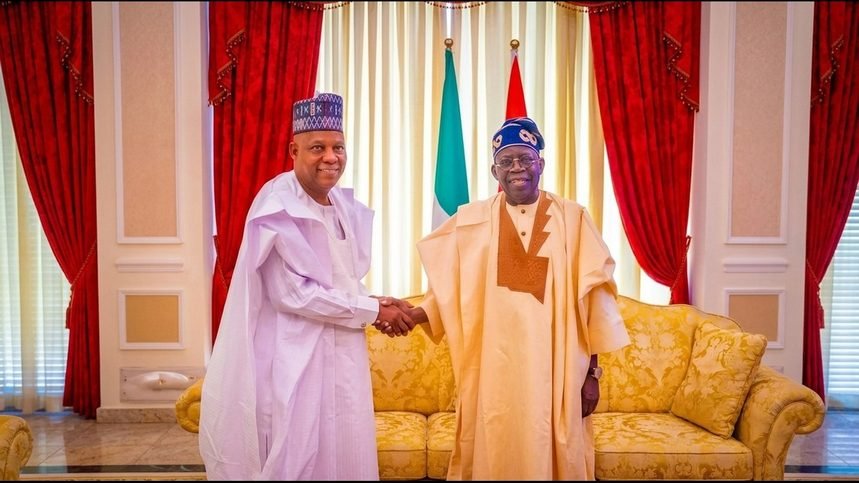
Vice-President Kashim Shettima urged Nigerians to be “generous” towards President Bola Tinubu, saying the president took difficult decisions to prevent the country’s economy from collapsing. That appeal, delivered in Lagos, landed the same week millions of Nigerians continue to manage compressed purchasing power and rising food prices across major urban markets.
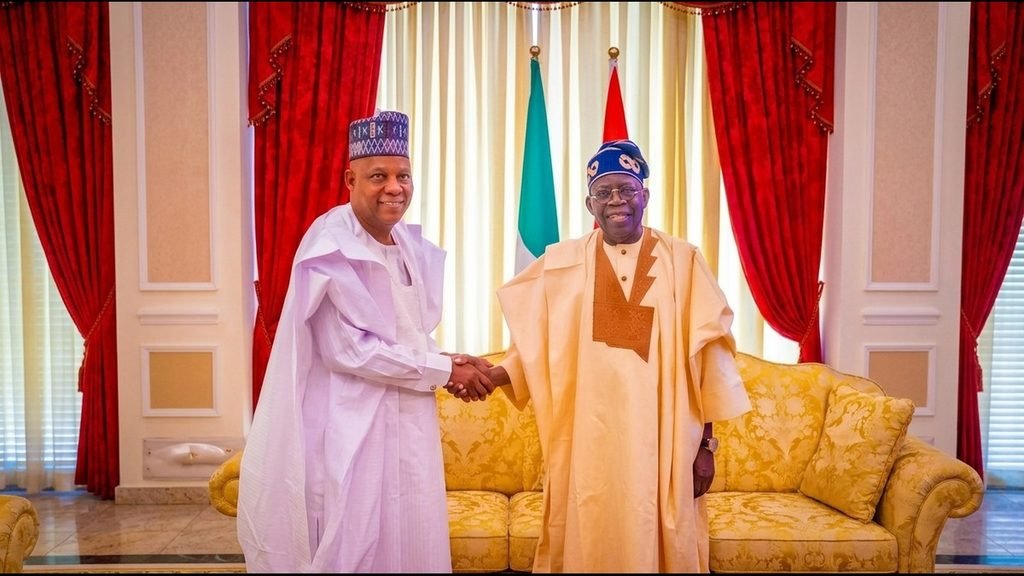
Shettima spoke in Lagos on Saturday after meeting with Tinubu, who returned to Nigeria a few days ago from his annual vacation. The vice-president, who confirmed he and the president were in regular contact throughout that period abroad, offered no timeline for when economic conditions would ease.
“It is absolutely essential that Nigerians need to be generous to this poor man,” he said. The phrase drew immediate attention online, with Nigerians pointing out that it was an unusual choice of words to describe a sitting head of state.
Defending the administration’s economic decisions, Shettima said Nigeria’s foreign reserves were below $3.9 billion when the Tinubu administration assumed office in 2023, describing the economy at the time as being on the verge of collapse, with insufficient reserves to import fuel for a month.
He said Tinubu had the “courage and conviction” to take what he described as far-reaching decisions, including the removal of the petrol subsidy and the realignment of the multiple exchange-rate system. Both moves triggered a sharp rise in the cost of transportation, food, and manufacturing inputs that Nigerians felt within days of their introduction.
Shettima said the economy was “teetering on the verge of collapse” when Tinubu assumed office. “He saved the economy,” the vice-president said. “We were on the road to Caracas; he saved our economy; he saved the nation from falling into pieces.”
Shettima acknowledged the economic hardship faced by Nigerians, saying the government was working on measures to reduce the impact on citizens. No date was given for when those measures would produce measurable change in household incomes or prices.
“We appreciate the pains Nigerians are going through, but tough times do not last forever; tough people do,” he said. That framing placed the burden of endurance on citizens rather than on the administration’s policy timetable.
Shettima announced planned interventions, including e-logistics services in the north-east and 10,600 electric tricycles, as well as 300 buses and e-taxis. The vice-president did not specify when the buses and taxis would begin operating or which cities would receive them first.
The vice-president said he and the president remained in regular contact throughout Tinubu’s time abroad.
“We are quite thrilled that he’s back on the beat. Advances in science and technology have made it possible to really have impactful leadership wherever one might find himself,” Shettima said.
Shettima said, “The president has empathy, a lot of empathy for the common man,” and described the Nigerian Education Loan Fund as “a masterstroke aimed at assisting students of limited means.” “NELFUND has faced questions since its launch over disbursement delays and the volume of eligible students actually reached, with student unions at several federal universities publicly reporting that members had not received approved funds.
Shettima said Tinubu had “empathy for the common man” and that the administration was continuing to roll out programs. The vice-president offered no specific data on how many Nigerians had benefited from any intervention program to date.
On the political calendar, Shettima said Nigerians should appreciate what he described as the difficult decisions taken by Tinubu since assuming office, particularly the removal of petrol subsidy and the unification of multiple exchange rates. Both remain the most contested policy decisions of the current administration ahead of the 2027 election cycle.
“The government is rolling out programs and projects to assuage the pains of our people,” Shettima confirmed. What those programs will cost, when they will be fully deployed, and how many Nigerians they will reach were questions the vice-president left unanswered on Saturday in Lagos.