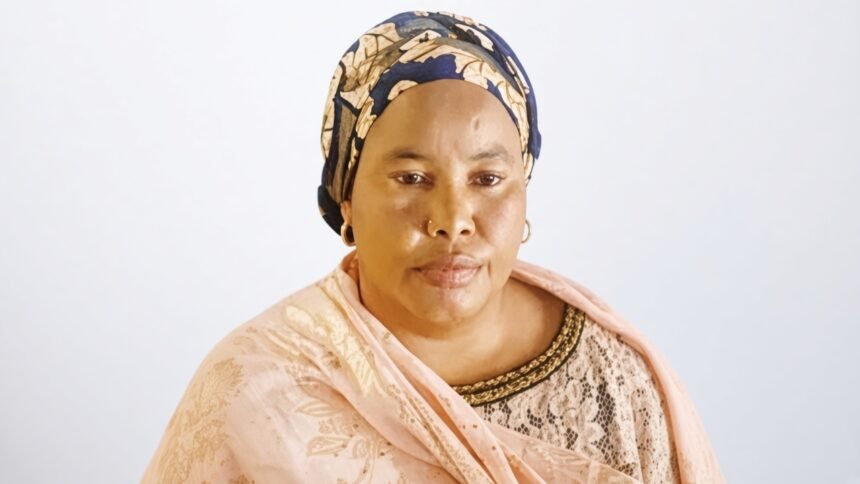
A Borno State High Court sitting in Maiduguri has sentenced a 37-year-old woman, Fatima Sanda, to two years’ imprisonment for procuring a 16-year-old girl for sexual exploitation and ordered her to pay ₦500,000 in compensation to the victim.
The conviction was secured by the National Agency for the Prohibition of Trafficking in Persons on Monday, according to a statement published by the agency on its Facebook page.
The court, presided over by Justice Aisha M. Ndume at Court 10 of the Borno State High Court, found Sanda guilty of procuring the minor and subjecting her to sexual exploitation by other persons, contrary to Section 16(1) of the Trafficking in Persons (Prohibition) Enforcement and Administration Act, 2015, as amended.
Announcing the conviction, NAPTIP said the court imposed a custodial sentence and ordered financial compensation for the victim, although the agency did not disclose further details about the circumstances surrounding the offence.
The agency stated, “A High Court of Justice, Court 10, sitting in Maiduguri, Borno State, presided over by Hon. Justice Aisha M. Ndume, has convicted Fatima Sanda (37, female) for procuring a 16-year-old female victim and subjecting her to sexual exploitation by other persons, contrary to Section 16(1) of the Trafficking in Persons (Prohibition) Enforcement and Administration Act, 2015, as amended.”
It added, “She was sentenced to two years’ imprisonment and ordered to pay ₦500,000 in compensation to the victim.”
The compensation order provides for financial redress in addition to the prison sentence. However, NAPTIP did not state when the payment would be made, whether the money had been paid or what arrangements had been made to support the victim following the conviction.
The case highlights the legal consequences of procuring children for sexual exploitation and the role of the courts in enforcing laws designed to protect minors from abuse.
Under the Trafficking in Persons (Prohibition) Enforcement and Administration Act, 2015, as amended, offences involving the procurement of minors for sexual exploitation are subject to criminal sanctions. The law provides a framework for prosecuting trafficking-related offences and protecting people exposed to exploitation.
NAPTIP is responsible for coordinating Nigeria’s efforts to prevent human trafficking, investigate suspected cases, prosecute offenders and support victims. The agency works with security organisations, state authorities and other relevant institutions to identify and respond to trafficking and exploitation.
In a separate case, the agency reported that a Niger State High Court sitting in Minna had sentenced a 27-year-old man, Hussaini Suleiman, to seven years’ imprisonment for sexually assaulting an eight-year-old girl at his residence behind the Prison Quarters in Minna.
According to NAPTIP, the case was referred to its Niger State Command by the state command of the Nigeria Security and Civil Defence Corps on April 16, 2026, following a report of the assault.
The agency said Suleiman pleaded guilty to the offence before he was arraigned at Court 8 of the Niger State High Court, Minna, on September 10, 2026.
“The convict admitted to committing the offence and was arraigned before Court 8 of the Niger State High Court, Minna, on 10th September 2026,” NAPTIP said.
The two cases involve separate offences and judicial proceedings, but both concern the protection of minors from sexual exploitation and abuse. The sentences demonstrate the use of criminal prosecution to hold offenders accountable, while the compensation order in the Borno case provides an additional form of redress for the victim.
NAPTIP did not provide further details about the victims’ current welfare or the availability of support services following the court decisions.
West Trybe reports that the convictions underscore the importance of reporting suspected offences against children, conducting thorough investigations and ensuring that cases are prosecuted before competent courts. Continued collaboration among law enforcement agencies, judicial authorities and victim-support organisations remains essential to protecting vulnerable children and helping survivors access appropriate care and justice.