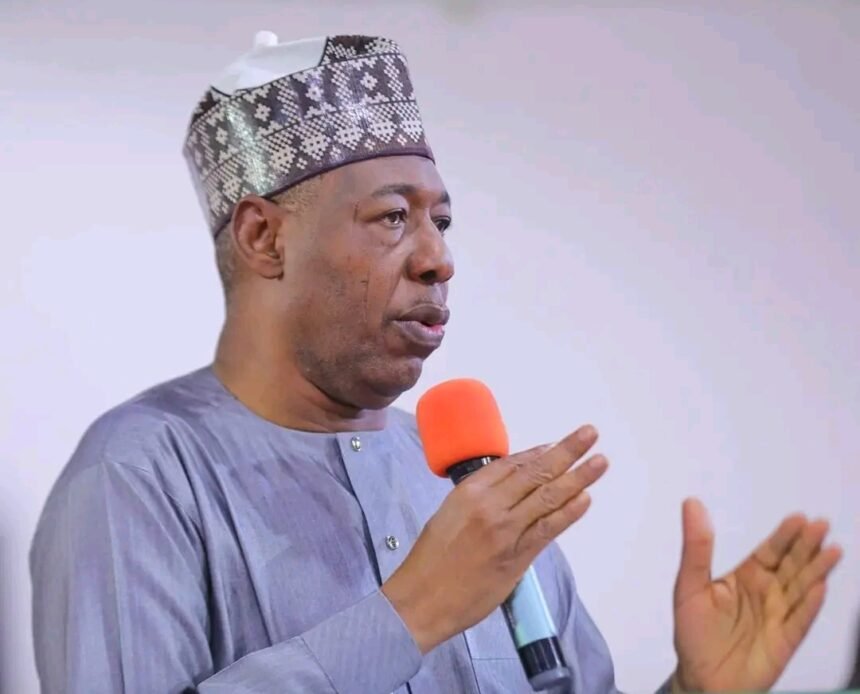
Borno State Governor, Babagana Umara Zulum, has revealed that the state lost electrical wires and other public infrastructure worth billions of naira to metal scavengers, locally known as Ajakuta, citing the losses and security threats as reasons for banning the scrap metal trade.
Zulum disclosed this on Saturday while addressing scrap metal operators, urging them to submit proposals on how they could continue their businesses without contributing to insecurity or damaging public infrastructure.
The governor said the restriction was introduced in the overall interest of Borno State and was not intended to deprive legitimate operators of their livelihoods.
He stressed that the government had no personal interest in stopping their businesses, adding that the decision was driven by concerns over the destruction of public assets and the security risks associated with metal scavenging.
“It is deeply concerning to me if one person loses his livelihood for whatever reason in Borno; believe me, there is nothing I stand to gain from banning scrap metal trade rather than addressing the serious security concerns associated with your activities,” Zulum said.
The governor cited the loss of electrical wires from a major distribution line connecting Damaturu in Yobe State to Maiduguri, the Borno State capital, as an example of the damage caused by scavenging activities.
“We spent more than N3 billion to connect an electricity distribution line from Damaturu to Maiduguri, but unfortunately we lost all the wires to the metal scavenging activities,” he said.
The loss, according to the governor, represented a significant setback to infrastructure investment aimed at improving electricity distribution in the state.
Zulum also raised concerns about the safety of scavengers operating in areas where security conditions remained fragile, saying hundreds of operators had reportedly been killed while searching for metals in villages considered unsafe for civilian activities.
“Before the ban, hundreds of your members were killed in the process of scavenging for metals in the villages that are not yet safe for civilian activities,” he said.
The governor’s remarks highlighted the competing concerns surrounding the scrap metal trade in a state that has faced prolonged insecurity, with the government seeking to protect infrastructure while also considering the livelihoods of people engaged in legitimate recycling and metal collection.
Zulum further alleged that security intelligence indicated that insurgents were using scrap metal dealers as channels to sell looted materials.
“We have security intelligence that even the insurgents use your platforms to sell looted metals. So, no responsible government will ignore such intelligence just to be politically correct,” he said.
The allegation underscores the government’s concern that the scrap metal market could be exploited to dispose of stolen public property and materials obtained through criminal activities. However, the governor did not publicly provide details of the intelligence or identify specific operators allegedly involved.
Despite defending the ban, Zulum acknowledged the economic implications for operators whose businesses depended on collecting, buying and selling scrap metals.
He urged them to develop proposals for a system that would allow legitimate businesses to operate without facilitating insecurity, the sale of looted materials or the destruction of public infrastructure.
As part of efforts to ease the effects of the restriction, the governor granted a waiver allowing operators to evacuate stocks accumulated before the ban at designated locations.
The concession provides an opportunity for businesses with existing stock to move their materials under the conditions set by the government, although details of the locations, duration and procedures for the exercise were not provided.
The development highlights the challenge facing authorities in balancing economic activities with the protection of public assets and security in communities affected by conflict. Scrap metal trading can support livelihoods and recycling, but weak oversight may also create opportunities for the disposal of stolen infrastructure.
West Trybe reports that Borno’s losses, including the reported destruction of electrical wires on a project costing more than ₦3bn, have intensified scrutiny of the scrap metal trade and its regulation. The effectiveness of the ban will depend on enforcement against criminal networks, protection of vulnerable communities and the establishment of clear conditions under which legitimate operators can resume business without undermining security or public infrastructure.