

Nigerian singer Davido has disclosed how the Adeleke family selected his uncle Ademola Adeleke to become Osun State governor, describing a process rooted in family discussion and a political tradition stretching from his grandfather to multiple uncles currently holding public office.
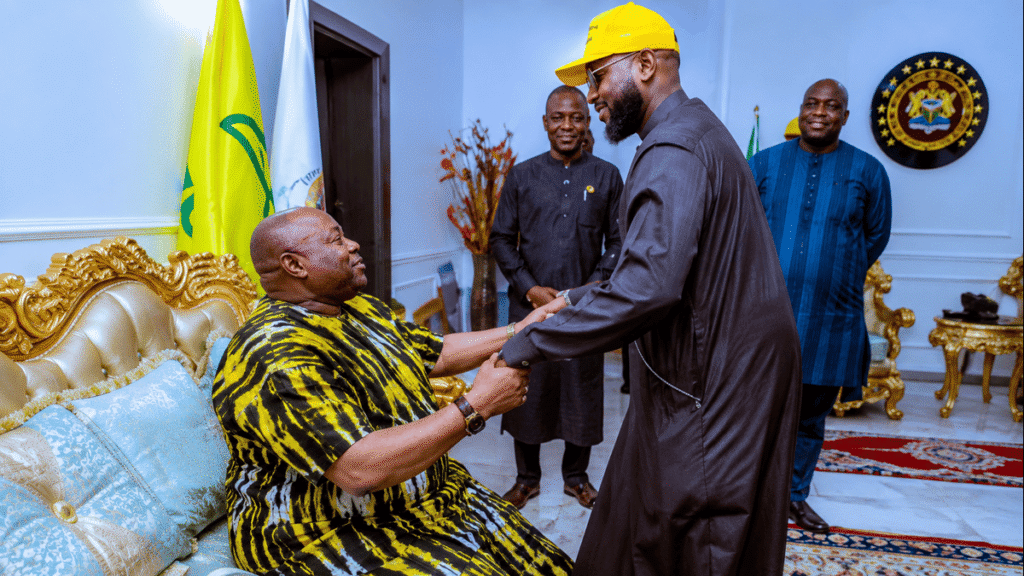
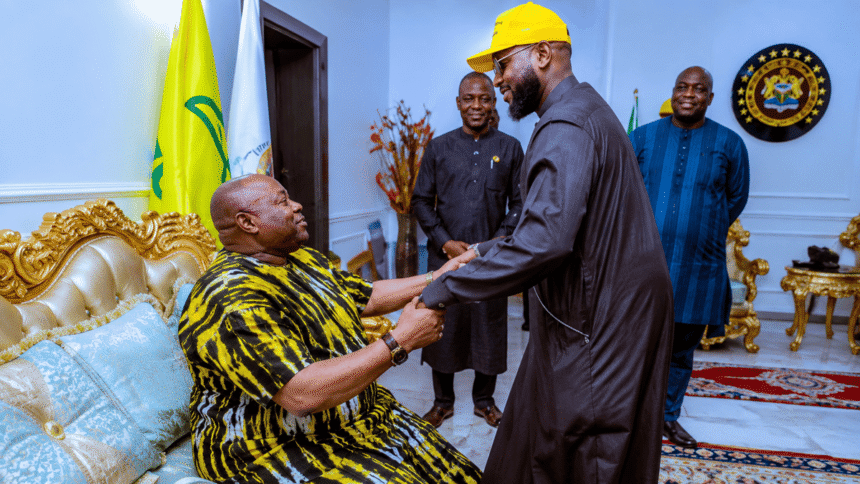
In a video that circulated widely, Davido described how the Adeleke family held discussions and chose Ademola Adeleke to succeed his brother Isiaka Adeleke as governor of Osun State, noting that politics runs deep in their blood across generations of the family.
Davido stated that the political tradition in the Adeleke family began with his grandfather, who served as a senator, and has continued through uncles who have held positions of power, presenting the family’s political involvement as a multi-generational pattern rather than a recent development.
The singer described the succession as a deliberate family decision, explaining that after the death of Isiaka Adeleke, who previously held the governorship, family members discussed among themselves and settled on Ademola Adeleke as the candidate to carry the family’s political banner forward in Osun State.

Ademola Adeleke, running on the Accord Party platform, secured re-election as Osun State governor on Saturday, defeating the All Progressives Congress candidate with 511,067 votes against 444,815 votes, a margin of 66,252 votes in a contest that drew significant public attention across Nigeria.
The election result confirmed Adeleke’s hold on the Osun governorship seat, a position that the Adeleke family has now occupied across two separate tenures, with Isiaka Adeleke having previously served as governor before his death and Ademola Adeleke subsequently winning the seat in his own right.
Public reactions to Davido’s video divided sharply, with one segment of Nigerians describing the Adeleke family’s control over the Osun governorship as a family monopoly, using the word “monarchy” to characterize what they viewed as a dynastic grip on the political leadership of the state.
A separate group of Nigerians pushed back against that characterization, describing the Adeleke family’s cohesion and collective approach to politics as a rare example of family unity in Nigerian public life, framing their coordination as a positive feature rather than a structural problem for democratic governance.

The split in public opinion reflected broader debates in Nigeria about political families, the influence of lineage in electoral contests, and whether coordinated family participation in governance constitutes a healthy form of political organization or an obstacle to broader democratic participation and competition.
Davido’s disclosure placed the family’s political decision-making in plain view, describing internal conversations that typically occur away from public scrutiny, and his account traced the origins of Adeleke political involvement to his grandfather’s tenure as a senator, establishing the family’s political roots as generational.
The Accord Party’s candidate secured the governorship seat in a two-candidate race at the top, with the All Progressives Congress finishing second at 444,815 votes and no other party mounting a serious challenge to the margin Adeleke built across the state’s local government areas on Saturday.
Davido’s account, delivered in video form, did not present the family’s political coordination as unusual from his perspective, describing it instead as a natural extension of a dynasty that has embedded itself in Osun State politics from the level of the federal senate down to the state executive.
Critics who used the word “monarchy” to describe the Adeleke family’s political arrangements focused their concern on the pattern of succession, pointing to the movement of the governorship from one Adeleke to another as evidence of concentrated political power within a single family unit in Osun State.
Those who praised the family’s approach pointed to unity as a rare quality in Nigerian political circles, where family and coalition loyalty can be difficult to sustain across election cycles, and characterized the Adeleke model as a demonstration of organized, disciplined political engagement within a democratic framework.
Ademola Adeleke’s re-election on Saturday, confirmed by the Independent National Electoral Commission returning officer, now extends Adeleke family involvement in Osun State governance into another term, keeping the governorship seat within the family lineage that Davido described as defined by politics in its bloodline.