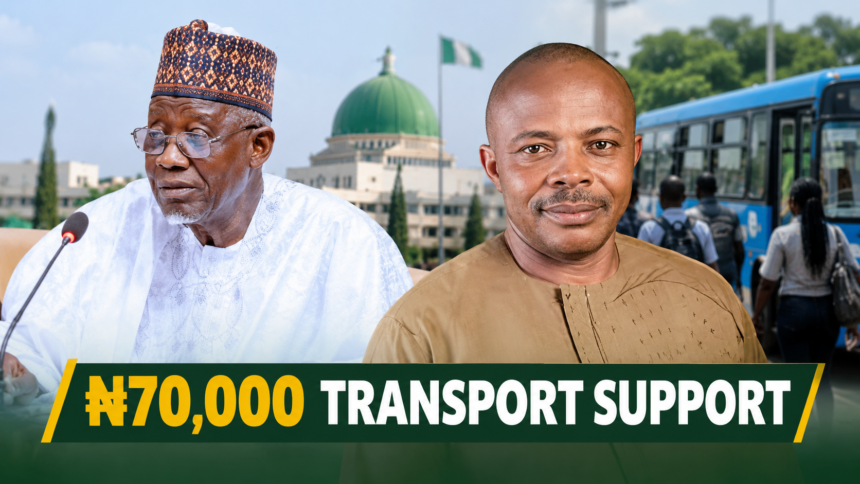
The Federal Government has approved a ₦70,000 transport intervention for public-service workers for six months, beginning in November 2026, following renewed negotiations with the Nigeria Labour Congress (NLC) over rising living costs and outstanding workers’ entitlements.
The agreement was reached on Tuesday, October 27, during a conciliation meeting convened by the Federal Ministry of Labour and Employment in Abuja. The discussions also produced commitments on outstanding allowances, health workers’ arrears and renewed negotiations over the national minimum wage.
FG Approves ₦70,000 Transport Support From November
Under the agreement, the Federal Government will provide ₦70,000 in transport support across public-service levels for six months, starting in November 2026.
The Federal Ministry of Labour and Employment confirmed the decision in a statement issued after the meeting with the NLC leadership.
The statement said the Federal Government would pay a transport intervention of ₦70,000 “across all levels for a period of six (6) months, commencing from November 2026.”
The intervention is intended to help workers cope with the financial pressure associated with transportation and other living expenses.
However, the agreement does not specify the day payments will begin, whether workers will receive the money at the same time as their salaries or how the disbursement will be administered.
These details will be important in determining when eligible workers can expect to receive the support.
The agreement also calls on state and local governments to participate in the intervention process. This is an appeal for their involvement, not confirmation that every state and local government has adopted the arrangement.
Why the Federal Government Agreed to the Allowance
The decision followed renewed pressure from organised labour over workers’ welfare, rising living costs, petrol prices and outstanding agreements with the government.
The October 27 meeting was a follow-up to an earlier conciliation session held on October 22 to address concerns raised by the NLC.
The labour movement had pushed for action on several issues, including the cost of petrol, workers’ earnings, tax relief and unpaid entitlements.
The transport intervention forms part of the government’s response to those demands. However, the agreement does not announce a new petrol price or establish that transportation costs will fall.
Instead, the approved support is a financial intervention intended to ease some of the pressure on workers.
The latest agreement represents progress on one of labour’s demands, although other issues still require further discussions or administrative action.
FG Approves Payment of Outstanding Allowances
Beyond the transport intervention, the Federal Government approved the payment of outstanding peculiar allowance arrears, with effect from May 1, 2026.
According to the ministry’s statement, payments are scheduled to begin in November and will be made in three equal monthly instalments.
The agreement does not specify the total amount of arrears involved or provide a breakdown showing how much individual workers will receive.
The parties also addressed outstanding allowances owed to health workers.
The government agreed that 19 months of health workers’ allowance arrears would be cleared within three months, beginning in December 2026.
The ministry stated that the arrears would be redeemed within three months from December.
Minimum Wage Negotiations Remain Unresolved
Despite the agreement on transport support and outstanding allowances, the government and the NLC did not reach an agreement on the effective date for implementing the national minimum wage arrangements under discussion.
Both sides agreed to constitute a Minimum Wage Negotiation Committee and begin meetings immediately.
The committee is expected to provide a platform for further discussions between the relevant parties.
However, the agreement does not announce a new minimum wage amount or establish a new implementation date.
The distinction matters because the ₦70,000 transport intervention is separate from the national minimum wage. The transport support should not be interpreted as an increase in workers’ basic salaries.
The unresolved implementation date means workers will have to await further developments from the negotiations.
Other Workers’ Welfare Issues Still Pending
The meeting also addressed proposed adjustments to the Consolidated Health Salary Structure (CONHESS), hazard allowances for agricultural officers and tax relief for workers.
On CONHESS, the National Salaries, Incomes and Wages Commission is expected to update the cost implications of the proposed adjustment within three weeks. The assessment will help the Presidential Committee on Salaries consider the matter.
For agricultural officers, the Ministry of Agriculture and Food Security had submitted beneficiary details and cost estimates for verification. The commission is expected to complete the verification within two weeks before issuing an implementation template.
The workers’ tax-relief request is to be referred to the National Executive Council for further consideration.
These issues have not all reached the payment stage. Some remain subject to verification, financial assessment or further decisions.
The government and labour representatives also agreed to reconvene after one month to review progress on implementing the resolutions.
What Workers Should Know About the ₦70,000 Allowance
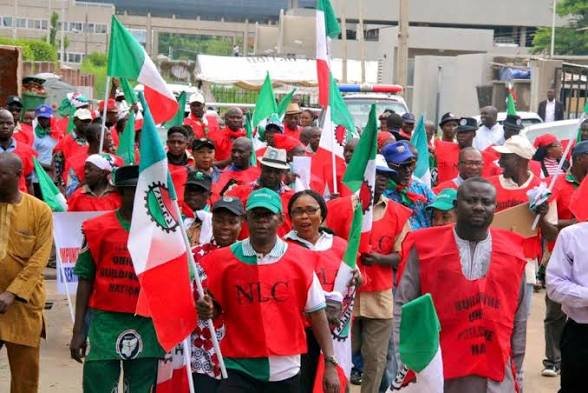
The key development is that the Federal Government has agreed to a six-month transport intervention worth ₦70,000 across public-service levels, beginning in November 2026.
However, the agreement does not provide a detailed payment timetable or explain the administrative process for disbursement. It also urges state and local governments to participate without confirming that all of them have adopted the intervention.
Workers should therefore distinguish between the agreement reached at the conciliation meeting and the practical arrangements required to deliver the money.
The next important developments will be clarification of the payment process, implementation of the approved allowance and progress on the outstanding wage and welfare issues.
For now, the agreement marks a step towards addressing workers’ demands, but its practical impact will depend on how the approved measures are implemented.