

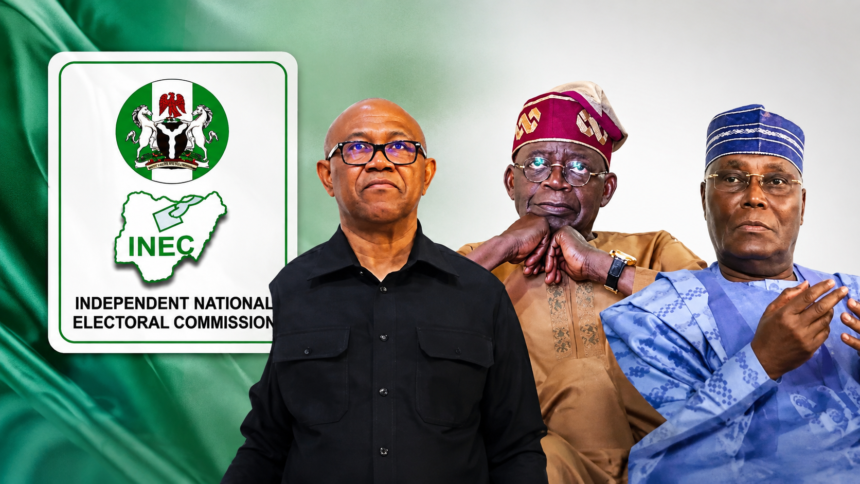
The Independent National Electoral Commission has begun publishing the personal particulars and academic credentials of aspirants for the 2027 general elections, in a move that is already reshaping the conversation around transparency, eligibility, and public trust ahead of Nigeria’s next presidential poll.
The display, which covers presidential and National Assembly candidates, includes submissions by incumbent President Bola Tinubu, former Vice President Atiku Abubakar, and Nigeria Democratic Congress presidential candidate Peter Obi. It comes amid renewed legal challenges and growing public demand for accountability in the nomination process.
What INEC Is Publishing And Why Now
Under the Electoral Act 2022, INEC is required to display in each constituency the particulars of candidates who emerge from party primaries. For 2027, the Commission has expanded the exercise to include scanned copies of academic certificates and other credentials submitted on Form EC9.The goal, according to electoral stakeholders, is to allow citizens, civil society groups, and political opponents to scrutinize claims made by aspirants before the final list of candidates is published.
Peter Obi has been at the forefront of calling for this transparency. In statements made in recent months, the NDC presidential candidate urged INEC to publish the academic certificates of all candidates seeking elective office ahead of 2027.
He argued that making credentials public would promote accountability and allow Nigerians to properly assess those seeking public office. Obi also proposed that candidates submit certificates immediately after party primaries, at least six months before the election, with details of schools attended, courses studied, and years of study made public for verification within 90 days.
The Candidates Under The Spotlight
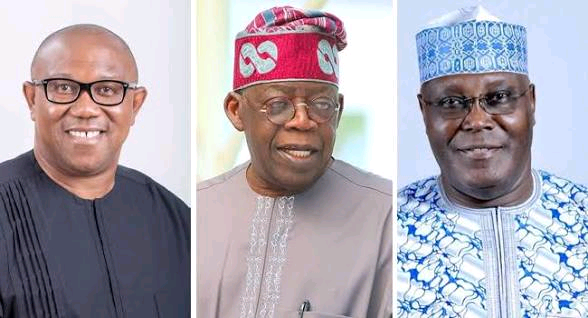
President Bola Tinubu
The President’s credentials have again become a focal point. A group, the Incorporated Trustees of the Centre for Reforms and Public Advocacy, filed suit FHC/KN/CS/312/2026 at the Federal High Court in Kano on June 26, 2026, seeking to disqualify Tinubu from the 2027 race over allegations that he submitted forged academic and NYSC certificates to INEC.
The petitioners referenced documents released in 2023 during a U.S. discovery case, In re: Application of Atiku Abubakar (No. 23 CV 05099), which compelled Chicago State University to release Tinubu’s academic records. They allege discrepancies including claims of attending Government College Lagos in 1970, four years before the school was established, and the presentation of a forged Cambridge GCE certificate. The group has asked the court to declare the CSU certificate a forgery, order INEC to disqualify Tinubu, and restrain the Commission from accepting his nomination.
Atiku Abubakar
Atiku’s educational background has drawn less controversy than his rivals. Records show he attended the School of Hygiene in Kano, completed a law diploma programme affiliated with Ahmadu Bello University, and later obtained a master’s degree in International Relations from Anglia Ruskin University. He was the applicant in the 2023 U.S. case that led to the release of Tinubu’s CSU records.
Peter Obi
Obi holds a degree in Philosophy from the University of Nigeria and has completed executive programmes at Harvard Business School and Saïd Business School. His academic records have generally been accepted as authentic, though minor discrepancies raised by critics have not escalated into legal challenges. Obi himself is now pushing for universal publication and verification of credentials to restore confidence in the system.
Legal and Constitutional Stakes
The petitions against Tinubu cite Section 137(1)(j) of the 1999 Constitution, which bars anyone who has presented a forged certificate to INEC from contesting elections. Section 285(14) also gives INEC powers to disqualify ineligible candidates. Obi has warned that certificate forgery is treated as a serious criminal offense in many democracies, citing Indonesia where candidates with fake documents are immediately disqualified and prosecuted. He said Nigeria cannot continue to overlook such issues if it wants credible elections.
Public Reaction and What It Means For 2027
The publication of credentials has triggered fresh debate online and offline. Supporters of transparency say early access allows voters and journalists to verify claims before campaigns begin in earnest. Critics argue the process could be weaponized for political attacks. Analysts note that the controversy demonstrates how documentation can become a defining issue in competitive democracies. With Tinubu’s administration facing questions over economic hardship and insecurity, Atiku weighing another bid despite age concerns, and Obi building a new platform, the credential display adds another layer to an already charged race.
INEC has not announced a specific portal for the 2027 display, but officials say the documents will be pasted at Commission offices and uploaded in line with the law. The Commission has also been urged to go beyond display and actively verify certificates submitted by candidates from the presidency to local government councillors.
The Road Ahead
For now, the publication is procedural, but its impact could be political. If the courts uphold any disqualification petitions, or if INEC finds discrepancies during verification, the 2027 ballot could look very different.
What is clear is that Nigerians will have more information earlier in the cycle. Whether that translates to greater trust in the outcome will depend on how thoroughly INEC investigates complaints, and how candidates respond to public scrutiny of their records.
As the 2027 countdown begins, one thing is certain: in Nigerian politics, a certificate is no longer just paper. It is evidence, and now, it is public.