

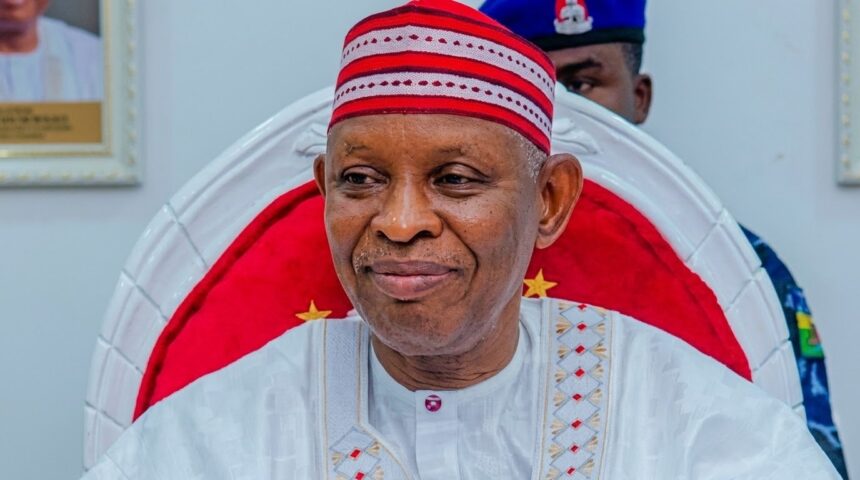
Kano State Governor Abba Kabir Yusuf has approved the release of ₦235.1m for the implementation of promotions for 18,984 teaching and non-teaching staff under the State Universal Basic Education Board.
The approval covers promotion exercises for January and July 2026 and affects eligible personnel serving across the state’s 44 Local Government Education Authorities.
The funds, totalling ₦235,116,339.09, are expected to cover the salary adjustments arising from the approved promotions and provide financial effect to the career advancement of the affected education workers.
The Executive Chairman of SUBEB, Yusuf Kabir, had requested the release of the funds in a letter dated September 2, 2026, following the completion of the processes required for the two promotion cycles.
According to SUBEB, the affected personnel comprise teaching and non-teaching staff whose eligibility for promotion had been assessed and processed, alongside the corresponding calculations for their new salary levels.
The Board said timely implementation of promotions was important to staff motivation, career development, capacity building and improved service delivery across the basic education sector.
The latest approval is also significant because of the size of Kano’s basic education workforce. SUBEB said it has approximately 60,000 teaching and non-teaching personnel deployed across the state’s 44 LGEAs, making it one of the largest public institutions in Kano.
The Board said the current promotion approval formed part of efforts to address outstanding career progression issues affecting education workers in the state.
According to SUBEB, the administration inherited promotion backlogs involving arrears covering as much as seven years, as well as another backlog of about one and a half years.
The Board said Governor Yusuf had previously approved the implementation of the outstanding promotions, an intervention it described as having improved staff morale and restored confidence among workers in the education sector.
SUBEB said the earlier intervention also demonstrated the administration’s commitment to addressing welfare concerns affecting public servants and ensuring that eligible workers receive the career progression due to them.
For the January and July 2026 promotion exercises, the Board said it had completed the necessary administrative processes, including verification of staff eligibility and computation of the salary adjustments required for the implementation.
The latest approval followed consideration of the request by the Kano State Executive Council, which ratified the decision and paved the way for the release of the funds.
The financial commitment comes at a time when the state’s basic education system has a large workforce spread across urban and rural communities, with teachers and support personnel playing a central role in the delivery of public education.
The implementation of the promotions is therefore expected to affect not only the beneficiaries’ remuneration but also their official career status within the state’s education service.
SUBEB said the timely implementation of promotion exercises was necessary to maintain staff motivation and encourage personnel to remain committed to their responsibilities.
The Board’s position is that regular promotion and corresponding salary adjustments form part of broader workforce management, particularly in a sector employing tens of thousands of personnel.
The approval also provides financial effect to promotions that had already undergone eligibility and administrative processing, rather than merely approving the promotions without funding their implementation.
However, the statement did not provide a breakdown of the number of teaching and non-teaching personnel among the 18,984 beneficiaries or indicate how much each category would receive from the approved amount.
It also did not disclose the precise distribution of the beneficiaries among the 44 LGEAs.
The government’s decision means the January and July 2026 promotion cycles can now proceed to implementation following the release of the approved funds.
West Trybe reports that the ₦235.1m approval places fresh emphasis on personnel welfare in Kano’s basic education system, while the promotion of 18,984 workers represents a significant workforce intervention in a sector employing about 60,000 teaching and non-teaching personnel across the state.