


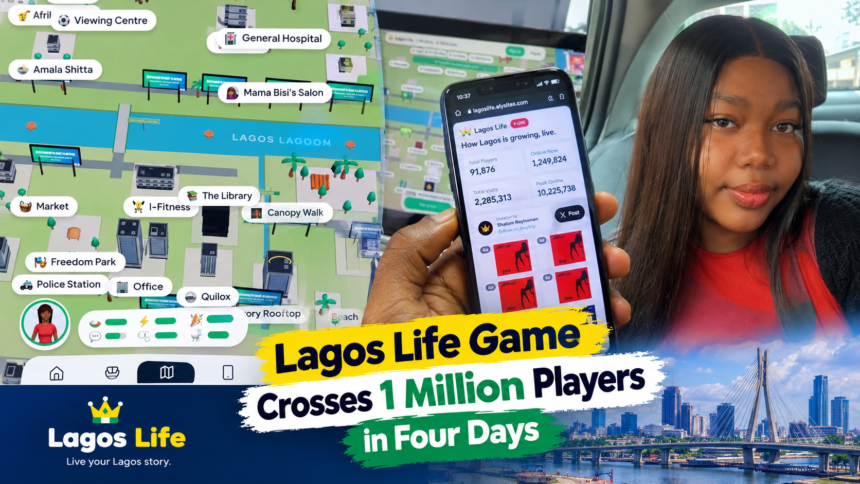
The Lagos Life game has crossed one million players just four days after launch, turning the Nigerian browser game into one of the country’s most talked-about new digital entertainment products.
Launched on October 1, Nigeria’s Independence Day, the Sims-style game has quickly built a virtual Lagos where players can create characters, take jobs, manage virtual money, pay rent and interact with other people. Its rapid rise is attracting attention for another reason: real businesses are already paying to advertise inside the virtual city.
Lagos Life game reaches million-player milestone

Lagos Life was launched as a browser-based life simulation created by Nigerian software developer Shalom Rayhamen, also identified in reports as Shalom Mathew. Rather than requiring users to download a large game application, it runs through a web browser, making it accessible on phones and computers with an internet connection.
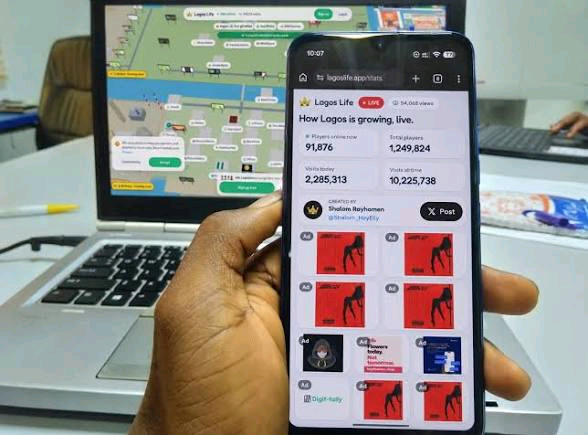
By October 5, the game’s dashboard showed 1,212,477 total players, alongside 71,625 people online at the time and more than 9.6 million all-time visits, according to Techpoint Africa. The developer had also previously reported a peak of more than 109,000 players online simultaneously.
Those figures have not been independently audited, so the one-million milestone is best understood as a figure reported through the game’s own system. Still, the speed of the reported growth is striking: the game moved from more than 100,000 users to more than one million within days of launching.
Why Nigerians are paying attention to Lagos Life
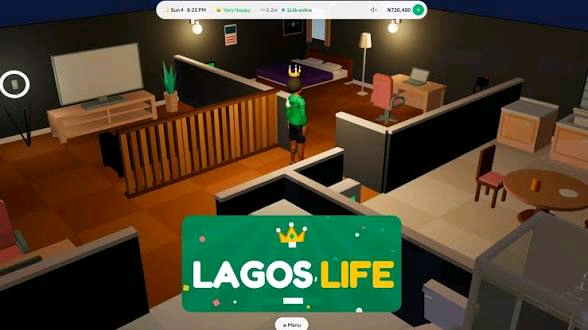
The game’s biggest attraction is its setting.
Lagos Life takes the familiar life-simulation formula associated with games such as The Sims and places it inside a world shaped by Nigerian experiences. Players encounter virtual jobs, housing, money management, social relationships and recognisable Lagos-inspired locations.
The idea reportedly grew from Rayhamen’s interest in The Sims 3 and was also influenced by Lagos Run, another Nigerian browser game that lets players drive a danfo through Lagos traffic. Lagos Run launched on September 26 and quickly attracted attention online, helping demonstrate the appetite for simple games built around distinctly Nigerian experiences.
Lagos Life takes that idea further by making the city itself a shared social environment. Instead of simply controlling a character through a short game, players can build a virtual life while other real people occupy the same digital Lagos.
That local identity is important. Familiar places, Nigerian humour, the struggle to earn money, rent, work and social status all become part of the gameplay rather than merely appearing as background details.
Virtual Lagos billboards are becoming real advertising space
Perhaps the most unusual part of the Lagos Life story is what is happening inside the game.
Businesses can pay to place advertisements on billboards positioned around the virtual city. According to the game’s advertising page, there are 38 billboard spaces available, with each listed at ₦5,000 for seven days. Businesses can upload their logo or advert, provide a website or social-media link and have the advertisement displayed inside the game.
The game also offers advertising opportunities through virtual sea plots and its live statistics page.
Techpoint Africa reported that advertisers already include Salary Index, Leadway Lifestyle Fair, MyDecorTrade and music distributor ONErpm, alongside smaller businesses and independent artists. One campaign shared by the developer recorded 3,686 taps from 9,826 app opens, although those figures were supplied by the developer rather than independently audited.
The model gives Lagos Life an interesting commercial angle. Instead of depending entirely on players paying to download the game, the developer can sell visibility to businesses that want to reach people inside the virtual environment.
The game is testing a different kind of Nigerian digital business
The rapid growth of Lagos Life also raises a bigger question about locally made entertainment.
Nigeria has a large online audience, but many of the games popular with Nigerian players are built around international characters, settings and stories. Lagos Life reverses that formula by making Nigerian culture and everyday experiences the central attraction.
Its browser-based format also removes one barrier to trying a new game. There is no large installation process or requirement for a dedicated gaming console. A player can encounter the game through a browser and enter a virtual environment built around a city they already recognise.
That does not mean the million-player figure automatically guarantees long-term success. Maintaining a multiplayer game at this scale brings its own challenges, including server capacity, security, moderation and keeping players interested after the initial viral excitement fades.
Lagos Life has already experienced some of those growing pains. Techpoint Africa reported a brief outage on October 2, after which players received ₦100,000 in virtual cash as compensation. Reports have also highlighted problems involving the game’s virtual economy.
What comes next for Lagos Life
For now, the one-million-player milestone gives Lagos life a remarkable opening chapter.
The game has moved from a Nigerian developer’s project to a rapidly growing online community in only a few days. At the same time, its virtual billboards show that the developer is already testing how a free browser game can become a commercial platform without putting the entire burden on players.
The bigger test will be whether Lagos Life can turn its sudden burst of attention into a lasting community and sustainable business.
For Nigerian game developers, however, the early lesson is already clear. A game does not necessarily need an international setting to attract a huge audience. Sometimes, giving people a digital version of a place they already know — with its jobs, money, struggles, humour and familiar landmarks — can be enough to make them want to step inside.