



NARD has given the Federal Government 14 days to act on unpaid professional allowances, salary arrears, residency training funding, manpower shortages and other demands or risk renewed industrial action by resident doctors.
NARD has given the Federal Government 14 days to act on outstanding welfare and professional issues, a warning that failure to make meaningful progress could lead to further industrial action and renewed pressure on Nigeria’s already stretched public hospitals.
The ultimatum was contained in resolutions from the Nigerian Association of Resident Doctors’ (NARD) 46th Annual General Meeting and Scientific Conference in Calabar, Cross River State. The meeting ran from September 21 to 26, while the ultimatum takes effect from October 1, 2026.
That means October 1 should be understood as the start of the two-week ultimatum period, not as the day the doctors are expected to begin a strike. NARD’s National Executive Council is expected to monitor the government’s response during the period, with industrial action among the possible steps if the association does not see meaningful compliance.
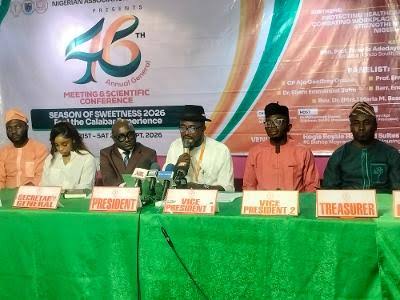
NARD demands payment of 19 months’ allowances
At the centre of the dispute are outstanding payments owed to resident doctors.
NARD is demanding immediate payment of 19 months of Professional Allowance Table (PAT) arrears, alongside arrears resulting from the 25 and 35 per cent upward review of the Consolidated Medical Salary Structure, known as CONMESS.
The association also raised concerns about salary and promotion arrears owed to doctors in several federal health institutions.
The latest demand follows several rounds of negotiations and previous government commitments on the issues. NARD has repeatedly complained that implementation has been slower than agreed, leaving financial obligations unresolved.
For resident doctors, the dispute is therefore not limited to a new demand for higher pay. Much of the pressure is over money the association says has already been approved or previously agreed upon but remains outstanding.
Residency training fund becomes another flashpoint

The 2026 Medical Residency Training Fund (MRTF) is another major issue in the latest ultimatum.
NARD called for corrections to omissions and errors affecting eligible resident doctors in the 2026 disbursement and demanded payment to those who were left out.
The association also wants the fund reviewed upward to reflect the rising cost of residency training and for the revised amount to be provided for in the 2027 Appropriation Act.
The reference to the 2027 budget does not mean the association is asking government to wait until 2027 before acting.
Nigeria’s budget preparation and appropriation process takes place ahead of the new financial year, so demands concerning funding for 2027 are being raised during the 2026 budget cycle.
NARD has also called for the accelerated conclusion of the Collective Bargaining Agreement between the Nigerian Medical Association and the Federal Government.
Manpower shortage and workload worry doctors
NARD’s demands go beyond unpaid allowances.

The association wants a sustainable recruitment system to address manpower shortages which it links to the continued migration of Nigerian medical professionals abroad. It also wants measures to ensure that doctors working in the country are not left carrying excessive workloads because of staffing gaps.
The doctors are seeking implementation of an approved work-hour regulation policy, including functional systems for recording working hours and a standard method for compensating doctors who work beyond the prescribed hours.
The association also wants outstanding pension contributions settled.
These demands have a direct connection to patients. Where hospitals have too few doctors and existing staff are required to work excessive hours, delays, workload and pressure can affect how services are delivered.
NARD raises hospital safety and equipment concerns
The association is also demanding stronger protection for health workers.
NARD called for implementation of the Assault on Health Workers Prevention Policy across health institutions, with clear accountability mechanisms for attacks on medical personnel.
It further demanded improvements in healthcare infrastructure, equipment and essential medical facilities, arguing that inadequate facilities can affect patient safety, healthcare delivery and the training of resident doctors.

For patients, this part of the dispute matters because resident doctors are part of the workforce providing care in many of Nigeria’s tertiary hospitals. Any prolonged industrial dispute involving them could therefore affect hospital operations, depending on the scale and duration of any eventual action.
This is not NARD’s first warning in 2026
The latest ultimatum follows several disputes between NARD and the Federal Government this year.
In June, the association issued another 21-day ultimatum over unpaid allowances, salary arrears and delays surrounding the residency training fund. In July, NARD again warned of a nationwide strike if outstanding demands were not addressed, with the proposed action scheduled for August 10.
The latest development therefore comes after months of negotiations, warnings and previous commitments.
NARD has now given the government another opportunity to demonstrate that the outstanding issues are being addressed.
What the October 1 ultimatum means for patients

There is no confirmed announcement that resident doctors will automatically begin a nationwide strike on October 1.
Instead, October 1 marks the point from which the new two-week ultimatum takes effect. NARD said its National Executive Council would monitor the government’s response and could take lawful action, including industrial action, if meaningful compliance is not achieved.
That leaves the Federal Government facing another deadline in a dispute that has already produced multiple warnings this year.
If the outstanding payments, training fund issues, workload concerns and other demands are addressed, the latest confrontation could end through negotiation. If NARD determines that there has been insufficient progress, however, the association has indicated that further industrial action remains on the table.
For patients who depend on government hospitals, the outcome will be closely watched. The immediate issue is no longer simply whether resident doctors have outstanding demands, but whether the government can make enough progress during the two-week window to prevent another disruption to healthcare services.