



The Nigerian Association of Resident Doctors, NARD, has issued a fresh warning to the Federal Government: meet outstanding welfare and work condition demands by August 10, or face a nationwide strike that could shut down services in federal and state tertiary hospitals. The ultimatum, declared after an Extraordinary National Executive Council meeting on June 27, 2026, marks the latest escalation in a dispute that has dragged on for months over unpaid funds, arrears, and poor working conditions.
Four-Week Ultimatum After Failed Talks
NARD said the decision to extend the deadline by four weeks came after an earlier 21-day ultimatum issued in May 2026 expired without meaningful action from government. In a communiqué signed by President Dr Mohammad Usman Suleiman, Secretary-General Dr Shuaibu Ibrahim, and Publicity Secretary Dr Abdulmajid Yahya Ibrahim, the association also declared an industrial dispute with the Federal Government.
“The Association cannot guarantee industrial harmony beyond the four-week window if all its demands are not fully addressed,” the communique warned. NARD directed its National Officers’ Committee to activate processes for possible industrial action if government fails to comply.
The Core Demands On The Table
Resident doctors say the crisis is not about a single issue, but a backlog of unfulfilled promises affecting training, pay, and basic welfare.
Unpaid training and salary funds
NARD expressed dissatisfaction over the federal government’s failure to disburse the 2026 Medical Residency Training Fund, MRTF, despite repeated assurances. The association also demanded immediate disbursement of the fund to eligible resident doctors nationwide within 21 days.
Salary and allowance arrears
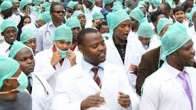
The doctors lamented the persistent delay in payment of House Officers’ salaries and outstanding entitlements across several training centres. Other grievances include the continued non-payment of the 25/35 per cent CONMESS upward review arrears and 19 months of Professional Allowance arrears, as well as unpaid salary and promotion arrears owed to doctors in several health institutions.
Working conditions and victimization
NARD raised concerns about extreme working conditions, including prolonged duty hours and excessive workloads worsened by manpower shortages. The association described the failure to enforce standard working-hour limits as “exploitative, inhumane, and dangerous to public health”.
It also cited the ongoing crisis at the Obafemi Awolowo University Teaching Hospitals Complex, OAUTHC, Ile-Ife, accusing hospital management of continued victimization of resident doctors, a situation it said was negatively affecting healthcare delivery and residency training.

At LUTH, the Association of Resident Doctors resolved to align with the national body and prepare for a total and indefinite strike over the continued absence of call meals, warning that the denial affects morale and emergency response.
A Cycle Of Ultimatums And Strikes
This is not the first time NARD has threatened to down tools. In August 2025, the association issued a 10-day ultimatum over non-payment of the 2025 MRTF, five months’ arrears from the CONMESS review, and 2024 Accoutrement Allowance arrears.
A strike was later suspended after government commitments on allowances, arrears, and training funding. At that time, NARD noted that initial approval had been secured for the 2026 MRTF, with a firm commitment to conclude disbursement.
Doctors say little has changed on the ground, forcing the union back to confrontation.
Resident doctors form the backbone of emergency, ward, and specialty services in Nigeria’s teaching hospitals. A total withdrawal would hit surgery lists, outpatient clinics, and 24-hour emergency units hardest.
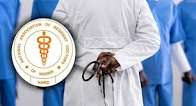
With the August 10 deadline now set, attention turns to the Coordinating Minister of Health and Social Welfare, the Budget Office, and the Accountant General’s office, all of whom NARD has engaged in past negotiations.
Government officials have yet to release a formal response to the latest communique. NARD says it will review the situation at the end of the four-week window and decide on the next line of action.
For millions of Nigerians who rely on public hospitals, the next two weeks will determine whether the wards stay open, or whether the country faces another crippling health sector shutdown.
NARD itself has flagged the risk, noting that Nigeria’s healthcare sector is already grappling with manpower shortages, heavy workloads, and the continued migration of medical professionals abroad. The association also called for implementation of a one-for-one replacement policy to immediately replace doctors who resign or migrate, to reduce burnout.