


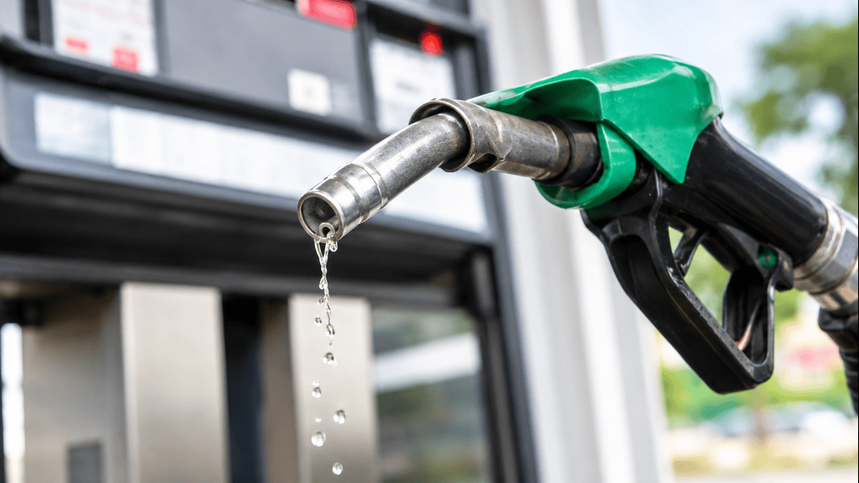
The retail price of petrol crossed N1,400 per liter in major commercial hubs across Nigeria, with independent and major fuel marketers adjusting their pump meters upward following steep wholesale price increases by the Dangote Petroleum Refinery. The question Nigerians are rightly asking is, what exactly was the point?
The Lekki facility raised its wholesale gantry price from N1,265 to N1,350 per liter, pushing domestic distribution costs to fresh records. That N85 increase represented the fourth upward price revision at the refinery gate within three weeks. This is not the behavior of a price stabilizer. It is the behavior of a market actor responding to commercial pressures.
Despite increased local refining output, Nigeria remained exposed to international oil price volatility because pricing in the downstream sector was still largely tied to global crude benchmarks. Local refining was never going to change that. What determines Dangote’s gate price is what Brent crude costs on any given morning in London.
Escalating tensions linked to the Iran-Israel conflict rattled oil markets, pushing crude prices upward and tightening supply routes. Even though Nigeria refines fuel locally, crude is still priced globally, meaning international shocks still feed into domestic fuel costs. Geography offers no exemption from that logic.
The currency arrangement that briefly stabilized prices has also unraveled in spectacular fashion. The Dangote Petroleum Refinery transitioned to pricing its refined products in US dollars for domestic sales, effective July 13, 2026, ending the previous naira-denominated payment system that began on October 1, 2024. That single decision rattled the entire downstream sector.
The primary reason for this change was the refinery’s need for foreign exchange to import crude oil, given Nigeria’s ongoing foreign exchange scarcity. The Central Bank of Nigeria had faced challenges consistently meeting the refinery’s dollar requirements. A naira-for-crude deal that depends on CBN reliability was always fragile architecture.
When Dangote reverted to naira on July 22, 2026, it did not return to the old N1,075 price. It set a new, higher figure of N1,215 per liter, a 13.02 percent jump, linking the increase directly to a sharp rally in global crude prices. Every currency switch reset the floor upward. Consumers absorbed every reset.
The National Publicity Secretary of the Independent Petroleum Marketers Association of Nigeria, Chinedu Ukadike, said retailers had no choice but to align pump prices with sourcing costs. He noted that frequent depot price changes were creating significant uncertainty for both marketers and consumers, as replacement costs could shift sharply within days. Uncertainty at the wholesale level always lands at the pump.
Some will argue that Dangote deserves credit for the periods when it cut prices. That is fair. The refinery did reduce its ex-depot price of petrol by N65, from N890 to N825 per liter, in February 2025. Those cuts were real and provided brief relief. But they were also entirely reversible the moment global crude spiked, which is exactly what happened.
The Centre for the Promotion of Private Enterprise warned against attributing the latest petrol-price increases entirely to subsidy removal, noting that prices were around N774 to N800 per litre before the recent escalation in international energy prices, after which prices rose above N1,300 per litre. Subsidy removal was a domestic structural reform, while the latest increase was also influenced by external crude-oil and refined-product price shocks. The refinery alone cannot neutralize that dynamic.
Nigeria remains structurally exposed: an energy-producing nation whose consumers absorb every gyration of the global crude market because domestic refining capacity remains insufficient and the exchange rate transmits foreign price shocks into local purchasing power with brutal fidelity. One refinery, however massive, does not fix a structurally broken exchange rate.
As long as Nigerian crude producers cannot consistently guarantee the volumes Dangote needs in naira, pump prices will keep reacting to global crude benchmarks almost as much as they did before the refinery existed, just with an added layer of naira-dollar pricing uncertainty on top. That is the honest assessment. It deserves to be heard loudly.
The government must now do two things without delay. First, it must honor and stabilize the naira-for-crude arrangement with full CBN commitment and transparent volume guarantees. Second, it must build real competition in the downstream sector so that no single refinery’s pricing decision cascades instantly into N1,400 pump prices across a nation of 220 million people.
Nigerians did not build Dangote’s refinery. They are, however, paying for its vulnerabilities. That is the contradiction policymakers must solve, not with press releases, but with durable structural reform that finally makes local refining a genuine price shield and not just a very expensive talking point.