

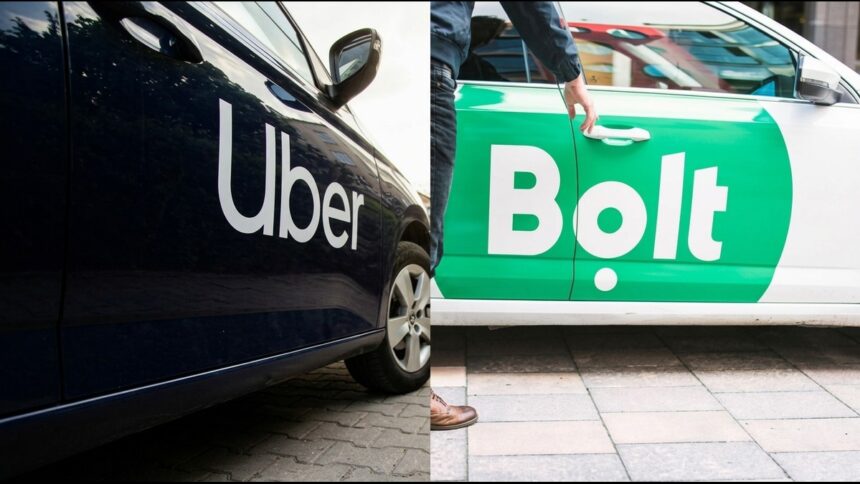
Bolt disclosed the figure in an email to PUNCH Online on Wednesday, roughly two weeks after Uber ended 12 years of Nigerian operations. The company has not released the raw registration numbers, which means the scale behind the percentage remains unknown to the public.
Teddy Appa-Dankyi, Senior General Manager for Bolt West Africa, said the company was taking the development seriously. “Bolt has recorded a 92 percent week-on-week increase in driver registrations following Uber’s exit from the Nigerian market,” he confirmed in the statement.
The figure captures only one side of the shift. Bolt did not disclose how many drivers were registering per week before Uber’s September 2 shutdown, leaving outside observers unable to determine whether the base number was large or small before the spike occurred. Without that baseline, the 92 percent figure, while striking, cannot be translated into an absolute count of new drivers joining the platform.
For the drivers themselves, the math is immediate. Uber’s exit stripped away a second or third income stream for thousands of Nigerians who had spread their trips across multiple apps. Bolt and inDrive are now absorbing that displaced supply in a market already squeezed by high fuel and vehicle maintenance costs.
Appa-Dankyi, who spoke after Bolt sent its statement, said the surge would not change how the company screens new drivers. “We are encouraged by the strong increase in interest from drivers looking to join Bolt,” he said. “It shows drivers’ confidence in our platform and the opportunities we provide. However, growth cannot come at the expense of safety.”
The assurance carries weight given the circumstances. A sharp influx of new applicants, many of them former Uber drivers, could pressure any platform to fast-track approvals. Bolt said it would resist that pressure.
Drivers previously suspended or blocked for serious safety violations, misconduct, or other breaches would not be automatically reinstated under the registration surge, Bolt confirmed. Every incoming driver must pass the same onboarding and safety checks that applied before Uber left.
“Every driver who joins Bolt must meet our onboarding and safety requirements, and those standards remain unchanged,” Appa-Dankyi said, according to the company’s statement issued Wednesday.
Bolt has operated in Nigeria since 2016. By some estimates, the company already held about 60 percent of Nigeria’s ride-hailing market before Uber’s exit, positioning it as the natural first stop for displaced drivers now seeking an established platform with an existing rider base.
Uber ended its Nigerian operations on September 2, citing a review of its business priorities and investment focus across Africa. The company also pulled out of Uganda as part of the same decision. High fuel costs, vehicle maintenance burdens, and intensifying competition had battered the economics of ride-hailing in Nigeria for years, making the market increasingly difficult to sustain profitably at the scale Uber required.
The departure left both drivers and riders looking for continuity. Riders in Lagos, Abuja, Port Harcourt, and other major cities where Uber operated now rely on Bolt, inDrive, and local platforms such as LagRide to fill the gap the American company left behind.
Bolt said it would continue investing in its platform and driver community as the Nigerian mobility market realigns. The company did not give a timeline for when registration numbers might stabilize or provide any projection for how many additional drivers it expected to onboard.
What remains unanswered is whether the income those drivers earn on Bolt will match what they made across two or more platforms before September 2. Fuel costs have not dropped. Vehicle maintenance has not become cheaper. A 92 percent registration spike tells Bolt’s story. It does not yet tell the drivers’ story.
Bolt driver registrations in Nigeria will continue to be watched as the market settles into a post-Uber shape in the weeks ahead.