
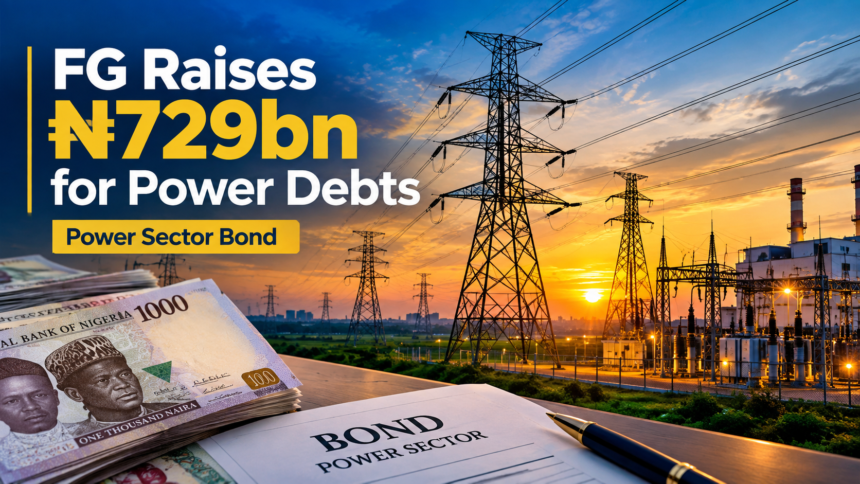
₦729bn power sector bond has been raised by the Federal Government to settle verified legacy debts owed to electricity generation companies and improve liquidity across Nigeria’s electricity market.
The ₦729bn power sector bond raised by the Federal Government is expected to tackle verified legacy debts owed to electricity generation companies (GenCos), in another major attempt to ease the financial pressure weighing on Nigeria’s electricity market.
The Federal Government raised approximately ₦728.9 billion through the Series 2 bond issuance under its ₦4 trillion Presidential Power Sector Debt Reduction Programme. The transaction, announced on Monday, September 14, 2026, brings the total amount raised under the programme to more than ₦1.1 trillion.
The latest move comes as the government continues efforts to address years of unpaid obligations in the electricity value chain, where cash-flow problems have affected power generation, gas supply and the ability of market participants to invest in the sector.
₦729bn Power Sector Bond Targets Legacy Debts
The second bond is part of a broader ₦4 trillion Power Sector Debt Reduction Programme established to settle verified legacy obligations and restore liquidity to Nigeria’s electricity market.
According to reports from the signing ceremony in Abuja, the Series 2 transaction consists of about ₦402 billion in cash bonds raised from the capital market and ₦326.979 billion in non-cash bonds allocated to participating generation companies.
The distinction is important because the programme is not simply a fresh cash injection into the electricity industry. It uses a structured debt instrument to address verified obligations while giving participating power companies financial instruments that can help unlock value from outstanding claims.
The Nigerian Bulk Electricity Trading Plc (NBET), which plays a central role in Nigeria’s electricity market, is the sponsoring institution for the debt-reduction programme.
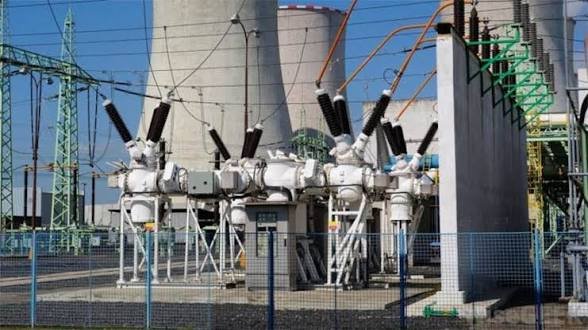
NBET purchases electricity from generation companies and resells it to distribution companies and other eligible customers, placing it at an important point in the electricity market’s payment chain.
Power Sector Debt Has Become a Major Challenge
Nigeria’s electricity industry has struggled for years with a persistent mismatch between the money required to generate and supply electricity and the revenue collected across the market.
When payments do not move smoothly through the chain, the effects can reach power generators, gas suppliers and other service providers. GenCos need reliable payments to continue purchasing fuel, maintaining generating plants and financing operations.
The Federal Government’s debt-reduction programme is therefore designed to address more than an accounting problem. The aim is to improve liquidity throughout the electricity market and create conditions in which companies can continue operating and investing.
Earlier in 2026, the government completed the first series of the programme with an issuance of about ₦501 billion, involving eight generation companies. The latest ₦728.9 billion Series 2 transaction represents the next major stage of that effort.
What the Bond Means for Electricity Generation

The immediate focus of the bond is the settlement of verified financial obligations, but its wider significance lies in what improved liquidity could mean for electricity generation.
Power generators have repeatedly faced financial pressure caused by unpaid or delayed obligations. At the same time, gas supply is critical to many of Nigeria’s generating plants. Reports in recent months have linked mounting debts in the sector to pressure on gas suppliers and concerns about the availability of fuel for electricity generation.
By reducing verified legacy debts, the government hopes to strengthen the financial position of market participants and make the sector more attractive to investors.
NBET officials have described the programme as part of efforts to restore liquidity, improve investor confidence and establish a more stable electricity market. The government has also said the structured approach is intended to support investment and sustainable electricity generation.
Will the ₦729bn Bond End Nigeria’s Power Problems?
The bond is significant, but it does not by itself solve every problem facing Nigeria’s electricity sector.
The country continues to deal with challenges involving electricity generation capacity, transmission infrastructure, distribution losses, gas availability, metering, revenue collection and the financial health of market participants.
The scale of the outstanding obligations also shows why the government’s ₦4 trillion debt-reduction framework is being implemented through multiple instruments rather than a single payment.
The latest issuance should therefore be viewed as one part of a wider effort to repair the financial foundation of the electricity market.
For electricity consumers, the bigger question is whether the improved liquidity will eventually translate into more reliable power supply. Settling verified debts can help generators and other companies operate with greater financial certainty, but sustained improvement in electricity supply will still depend on the performance of the wider power value chain.
Government Pushes Ahead With Power Sector Reform
The Federal Government’s latest bond issuance marks another attempt to deal with one of the most persistent obstacles to Nigeria’s electricity reforms: the sector’s financial instability.
With approximately ₦728.9 billion raised in the Series 2 issuance, the government has now mobilised more than ₦1.1 trillion under the broader debt-reduction programme.
The challenge ahead will be ensuring that the funds and debt instruments are applied to the verified obligations for which they were designed, while deeper reforms address the problems that continue to create new financial shortfalls.
For now, the ₦729 billion transaction gives the electricity market another significant financial boost. Whether that support produces lasting improvements in generation and electricity supply will depend on what follows beyond the bond itself.