President Tinubu dissolves the Presidential Implementation Committee on Federal Government property privatization, transferring all functions to attorney general Lateef Fagbemi.
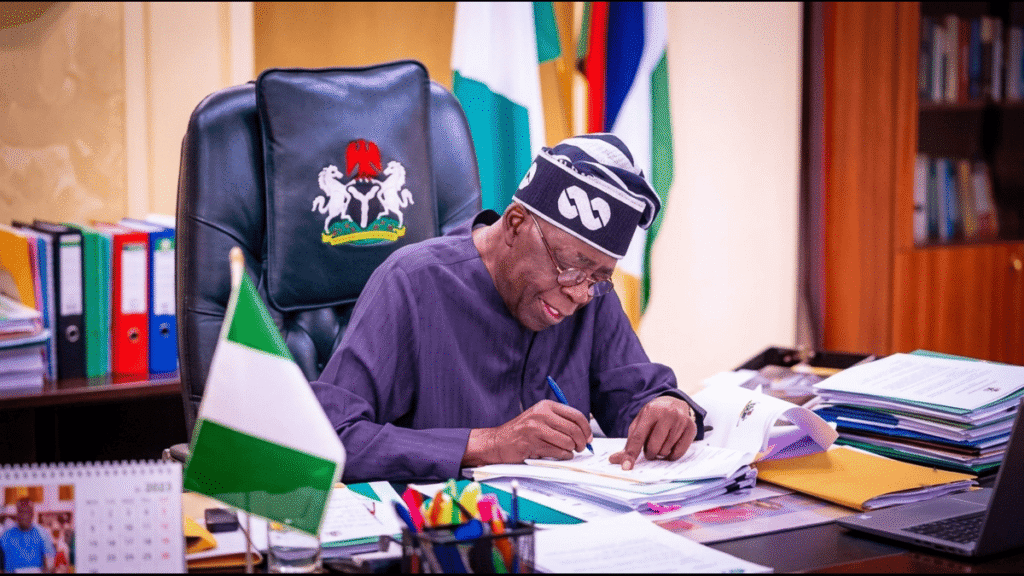
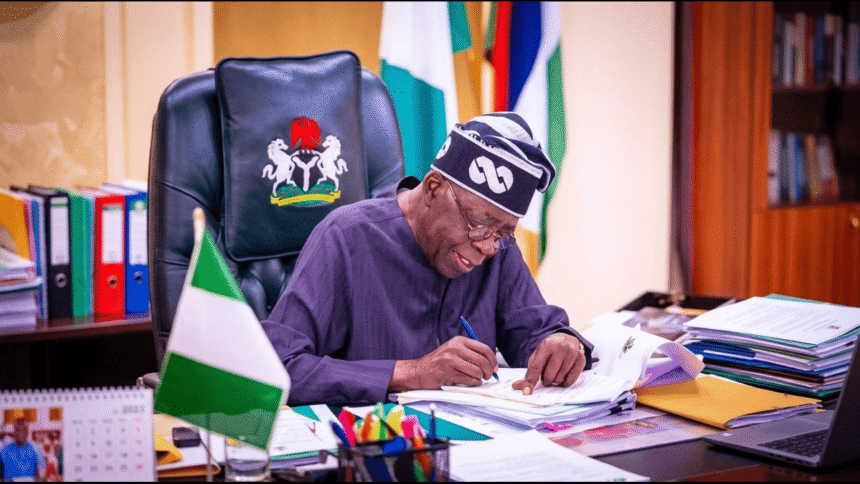
President Bola Tinubu on Thursday approved the immediate dissolution of the Presidential Implementation Committee on the Alienation of Federal Government Properties, a body established 25 years ago under former President Olusegun Obasanjo to oversee the disposal of federal landed assets.
Bayo Onanuga, Special Adviser to the President on Information and Strategy, disclosed the directive in a statement. Tinubu also transferred all functions of the dissolved committee to the Attorney-General of the Federation and Minister of Justice, Lateef Fagbemi.
According to the statement, the dissolution took effect from November 5, 2025. The committee’s erstwhile secretary, B. S. Dutsin-Ma, received a directive to cease acting on behalf of the committee and the federal government on all related matters with immediate effect.
“After careful consideration, the government has noted that the activities of the PIC had extended beyond its original mandate, resulting in multiple litigations across the country, and the continued existence of the committee is no longer justified,” the statement read.
The presidency stated that a careful review found the committee had exceeded its original mandate. Multiple litigations across the country followed from that overreach, and that development formed the basis of the decision to end the committee’s operations.
Onanuga confirmed in the statement that all matters relating to the activities of the committee would henceforth be coordinated by Fagbemi. No transition period was specified beyond the retroactive dissolution date of November 5, 2025, and no handover process was publicly outlined.
The Presidential Implementation Committee was established in 2000 under Obasanjo’s administration to oversee the privatization, sale, and lease of federal government landed assets under the government’s monetization policy, which sought to convert government-owned housing, vehicles, and other assets into cash.
Its membership comprised the then minister of housing as chairperson, alongside representatives from the ministries of transportation, justice, health, and agriculture, as well as the Nigeria Police Force. Professor P. T. Ahire, then a deputy director in the Office of the Secretary to the Government of the Federation, served as pioneer secretary.
On March 22, 2001, the Federal Executive Council approved the establishment of a panel of inquiry to produce a white paper to guide implementation of the committee’s recommendations. That panel worked for 21 months before submitting its report to the government.
The monetization policy the committee served was one of the most consequential administrative reforms of the Obasanjo era, moving the federal civil service away from providing perquisites in kind to public servants and toward direct cash compensation. The policy affected tens of thousands of federal workers and reshaped the structure of civil service remuneration.
But its implementation drew decades of controversy. Thousands of disputes arose over the valuation and sale of government properties, with allegations of undervaluation, claims of irregular sales to political insiders, and a trail of court cases that persisted long after the Obasanjo administration ended.
Those unresolved court cases appear central to Thursday’s dissolution order. The Presidency’s statement pointed directly to the volume of litigation as evidence that the committee’s continued existence served no justifiable purpose, given how far its activities had strayed from the original mandate set in 2000.
Fagbemi, who now holds responsibility for all committee-related matters, is a senior advocate of Nigeria. He has served as Attorney General of the Federation under Tinubu since the start of the current administration and oversees the legal affairs of the federal government across all ministries and agencies.
The decision ends a body that survived through the administrations of former Presidents Umaru Musa Yar’Adua, Goodluck Jonathan, and Muhammadu Buhari without dissolution, outlasting the monetization program it was created to implement by well over a decade.
No statement from Fagbemi’s office on the new responsibilities assigned to him had been released by the time the presidential directive was published on Thursday.