


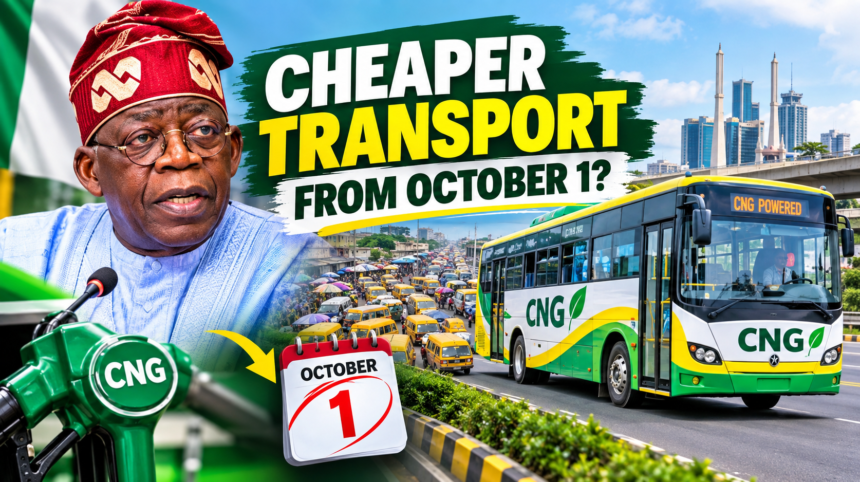
National Affordable CNG Transit Programme targets lower transport costs from October 1 as President Tinubu urges states to expand CNG and electric transport and pass energy savings to commuters.
National Affordable CNG Transit Programme targets lower transport costs from October 1, President Bola Tinubu has said, as the Federal Government pushes states to accelerate the rollout of compressed natural gas (CNG) and electric-powered public transport.
The President gave the update on September 19, 2026, saying the initiative is expected to deliver measurable reductions in what Nigerians pay for transportation. The announcement comes as rising energy costs continue to put pressure on fares and household expenses.
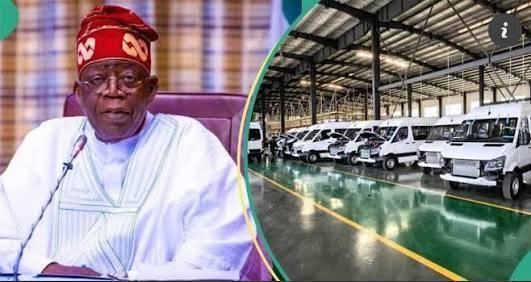
Tinubu said the October 1 target followed a meeting with the governors of the 36 states on August 27, where they agreed on the objective of making cheaper transportation more accessible to Nigerians.
National Affordable CNG Transit Programme Gets October 1 Target
Following the meeting with the governors, an implementation committee was established under the Nigeria Governors’ Forum. The committee is chaired by Kwara State Governor AbdulRahman AbdulRazaq and is working with the Presidential Initiative on Compressed Natural Gas and Electric Vehicles (PiCNG & EV), state governments and other stakeholders.
According to Tinubu, the committee is identifying priority transport corridors and determining the interventions needed to make lower-cost transportation available to more commuters.
The President urged states to move faster with the programme, particularly by working with transport unions and commercial operators, supporting vehicle conversion and facilitating the infrastructure needed for CNG and alternative-energy buses.
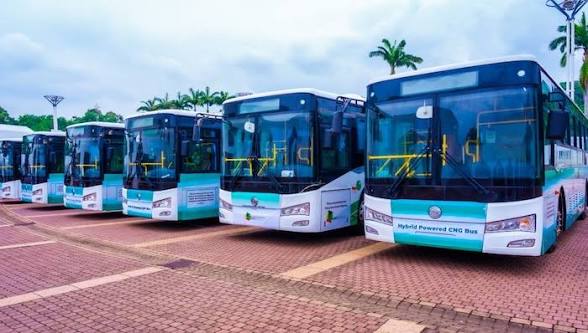
He stressed that the savings created by cheaper energy should reach commuters through lower fares.
The Federal Government’s broader CNG strategy has expanded beyond vehicle conversions to include refuelling infrastructure, conversion centres and electric mobility.
In March 2026, Tinubu approved the expansion of the Presidential Initiative on Compressed Natural Gas to include electric vehicles, creating the PiCNG & EV framework for coordinating CNG and electric mobility initiatives nationwide.
CNG Transport Savings Already Showing in Several States
Tinubu pointed to existing transport programmes in several states as evidence that cheaper energy can translate into lower fares.
In Borno State, he said CNG-powered and electric public transport services are carrying commuters for between ₦50 and ₦100 on routes where commercial operators charge between ₦300 and ₦600.
In Kaduna, 100 CNG-powered buses are providing free transportation on major routes. The President said the buses carried approximately 3.2 million passengers during their first year of operation and saved commuters more than ₦3.5 billion in transport costs.
Oyo State was another example cited by the President. He said CNG buses deployed to Pacesetter Transport brought the Lagos-Ibadan fare down from about ₦8,000 to ₦3,200 during the initial deployment.
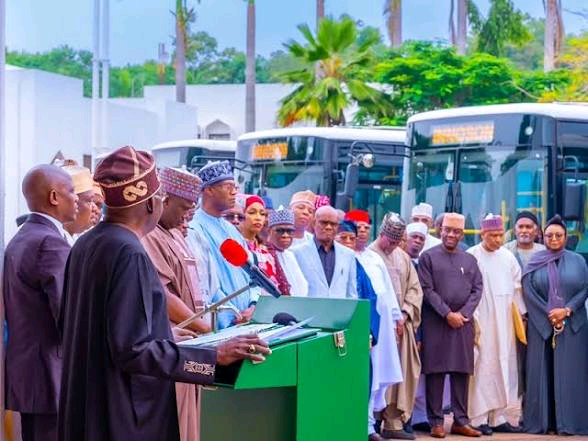
In Adamawa, Tinubu said alternative-energy transit services had reduced fares by as much as 50 per cent, from ₦8,000 to ₦4,000.
The President also cited Enugu, where 100 CNG buses have reduced the Enugu-Nsukka fare from ₦2,500 to ₦1,500.
In Plateau State, government-supported buses reportedly carry about 13,000 commuters every day at ₦200, compared with fares above ₦500 charged by commercial operators.
Abuja, Niger and Abia Also See Alternative-Energy Transport
The Federal Government says the impact of the programme is also being seen on some routes around Abuja.
Through a partnership with the National Union of Road Transport Workers, CNG-converted commercial vehicles on selected Abuja routes have reportedly provided fare reductions of about 40 per cent.
Tinubu gave examples including the Area 1-Gwagwalada route, where he said the fare had fallen from ₦1,500 to ₦900. The Nyanya fare reportedly dropped from ₦700 to ₦420, while Wuse fell from ₦400 to ₦240.
In Niger State, passengers using the Suleja-Abuja service are paying about ₦550 compared with approximately ₦800, according to the President.
Abia State has also deployed 40 electric buses, with fares subsidised by 50 per cent, he said.
These examples are important because the October 1 target is built around expanding programmes already operating in parts of the country rather than introducing CNG transport from scratch.
More Than 120,000 Vehicles Converted to CNG
Tinubu said the Federal Government has spent the past three years developing a CNG transportation ecosystem across Nigeria.
More than 120,000 vehicles have now been converted to CNG, according to the President. He also said the country has more than 400 certified conversion centres and over 90 CNG refuelling stations, with both numbers continuing to increase.
The expansion of infrastructure is central to the government’s plan because the availability of converted vehicles alone cannot guarantee cheaper transportation. Commuters and transport operators also need reliable access to CNG refuelling points.
In May, the President commissioned CNG infrastructure projects in Lagos, Abuja and Owerri, including refuelling and conversion facilities. The Federal Government said the projects were intended to expand domestic gas use, support cleaner transportation and reduce transport costs.
What October 1 Means for Nigerian Commuters
The October 1 target does not specify one nationwide fare or a uniform percentage reduction for every route.
Instead, the government is asking states to expand CNG and electric transport systems and ensure that lower energy costs are reflected in the fares paid by passengers.
That distinction matters because transportation prices vary widely between states, routes, vehicle types and operators. The actual savings commuters experience will therefore depend on how individual states, transport unions and operators implement the programme.
Tinubu said the renewed push had become more urgent because disruptions in global energy supplies were putting pressure on petrol and diesel prices and increasing transportation costs.
Nigeria, he argued, cannot control international energy markets but can reduce its exposure to those pressures by making greater use of its domestic gas resources.
The President has therefore called on states to maintain momentum ahead of October 1 and ensure that the benefits of the CNG programme are reflected in everyday transportation.
For commuters, the immediate issue will be whether the expanded rollout translates into lower fares on the routes they use. The October 1 target is intended to move the programme from individual state initiatives towards wider and more measurable reductions in transportation costs.