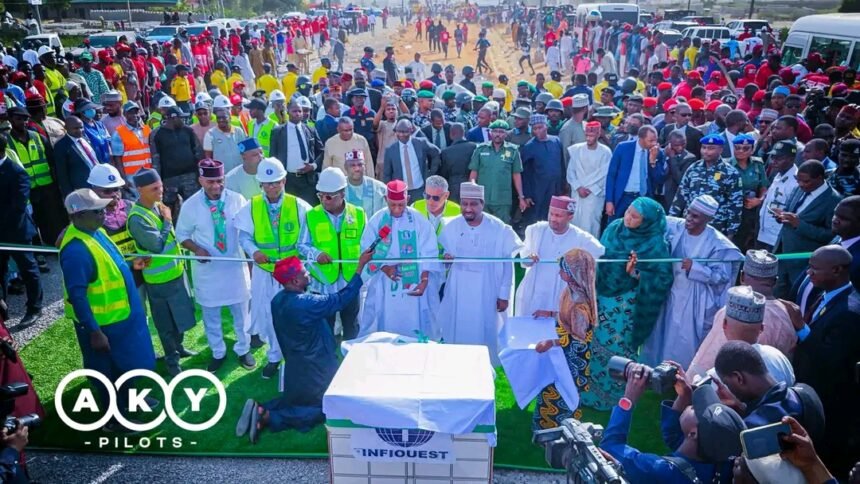
President Bola Ahmed Tinubu has commissioned Section III of the Abuja–Kaduna–Zaria–Kano Expressway, covering the Zaria–Kano corridor, in a move expected to improve road safety, ease transportation and boost trade across Northern Nigeria.
Kano State Governor, Abba Kabir Yusuf, represented the President at the commissioning ceremony, according to a press release issued on October 21, 2026, and signed by the Director-General, Media and Publicity, Government House, Kano, Sunusi Bature Dawakin Tofa.
The expressway is a major transport route linking Kano with Kaduna and other parts of the country, serving commuters, traders, commercial drivers and transport operators.
The Kano State Government said the completion of the Zaria–Kano section was expected to improve driving conditions and reduce hazards associated with damaged road surfaces, which can contribute to road crashes and loss of lives.
The corridor carries substantial passenger and commercial traffic, making it an important route for the movement of people and goods between Kano, Kaduna and neighbouring states.
The improved road is expected to support safer journeys by providing motorists with better driving conditions and reducing some of the risks associated with deteriorated sections of the highway.
Beyond safety, the project is expected to strengthen commercial activities by facilitating the transportation of agricultural produce, manufactured goods and other commodities across the region.
Kano, one of Northern Nigeria’s major commercial centres, could benefit from improved access to markets, reduced travel delays and lower vehicle operating costs. These improvements may also help traders, farmers and other businesses move goods more efficiently.
The highway’s importance extends beyond the two states, as it forms part of a major road connection linking the Federal Capital Territory with Kaduna, Zaria and Kano. Better connectivity along the corridor is expected to support the movement of passengers and freight between northern commercial centres and other parts of the country.
The commissioning also highlights the Federal Government’s continued focus on major transport infrastructure intended to strengthen national connectivity and facilitate economic activity.
However, the extent of the road’s economic and safety benefits will depend on continued maintenance, responsible driving and effective enforcement of traffic regulations.
The Kano State Government urged motorists to observe speed limits, avoid dangerous overtaking and comply with traffic rules to ensure the improved highway delivers lasting benefits to road users.
The statement did not provide the total cost of the completed section, the length of the corridor commissioned or details of the project’s construction and rehabilitation timeline.
West Trybe reports that the commissioning of the Zaria–Kano section marks an important development for a transport corridor serving commuters, traders and businesses across Northern Nigeria. Sustained maintenance and compliance with road safety regulations will be essential to translating the improved infrastructure into safer journeys, more efficient trade and reduced transportation costs.