


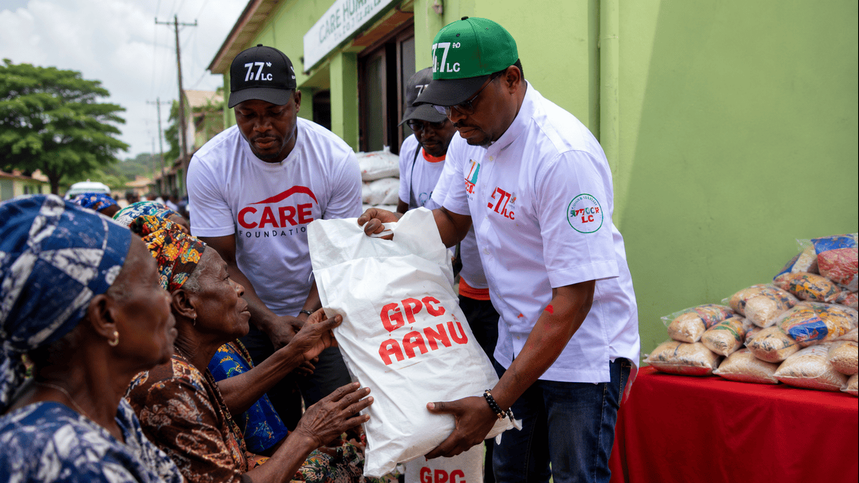
The video, which surfaced on Saturday, shows Fash-Lanso handing out white plastic bags containing bread and other food materials from a roadside location in Lagos. Several people gathered at the scene to receive the packages during the exercise.
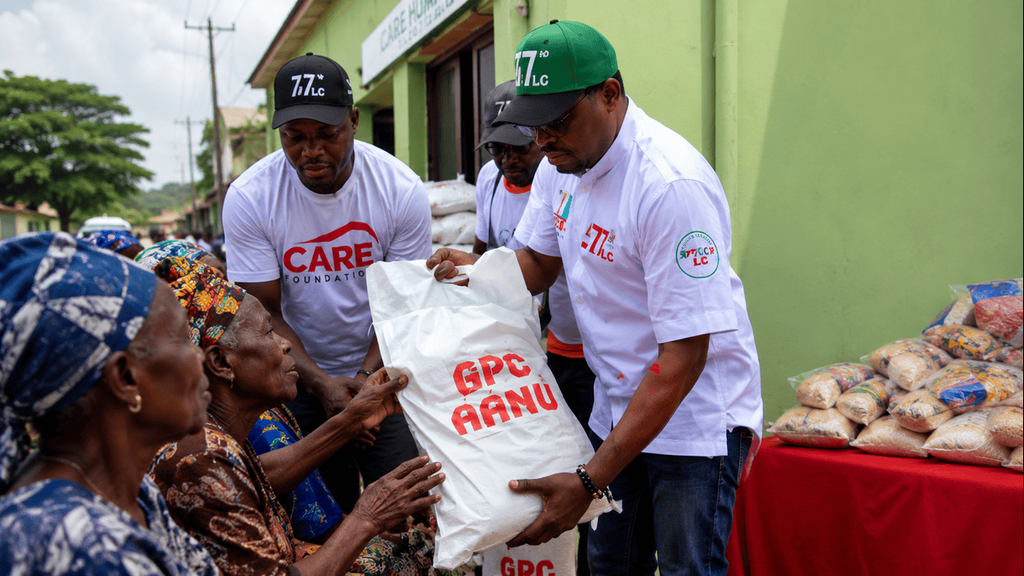
The actor wore a white shirt and a green cap carrying both APC and local government branding. Individuals wearing iCARE Foundation T-shirts assisted him with the distribution, while recipients collected white plastic bags containing the food items.
The packages and some of the clothing worn by those involved prominently displayed the logo of the All Progressives Congress. The visible political branding on the food items drew public attention to questions about the relationship between welfare programs and political activity in Nigeria.
Fash-Lanso, a recognizable figure in the Yoruba film industry, drew public attention to the exercise through his personal participation in the distribution. His presence at the roadside event amplified visibility of the outreach beyond what an unbranded community program might ordinarily attract from Lagos residents.
The distribution took place against the backdrop of growing concerns over poverty and the rising cost of living across the South-West. Many households in the region continue to struggle with increasing costs for food and other basic necessities during this period of economic pressure.

Community outreach programs involving food distribution have often been used by political groups and affiliated organizations to maintain contact with residents. Such exercises frequently serve the dual purpose of providing temporary relief to recipients while also building public goodwill for the sponsoring group or party.
The video does not establish the specific purpose or source of funding for the food distribution beyond the branding visibly displayed on the packages. The APC logos on the bread packages and clothing drew commentary on social media following the circulation of the footage on Saturday.
Bread and other basic food items distributed during such exercises can provide temporary relief to recipients facing immediate hunger. The broader challenge for households, however, remains the ability to earn enough income to consistently meet their daily food and living needs on a regular basis.
The development highlights a pattern of Nigerian political organizations using food distribution as a vehicle for community engagement. The exercise in Lagos reflects a broader national practice in which branded welfare interventions serve as visible demonstrations of party presence in local communities.
Observers have noted that such distributions raise questions about how political parties and their supporters present welfare interventions to communities during periods of economic hardship. The use of APC branding on basic food items places the distribution directly within the space of political communication and shapes how recipients and the wider public perceive the intent behind the exercise.
The role of celebrities in political and community activities in Nigeria has grown in recent years. Fash-Lanso’s participation illustrates how well-known figures from the entertainment industry are drawn into outreach exercises that carry clear political association and party identification.
Many Nigerians continue to call for policies that address the structural causes of poverty rather than relying on temporary relief distributions. The debate over whether food handouts provide lasting solutions to economic difficulties confronting ordinary households has persisted across multiple administrations and political cycles.
South-West households have faced particular pressure from declining purchasing power and rising food prices. The scale of economic difficulty in the region has created conditions in which food distributions, regardless of their political branding, attract crowds of residents seeking immediate relief from daily hardship.
The Lagos distribution by Yomi Fash-Lanso and iCARE Foundation volunteers, branded with APC logos, adds to a record of politically affiliated food outreach exercises in Nigeria’s South-West during a period when residents continue to report worsening economic conditions and limited household income.