


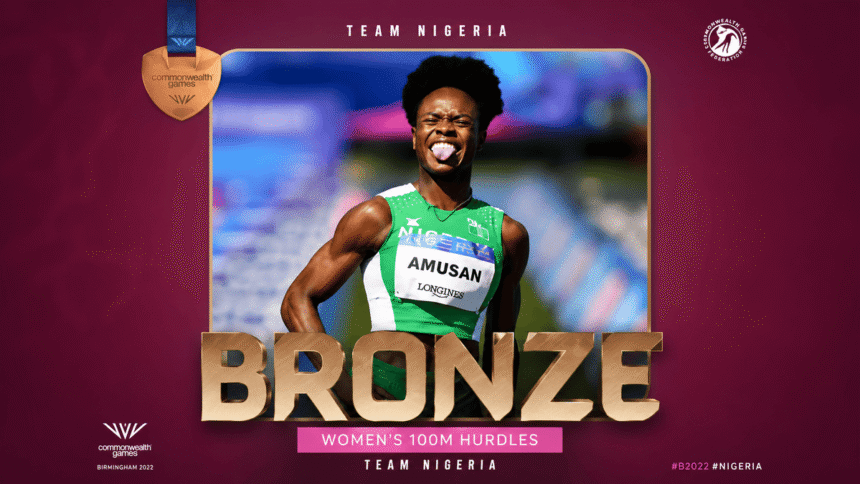
Nigeria’s Tobi Amusan settled for bronze on Thursday in the women’s 100m hurdles at the Glasgow 2026 Commonwealth Games, a result that brought her six-year reign as Commonwealth champion to a close. The sprint hurdler had been the dominant figure in the event since 2018, but Thursday’s final in Glasgow told a different story, one in which she had to watch two other athletes cross the line ahead of her.
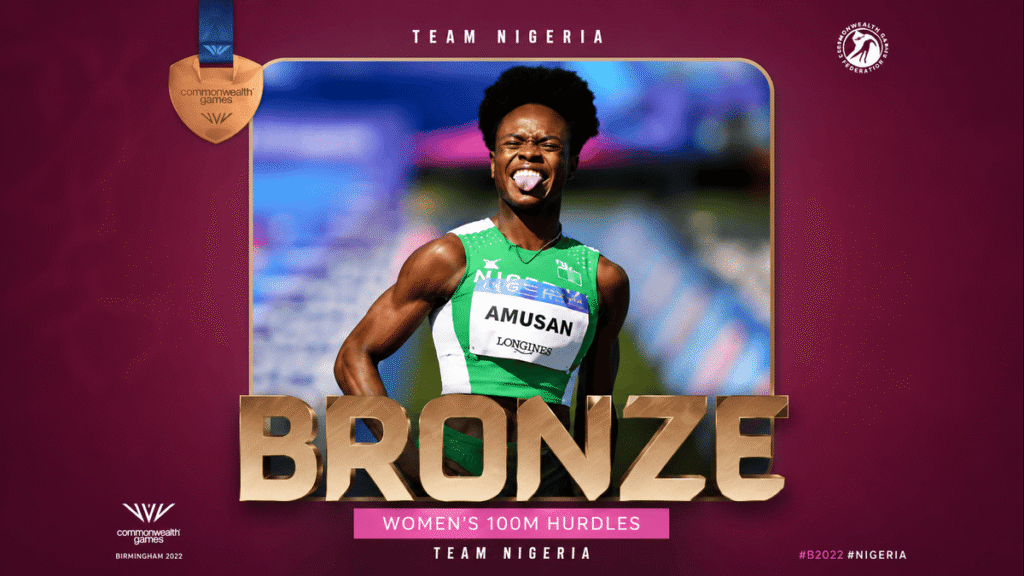
Amusan‘s résumé heading into these Games was formidable. Her gold medal at Gold Coast in 2018 announced her arrival on the Commonwealth stage, and she followed it up four years later in Birmingham with another commanding title-winning run. Together, those two victories set up a tantalizing possibility for Glasgow: a chance to become the first woman in the history of the Games to win three consecutive titles in the women’s 100m hurdles. It was a record no one else had managed, and Amusan appeared well placed to be the one to finally claim it.
That bid, ultimately, did not succeed. Devynne Charlton of The Bahamas had other ideas, producing the performance that mattered most when it counted and denying Amusan the piece of history she had been chasing.
The 29-year-old crossed the finish line in 12.60 seconds to place third in the final. Two athletes, one from the Bahamas and one from Jamaica, finished ahead of her in a race that denied Nigeria a third straight gold and ended eight years of Nigerian dominance in the event at the Commonwealth level. It was a stark reminder of how unforgiving the sport can be, with fine margins separating triumph from disappointment on the biggest stage.
Devynne Charlton of The Bahamas won the gold medal in a time of 12.33 seconds, while Jamaica’s Megan Simmonds claimed the silver medal after clocking 12.41 seconds. The gap between gold and bronze was 0.27 seconds, and the margin between silver and bronze was 0.19 seconds, figures that underline just how closely fought the contest for the podium had become by the time the athletes settled into their blocks.
Earlier in the day, Amusan had produced a dominant performance in the heats, winning her race in a wind-assisted 12.19 seconds. That time generated expectations of a title defense before the final was run, and it stood as the fastest time ever recorded at the Commonwealth Games under any conditions, though it was not eligible for record purposes because of excessive wind assistance. It nonetheless left many observers convinced, however briefly, that history was within reach.
Yet the heat’s pace did not carry into the medal race. Amusan could not replicate that performance in the final, as Charlton and Simmonds finished ahead of her. The final took place at Scotstoun Stadium in Glasgow, Scotland, bringing a definitive close to Amusan’s reign as Commonwealth champion after she had held the title across two consecutive Games cycles.
Despite falling short of a historic third straight Commonwealth title, Amusan extended her record at the Games by securing a third consecutive podium finish in the women’s 100m hurdles, a record that now spans three host cities across eight years of competition. No other detail in the source addresses what she or team officials said after the race.
The result closes one chapter in Amusan’s Commonwealth record while leaving another open. Her back-to-back gold medals came at Gold Coast in 2018 and Birmingham in 2022. Glasgow adds a bronze to that collection, keeping her on the podium for a third straight edition of the Games.
Her original target had been to become the first woman to win three consecutive Commonwealth titles in the event. Charlton’s gold on Thursday means that record remains unset, and whether Amusan contests the 2030 Commonwealth Games was not addressed in the source material.