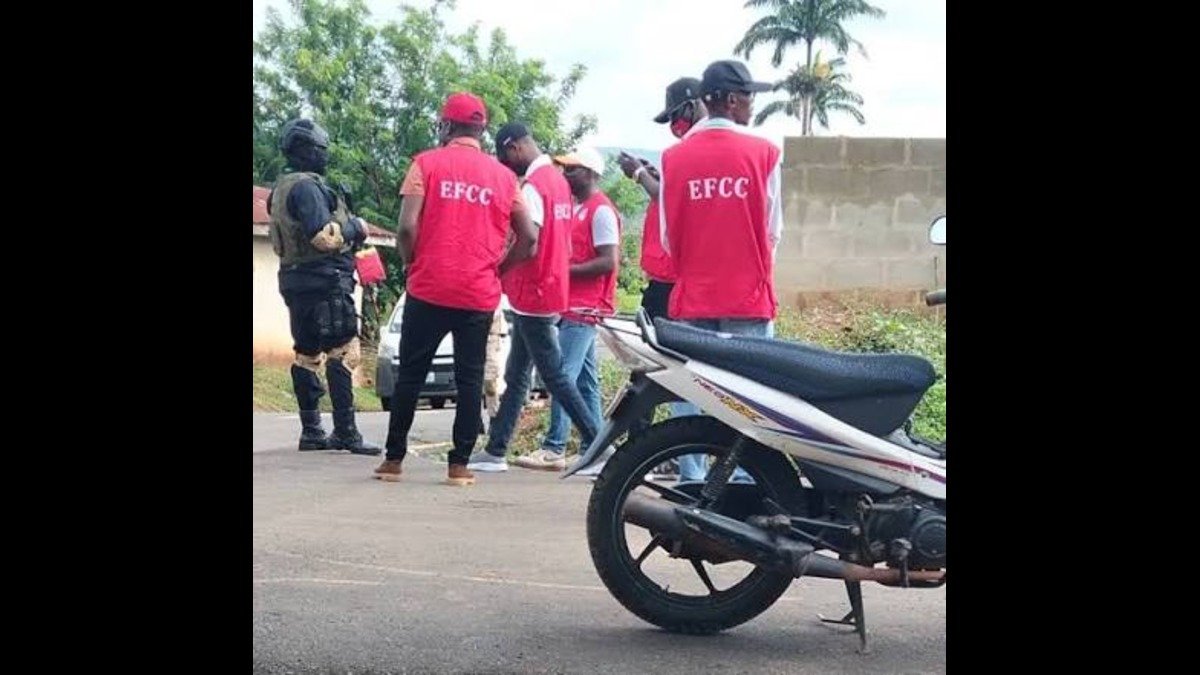
The Economic and Financial Crimes Commission has commenced investigation into a man arrested with large amounts of undeclared foreign currencies at the Malam Aminu Kano International Airport, Kano.
The suspect, identified as Haruna Yusuf, was arrested by operatives of the Nigeria Customs Service during the screening of passengers arriving at the airport between August 8 and 12, 2026.
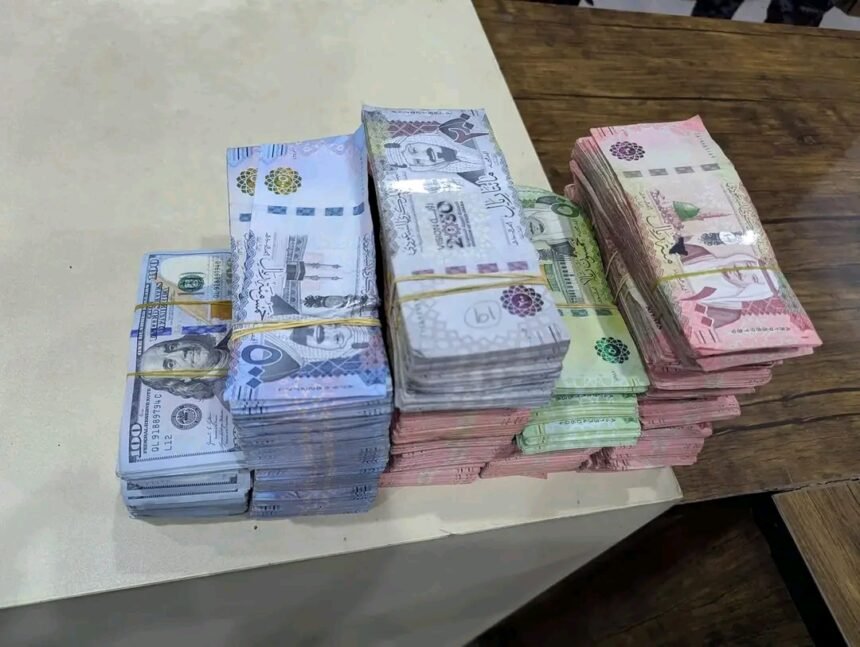
The currencies recovered from the suspect and another unaccompanied suitcase included $73,000, £15,957 and 827,800 Saudi Arabian riyals.
The EFCC disclosed that the Kano Zonal Command took over the suspect and the recovered currencies from the Customs Service for further investigation into the circumstances surrounding their movement into the country.
According to the commission, the development followed separate discoveries made by Customs officers during routine passenger screening at the airport.
On August 8, officers reportedly discovered 827,800 Saudi Arabian riyals and $53,300 concealed inside shoes in an unaccompanied suitcase belonging to a passenger arriving from Saudi Arabia.
The suitcase was reportedly subjected to inspection after Customs officers detected the undeclared currencies concealed in the footwear.
In a separate incident on August 12, Yusuf was arrested after arriving in Kano aboard Ethiopian Airlines flight ET941.
The EFCC said a non-intrusive scanning machine used by Customs officers detected suspicious items in his luggage, leading to a physical search.
The search reportedly resulted in the recovery of $20,000 and £15,957 concealed inside sports shoes.
The two discoveries brought the total amount of foreign currencies recovered during the period to $73,000, £15,957 and 827,800 Saudi Arabian riyals.
Following Yusuf’s arrest, the Acting Comptroller of the Kano/Jigawa Area Command, Deputy Comptroller U.U. Adamu, handed the suspect and the recovered currencies over to the EFCC for further investigation and possible prosecution.
The EFCC said the investigation would establish the circumstances surrounding the possession and attempted movement of the funds into Nigeria.
The commission also drew attention to the legal requirements governing the movement of large amounts of foreign currency across Nigeria’s borders.
It said failure to declare large sums of foreign currency being brought into the country could constitute a violation of the Money Laundering (Prevention and Prohibition) Act, 2022.
However, the commission clarified that declaring money being carried into the country does not, in itself, attract a penalty.
Rather, the EFCC said, undeclared funds could raise questions about their source and purpose, potentially resulting in further investigation and legal action where violations of the law are established.
The clarification is important because travellers carrying foreign currencies within the limits permitted by law are required to make the necessary declarations at entry points.
The latest development also highlights the role of airport screening and inter-agency cooperation in detecting the movement of potentially suspicious funds across Nigeria’s borders.
The Nigeria Customs Service has responsibility for monitoring goods, passengers and currency movements at the country’s entry points, while the EFCC investigates suspected financial crimes and money-laundering offences.
The EFCC and Customs said their continued collaboration would help strengthen efforts to prevent the movement of undeclared funds and combat financial crimes at airports and other border points.
The agencies also urged travellers to comply with existing currency declaration requirements to avoid possible violations and subsequent investigations.
The investigation into Yusuf is expected to determine the circumstances surrounding the currencies found in his possession and whether the funds were connected to any financial crime.
The authorities have not indicated that Yusuf has been convicted of any offence, and the investigation remains ongoing.
West Trybe reports that the recovery of the foreign currencies comes amid sustained efforts by Nigerian financial and border-control agencies to strengthen monitoring of cash movements and prevent money laundering through the country’s airports and other international entry points.