


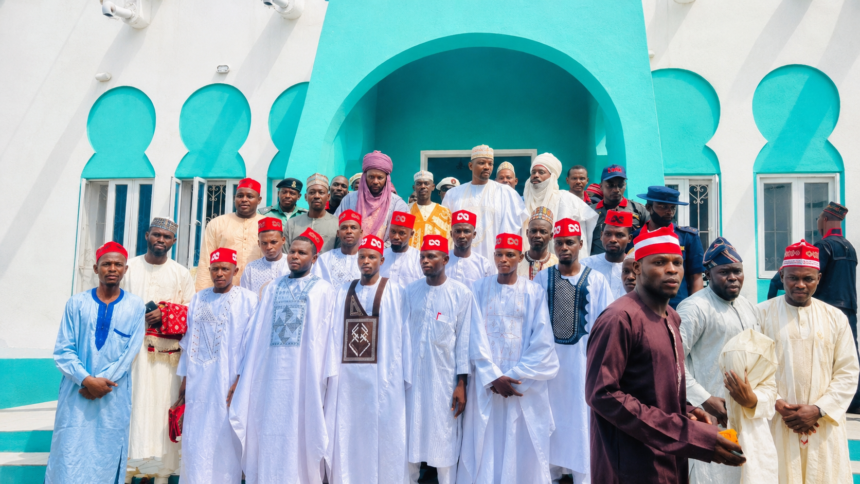
The Kano State Government has facilitated the marriage of 1,500 widows and young women under its Mass Wedding Programme, in a major social intervention aimed at supporting vulnerable residents, strengthening family institutions and promoting dignified family life.
The mass wedding was officiated by Governor Abba Kabir Yusuf on Friday at the Emir of Kano’s Palace, where the governor represented the first groom during the solemnisation of the marriages and formally sought the bride’s hand from the Emir of Kano, Muhammadu Sanusi II.
The emir accepted the proposal in accordance with Islamic injunctions, setting the tone for the mass solemnisation of the marriages conducted under the programme coordinated by the Kano State Hisbah Board.
The development was announced in a statement issued on Friday by the governor’s spokesperson, Sunusi Bature Dawakin Tofa.
Speaking during the ceremony, Yusuf said the initiative was designed to reduce the financial burden associated with marriage for vulnerable citizens while creating opportunities for beneficiaries to establish stable families.
“This programme reflects our administration’s commitment to supporting vulnerable citizens by easing the financial burden associated with marriage and creating opportunities for dignified family life in accordance with Islamic principles and the rich cultural heritage of Kano,” the governor said.
The governor said the programme formed part of his administration’s broader social intervention efforts aimed at improving the welfare of residents and supporting families facing economic difficulties.
Under the support package provided to the newly married couples, each groom will receive 10 yards of shadda fabric, a cap, a bag of rice and a jerrycan of cooking oil to assist him in starting married life.
Each bride will also receive N200,000 to support dowry payments and establish or strengthen a small business.
The brides are also expected to receive household items, including a bed, mattress, wardrobe, dressing mirror, blankets, bed sheets and a centre rug, as part of the government’s efforts to provide basic household necessities for the beneficiaries.
The package, according to the state government, is intended to go beyond the solemnisation of the marriages by providing practical support to the couples as they begin their lives together.
The Emir of Kano, Muhammadu Sanusi II, who delivered the Friday sermon during the ceremony, urged the newly married couples to build their homes on faith, patience, mutual understanding and responsibility.
“Peaceful families remain the foundation of a stable and prosperous society. I urge every couple to uphold the virtues of understanding, tolerance and responsibility in their marriages,” Sanusi said.
The emir also urged the couples to regard marriage as a partnership requiring mutual respect and commitment, stressing the importance of patience and compassion in resolving disagreements.
He called on the beneficiaries to ensure that their homes contributed to peace and stability within their communities.
The Commander-General of the Kano State Hisbah Board, Sheikh Aminu Ibrahim Daurawa, said the beneficiaries underwent screening and counselling before the marriages were conducted.
Daurawa explained that the exercise was designed to ensure that the religious and legal requirements for the marriages were fulfilled and that the beneficiaries received guidance on family responsibilities.
“We ensured that all religious and legal requirements were fulfilled before the marriages were solemnised. The beneficiaries were properly screened and counselled to prepare them for successful family life,” Daurawa said.
He said the counselling component was particularly important because the success of the programme would ultimately depend on the ability of the couples to sustain peaceful and responsible homes after the ceremony.
The Chief Imam of Kano, Prof. Sani Zahraddeen, also offered prayers for the newly married couples, asking Allah to grant them guidance, blessings and lasting harmony in their homes.
The ceremony attracted religious leaders, traditional authorities, government officials, representatives of the Hisbah Board and other stakeholders involved in the implementation of the programme.
Some of the beneficiaries expressed appreciation to the government, describing the initiative as an opportunity that had enabled them to begin a new chapter of their lives despite the financial challenges associated with marriage.
They said the financial and household support provided under the programme would reduce some of the immediate pressures facing the couples and enable them to focus on building their families.
The programme also comes against the backdrop of rising living costs, which have made marriage increasingly difficult for many low-income families and young people. The cost of dowry, accommodation, household items and other basic requirements has continued to place financial pressure on prospective couples.
For the beneficiaries, the intervention therefore combines the social objective of facilitating marriages with economic assistance intended to help the couples establish their households.
The government said the initiative was also consistent with its broader efforts to promote social welfare, protect vulnerable groups and strengthen institutions considered central to community stability.
The involvement of the Hisbah Board further places the programme within the state’s emphasis on religious and moral values, with screening, counselling and religious guidance forming part of the process leading to the marriages.
The mass wedding scheme is one of the social intervention programmes of the Abba Kabir Yusuf administration, which has positioned support for vulnerable residents and family welfare as part of its broader governance agenda.
West Trybe reports that mass wedding programmes have increasingly emerged as a social intervention mechanism in parts of Northern Nigeria, where the rising cost of marriage has created financial barriers for many young people and vulnerable women. The Kano initiative combines marriage facilitation with financial and household support, reflecting an approach that seeks not only to solemnise marriages but also to provide beneficiaries with some of the resources needed to begin family life with greater stability.