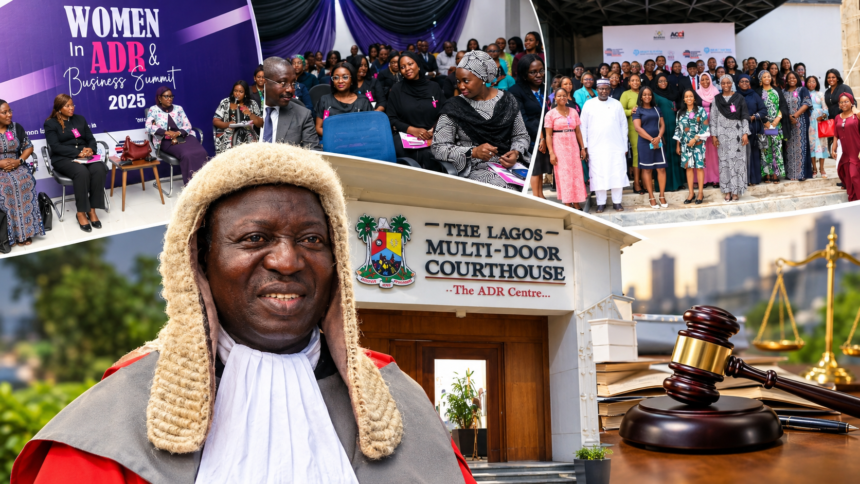
The Lagos Multi-Door Courthouse has facilitated settlements and recoveries worth more than ₦86.8 billion over five years, highlighting the growing role of alternative dispute resolution in commercial justice, business continuity and investor confidence.
The figure was disclosed by Lagos State Chief Judge, Justice Kazeem Alogba, at the third annual Lagos Multi-Door Courthouse (LMDC) and Alternative Dispute Resolution (ADR) Stakeholders’ Summit held at the MUSON Centre in Lagos on October 19, 2026.
The summit, themed “Investor Confidence and ADR: Strengthening Nigeria’s Investment Climate,” brought together stakeholders to examine how more efficient dispute-resolution mechanisms could support businesses and improve Nigeria’s investment environment.
Alogba said the money recovered through settlements could return to productive economic activities rather than remain tied up in disputes.
“Those are funds that have been released back into the economy for salaries, suppliers, expansions, and lending,” he said.
“That is what investor confidence looks like in practice.”
The disclosure places renewed attention on the economic consequences of prolonged commercial disputes and the alternatives available to individuals and businesses seeking a resolution.
How the Lagos Multi-Door Courthouse Works
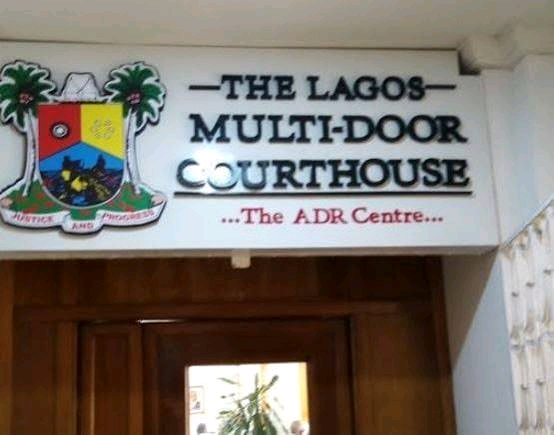
Established in June 2002, the Lagos Multi-Door Courthouse is a court-connected alternative dispute resolution centre designed to provide options beyond conventional litigation.
According to the Lagos State Judiciary, the institution was the first of its kind in Nigeria. Its purpose is to improve access to justice by offering alternative mechanisms for resolving disputes.
The word “multi-door” reflects the different processes available to disputing parties. These include mediation, arbitration, early neutral evaluation and hybrid procedures.
Unlike conventional litigation, which can involve lengthy proceedings, these mechanisms provide structured ways for parties to address disagreements without necessarily pursuing a full court trial.
In mediation, for instance, a neutral third party helps disputing sides communicate, examine their positions and work towards a mutually acceptable settlement. The mediator does not simply impose a decision on the parties.
Arbitration follows a different process, in which an arbitrator determines the dispute in accordance with the applicable procedure and the parties’ agreement.
The appropriate process depends on the nature of the dispute and the circumstances surrounding it.
The LMDC handles matters referred by courts as well as disputes brought by individuals, businesses and other organisations. Its work is intended to complement the formal justice system rather than replace it.
Why the ₦86.8bn Settlement Figure Matters

The reported settlement value highlights the financial consequences of disputes that might otherwise continue through lengthy legal proceedings.
When businesses disagree over payments, contractual obligations or other commercial matters, unresolved disputes can affect cash flow and delay important decisions.
Money tied up in a disagreement may be unavailable for paying employees, settling supplier invoices, expanding operations or providing loans. Delayed resolutions can also increase legal expenses and place pressure on relationships between commercial partners.
Settlements can help release those funds when parties reach an agreement and fulfil its terms.
For Lagos, which serves as a major commercial centre, the effectiveness of dispute-resolution institutions can influence how businesses manage legal risks and contractual disagreements.
However, the reported ₦86.8 billion should be understood as the value of settlements and recoveries facilitated by the LMDC, not automatically as new revenue generated by the Lagos State Government.
The figure also does not establish that every dispute was resolved without difficulty or that every settlement amount was immediately paid in full. Those conclusions would require additional information about the cases and compliance with the agreements.
Nevertheless, the five-year total provides an indication of the financial scale of disputes handled through the institution.
Sanwo-Olu Highlights ADR’s Economic Benefits

Governor Babajide Sanwo-Olu also used the summit to highlight the Lagos State Government’s wider use of alternative dispute resolution.
Represented by the Attorney-General and Commissioner for Justice, Lawal Pedro, SAN, the governor said the administration had resolved 3,000 petitions through ADR, reducing potential liabilities exceeding ₦1.2 billion to a settlement of ₦3 million.
The figure concerns the separate petitions handled by the government and should not be confused with the LMDC’s reported five-year settlement total.
According to the governor’s remarks at the summit, the achievement demonstrated how resolving disputes through alternative processes could support accessible justice and improve the business environment.
The government’s broader approach recognises that disputes do not always need to proceed through lengthy litigation before parties can reach a resolution.
For businesses, a predictable system for handling disagreements can make contractual relationships easier to manage. Investors also need confidence that disputes can be addressed through credible institutions and established procedures.
However, the effectiveness of ADR depends not only on reaching settlements but also on ensuring that agreements are honoured and enforceable.
LMDC Seeks Stronger Compliance and Faster Resolution
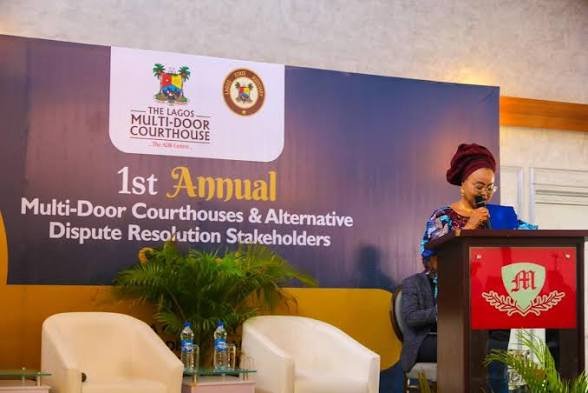
Despite the reported financial achievements, Alogba called for further improvements in the dispute-resolution system.
He urged stakeholders to strengthen the enforcement of settlement agreements, build the capacity of mediators and judges, and increase the adoption of technology.
These priorities address an important distinction between reaching an agreement and ensuring that it produces the intended result.
A settlement may resolve the immediate disagreement on paper, but its practical value depends on the parties carrying out their obligations. Where agreements are not honoured, the dispute can create further legal and financial difficulties.
Improving compliance mechanisms could therefore help ensure that settlements deliver their intended benefits to individuals and businesses.
Technology could also support more efficient case administration, communication and dispute management, although the scale of any improvement would depend on how the systems are implemented.
Alogba urged participants to develop practical recommendations and measurable targets for reducing the time and cost of resolving commercial disputes.
His call suggests that the next stage of reform should focus not only on the value of settlements recorded but also on the speed, accessibility and reliability of the process.
What the Settlement Record Means for Investors

The LMDC’s reported five-year performance places alternative dispute resolution within a wider discussion about Nigeria’s investment climate.
Investors need more than business opportunities. They also need confidence that contractual disagreements can be addressed fairly and without unnecessary delays.
For companies operating in Lagos, access to mediation and arbitration can offer additional routes for resolving suitable disputes. These processes may help preserve commercial relationships and reduce the disruption associated with prolonged disagreements.
They do not, however, eliminate every legal risk. Some disputes require formal judicial determination, and the suitability of ADR depends on the nature of the matter and the applicable law.
The central challenge is ensuring that the available mechanisms are accessible, effective and supported by reliable enforcement procedures.
With the LMDC reporting settlements and recoveries worth more than ₦86.8 billion over five years, the institution has highlighted the potential economic value of resolving disputes more efficiently.
Whether that translates into stronger investor confidence will depend on sustained performance, compliance with agreements and continued improvements in the wider justice system.