
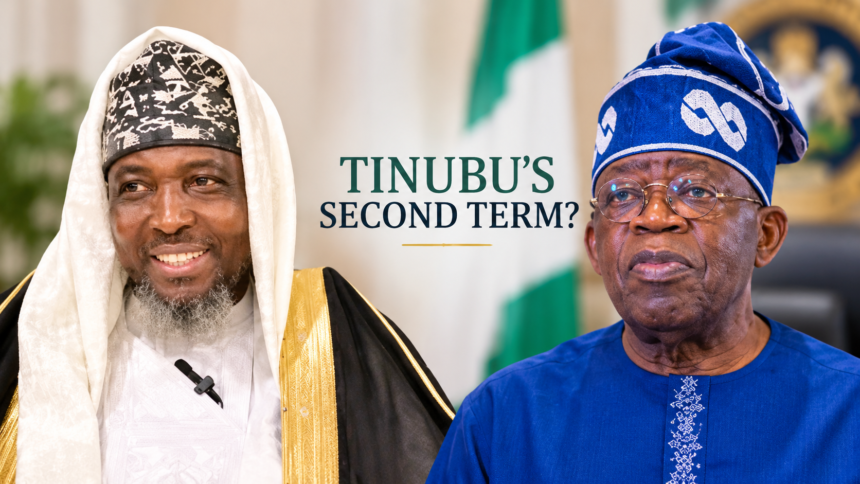
Tinubu’s second-term ambition has drawn fresh attention after former National Hajj Commission of Nigeria (NAHCON) chairman, Sheikh Abdullahi Saleh Usman, popularly known as Sheikh Pakistan, warned that denying President Bola Tinubu another term could plunge Nigeria into a political crisis.
Sheikh Pakistan reportedly made the remarks while addressing youth groups at his residence in Kano, where he argued that Tinubu should be allowed to complete a second term to maintain fairness in Nigeria’s power rotation arrangement between the North and the South.
The former NAHCON chairman also defended the president’s performance, pointing to what he described as improvements in security and reductions in food prices under the current administration.
His comments come as political discussions surrounding the 2027 presidential election increasingly focus on Tinubu’s re-election prospects, regional representation and the performance of his government.
Why Sheikh Pakistan Warns Against Denying Tinubu a Second Term

Sheikh Pakistan argued that opposing a president because of the region he comes from could create problems for Nigeria’s political future.
He maintained that the country’s power rotation arrangement should be respected, particularly because Tinubu had supported former President Muhammadu Buhari’s two-term tenure despite the health challenges Buhari experienced while in office.
According to the remarks attributed to him in a report published on October 21, 2026, Sheikh Pakistan said:
“We have to be fair to Tinubu. The type of politics we are playing where we reject somebody because of the region he came from is dangerous. If we sustain this, we will suffer in the future.”
He further argued that denying Tinubu a second term after his support for Buhari’s two terms could undermine the principle of political rotation.
“The way Tinubu supported late Muhammadu Buhari and insisted that he completed his two terms, even though he was ill and now some people are working hard to deny Tinubu a second term, we will fling the country into a political crisis in the future. Nobody will allow any northerner to take two terms,” he added.
The warning reflects the continuing debate over zoning, regional representation and whether Nigeria’s informal power rotation arrangement should influence decisions ahead of the next presidential election.
However, the former chairman’s position represents his argument in the political debate. It does not, by itself, establish that denying Tinubu another term would inevitably result in a national crisis.
Sheikh Pakistan Compares Tinubu and Buhari on Insecurity
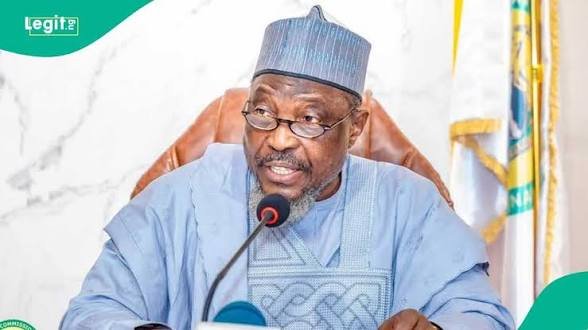
Beyond the question of political rotation, the Sheikh defended Tinubu’s administration by comparing the security challenges inherited by the current president with those experienced under Buhari.
He argued that kidnapping and banditry became major security concerns during Buhari’s administration, while the former president had inherited the Boko Haram insurgency.
In his assessment, Tinubu inherited serious security challenges that had developed under previous governments.
He said:
“If you look at insecurity used by some politicians to campaign, up to the time Buhari became president, there was no kidnapping. There were no kidnapping cases in Zamfara, Kaduna, Sokoto and Kebbi states. Kidnapping started under Buhari. Of course, Buhari inherited Boko Haram insurgency, but banditry started under him. This means that Tinubu inherited two major security challenges: kidnapping and Boko Haram insurgency.”
He also cited the Abuja-Kaduna road and railway corridor as examples of what he considered security improvements under Tinubu.
According to him, travelling between Abuja and Kaduna had become extremely dangerous towards the end of Buhari’s administration, while the situation had improved under the current government.
“Up to the time Buhari finished his second term in office, a journey from Abuja to Kaduna was suicidal. You only heaved a sigh of relief when you arrived in Kaduna. But now you can leave Abuja at 12am and arrive at Kaduna safely. It means there is an improvement,” he said.
He also recalled attacks on the Abuja-Kaduna train, arguing that the railway service had previously become a target for kidnappers and that passengers had been afraid to use it.
However, these statements reflect Sheikh Pakistan’s assessment of the security situation. A comprehensive evaluation of the administration’s performance would require examining security incidents, official data and conditions across different parts of the country.
Tinubu Second Term: Sheikh Pakistan Cites Falling Food Prices

Sheikh Pakistan also defended Tinubu’s economic record, using the prices of rice and millet to argue that some food commodities had become cheaper compared with their prices under Buhari.
He claimed that a bag of rice, which he said sold for ₦120,000 during Buhari’s administration, was selling for ₦57,500 under Tinubu.
“Under Buhari, a bag of rice sold for ₦120,000, but today it is ₦57,500. It is less than half the amount under Tinubu,” he said.
Speaking from his experience as a farmer, the former NAHCON chairman also compared millet prices under the two administrations.
“As a farmer, under Buhari I sold a bag of millet for ₦85,000. But today it is sold for about ₦30,000,” he added.
His comments present food prices as another reason he believes Tinubu’s performance should be considered in discussions about a second term.
Nevertheless, the prices he cited should be understood as his own claims rather than a comprehensive measure of Nigeria’s economic situation. Food prices vary by location, market and period, while assessing the broader cost-of-living situation also requires considering household incomes, transport costs and the prices of other essential goods.
What the Warning Means Ahead of the 2027 Election
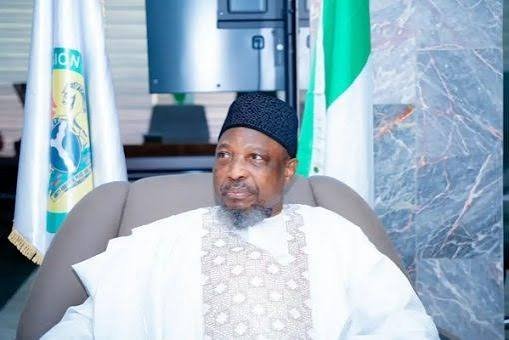
Sheikh Pakistan’s remarks add another voice to the political debate over Tinubu’s potential re-election in 2027.
At the centre of his argument is the belief that political fairness requires acknowledging the regional arrangement that has influenced Nigeria’s presidential politics, particularly the expectation that power should rotate between the North and the South.
His position also connects the second-term debate with broader questions about the performance of the Tinubu administration, including security, food prices and the economic circumstances facing Nigerians.
However, whether Tinubu deserves another term remains a matter of political debate. Voters will ultimately weigh competing arguments about governance, security, economic conditions and the president’s record in office.
For now, Sheikh Pakistan’s warning underscores the significance of regional power rotation in Nigeria’s political discussions ahead of 2027. His argument is that denying Tinubu a second term on regional grounds could have consequences for the country’s future political arrangements.