


Tinubu’s meeting with Vincent Bolloré in Paris is opening fresh investment discussions around Nigeria’s creative economy, Nollywood, Afrobeats, film, fibre-optic infrastructure and digital growth.
Tinubu and Bolloré investment talks in Paris are putting Nigeria’s creative and digital economy in focus, with fresh plans to deepen operations in film, entertainment, fibre-optic infrastructure and related sectors.
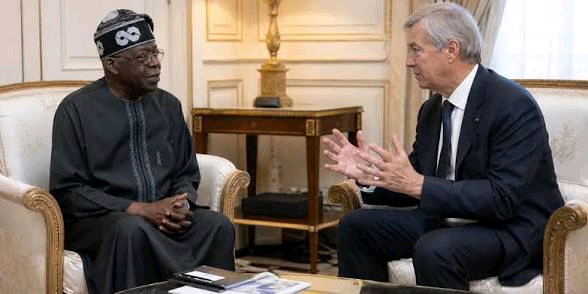
President Bola Ahmed Tinubu held extensive discussions with French businessman Vincent Bolloré and executives of the Bolloré Group in Paris on September 18, 2026, during the President’s working vacation in Europe.
The meeting focused on expanding the group’s investments in Nigeria, particularly across the creative and digital economy. According to the State House, the Bolloré Group confirmed plans to deepen the localisation of its operations in the country, covering film, entertainment, fibre-optic infrastructure and other related areas.
The development comes as Nigeria’s music, film and wider cultural industries continue to attract international attention, with Nollywood and Afrobeats increasingly reaching audiences outside Africa.
Tinubu Seeks More Investment in Nigeria’s Creative Economy

At the Paris meeting, Tinubu emphasised the need for Nigeria to capture more of the economic value created by its creative talent.
The President said his administration wanted more production, investment and employment opportunities to remain in Nigeria, particularly as the country’s cultural influence expands internationally.
He pointed to the global reach of Nigerian music, films, fashion and culture as an opportunity that should translate into stronger domestic investment and jobs.
The State House said the President reaffirmed his administration’s commitment to economic growth and job creation, with particular attention to young Nigerians and digitalisation.
The emphasis on localisation is significant because it goes beyond simply attracting foreign companies to Nigeria. The administration is seeking deeper local production, stronger infrastructure and greater participation by Nigerian workers and businesses in industries serving both domestic and international markets.
Bolloré Group Expands Focus on Nollywood and Afrobeats
The Bolloré Group and its executives reportedly described Nigeria as a major driver of Africa’s cultural growth, pointing specifically to the international success of Nollywood and Afrobeats.
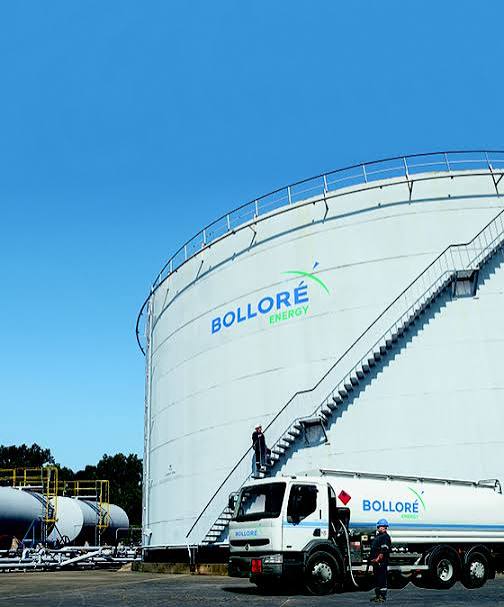
Nigeria has become one of Africa’s most visible cultural exporters. Nigerian musicians regularly perform for audiences across Europe, North America and other parts of the world, while Nollywood productions have found audiences through cinemas, television and streaming platforms.
For investors with interests spanning media, entertainment and technology, that expanding audience creates opportunities across the wider value chain, from production and distribution to broadcasting, streaming and digital infrastructure.
The Paris discussions therefore place Nigeria’s creative economy within a much larger investment conversation rather than treating entertainment as a stand-alone sector.
What Canal+, MultiChoice and Universal Music Bring
The involvement of companies connected to the Bolloré Group gives the discussions particular significance for Nigeria’s entertainment industry.
Bolloré Group’s current portfolio includes a 30.4 per cent stake in Canal+ and an 18.4 per cent stake in Universal Music Group, according to the group’s own published shareholding information.
Canal+ itself operates across the audiovisual sector, including production, broadcasting, distribution and aggregation. Its group structure also includes MultiChoice, the major African entertainment company behind platforms including DStv.
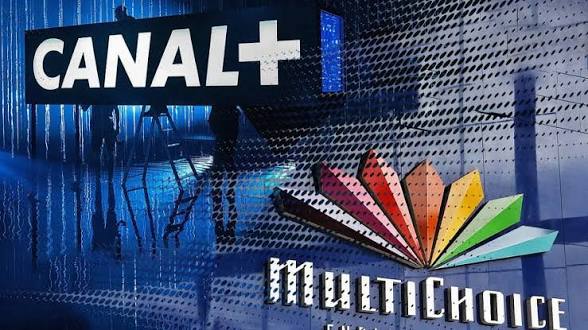
This means the companies linked to the discussions have interests across several areas that are directly relevant to Nigeria’s growing creative market.
Universal Music, meanwhile, gives the broader group exposure to the global music business, while Canal+ and MultiChoice have established distribution and entertainment operations across Africa.
The combination could create room for greater investment in Nigerian content, talent development, production and distribution, although the government’s announcement did not provide specific investment figures or detailed project timelines.
Fibre-Optic Infrastructure Adds a Digital Dimension
The discussions were not limited to entertainment.
Fibre-optic infrastructure was specifically identified as another area of interest, bringing the proposed expansion into Nigeria’s wider digital economy.
Reliable and extensive digital infrastructure is increasingly important for industries that depend on high-speed connectivity. Film production, streaming, music distribution, digital services and other technology-driven businesses all require dependable networks.

The State House said the planned investments would help strengthen infrastructure while positioning Nigeria as a base for companies serving the African and wider global markets.
That approach also aligns with the administration’s broader emphasis on digitalisation and economic diversification.
Nigeria Wants More Value to Stay at Home
Tinubu’s message during the meeting was centred on turning Nigeria’s cultural popularity into sustained economic activity inside the country.
Rather than allowing global demand for Nigerian music and film to benefit mainly distributors and businesses outside Nigeria, the administration wants more production, investment and employment to take place locally.
That could mean greater opportunities for filmmakers, musicians, producers, technicians, digital professionals and other workers across the creative value chain if the investment plans translate into concrete projects.
The President said the government would continue supporting investments that develop local talent, expand the creative and digital economy and strengthen infrastructure.
What the Paris Talks Could Mean for Nigeria
The meeting does not, by itself, amount to a completed investment agreement with a disclosed financial value. The official announcement instead confirms the Bolloré Group’s intention to deepen its localisation and investment activities in Nigeria.
The next stage will be whether those plans develop into specific projects, capital commitments, expanded production facilities, infrastructure deployment and new jobs.
For Nigeria, the potential significance is clear: the country already has globally recognised creative talent, but stronger investment and infrastructure could determine how much of the value generated by that talent is retained domestically.
The Paris discussions therefore place Nollywood, Afrobeats and Nigeria’s digital infrastructure at the centre of a wider conversation about foreign investment, local production and the country’s ambition to become a major creative and business hub for Africa.
With international demand for Nigerian culture continuing to grow, the challenge now is turning that attention into lasting investment, stronger local capacity and measurable opportunities for Nigerians.