

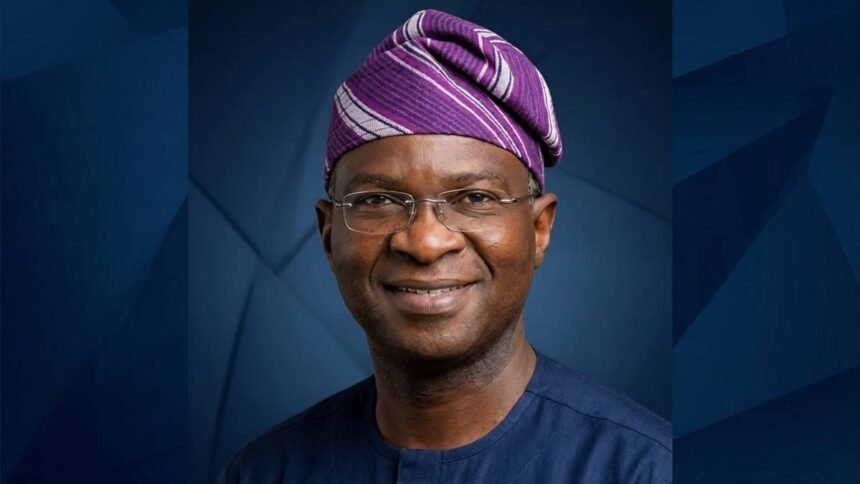
Former Lagos governor Babatunde Fashola ruled out a 2027 presidential bid on Wednesday, saying he is content being president at home.
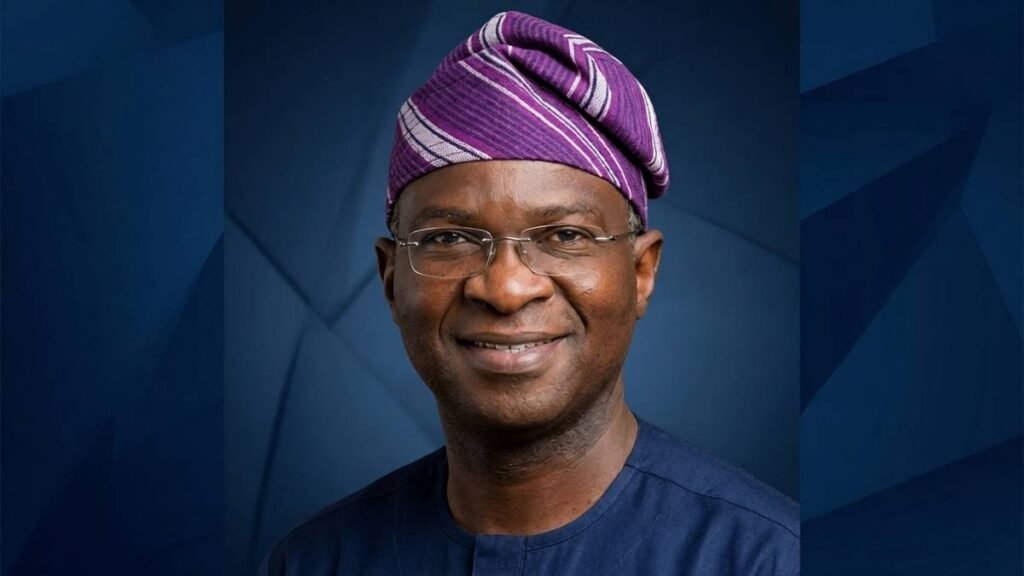
Babatunde Fashola, former governor of Lagos State and former minister of works, told TVC on Wednesday that he has no interest in contesting for the presidency of Nigeria, closing the door on speculation that had placed his name in pre-2027 political conversations.
Asked directly whether he would contest for president, Fashola gave a single word: “No.” Pressed by the interviewer to clarify whether he was considering the office of president of Nigeria, the former minister replied with a smile, “President of what? I’m president at home.”
Fashola spoke on the program Beyond the Headlines on TVC. He said he does not miss public office, describing his decades in government as a privilege he has already fully experienced and one he has no desire to extend into a presidential campaign.
Reflecting on more than two decades in public service, Fashola described his career as an experience he would not trade. “My journey has been an unimaginable privilege, and I hope that it, in some way, inspires another generation about the possibilities of this country,” he told the program.
On the question of his legacy, Fashola declined to shape or direct how history would record his tenure. “Let history write whatever history wants to write. It is not in my place,” he stated, making clear he would not seek to control public perception of his record.
Fashola also declined to reopen the debate over his preferred successor ahead of the 2015 Lagos governorship election. When reminded of speculation over whether he had favored Kadri Hamzat, current deputy governor of Lagos State and the All Progressives Congress governorship candidate for 2027, or Olasupo Sasore, former attorney general of Lagos State, Fashola refused to engage the question.
He confirmed that he remains a member of the Lagos State Governance Advisory Council but drew a line between advisory engagement and active interference in government operations. “There is a thin line between intervention and interference,” he stated.
On the judiciary, Fashola warned that persistent attacks on the courts posed a risk to democratic institutions, saying public confidence in the judiciary must be preserved. He also argued that a vibrant opposition was a requirement for democracy to function, not an inconvenience for ruling parties to manage.
Fashola called for national consensus on taxation, foreign policy, and legislative oversight. He urged professionals and young Nigerians to take a more active part in shaping public policy, saying participation at that level determined the quality of governance a country produced.
Turning to Lagos State’s recurring flooding problem, Fashola acknowledged that the state’s coastal geography made flooding a permanent feature of city life but described the challenge as manageable. He identified indiscriminate waste disposal as a factor that worsened flooding and said solving the problem required cooperation between the government and residents, not government action alone.
Fashola described President Bola Tinubu as fundamentally unchanged as a person but operating under the weight of greater national responsibilities. He pointed to ongoing fiscal and monetary reforms, including tax measures, as part of the administration’s current direction.
On state police, Fashola expressed support for the policy but cautioned that it would not deliver an instant solution to Nigeria’s security challenges. He indicated that the reform required time and proper implementation before its effects could be measured against the country’s security situation.
He also noted that Nigeria carried many stories of people rising from humble beginnings to public prominence. “Particularly because when we celebrate dreams across the Atlantic, our country is also a place where there are so many stories of rags to riches and grass to grace. I hope that it inspires another generation,” he told TVC.
Summing up his public service career, Fashola stated that the greatest honor attached to his years in government was not the offices he held but the opportunity to serve. “My journey has been an unimaginable privilege, and I hope it inspires another generation about the possibilities of this country,” he said, repeating a line he had used earlier in the interview to close his remarks on a career that spanned Lagos State government and two federal ministerial portfolios.


