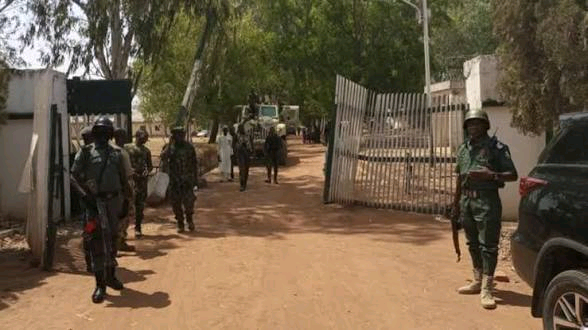
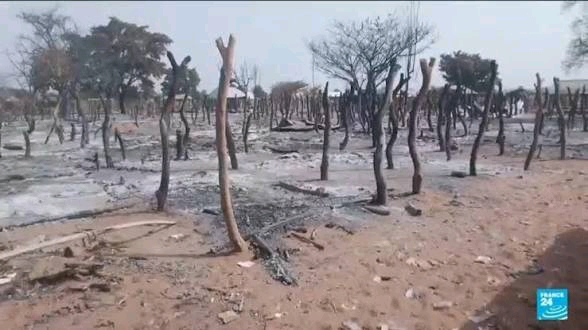
Gunmen stormed a community in northwestern Nigeria in the early hours of Monday, killing at least 30 people, including children, and injuring several others, residents said. The attackers set houses ablaze before escaping, leaving behind grief and fear in a region already battling years of bandit violence.
The latest assault underscores the persistent insecurity across northwest and north-central Nigeria, where armed gangs routinely target remote villages with little or no security presence.
Midnight Raid Turns Deadly
According to residents, the attack occurred in Naridon village, Kauru Local Government Area of Kaduna State, close to midnight. Youth leader Ishaya Dawa said the gunmen arrived and opened fire on residents indiscriminately. “The victims are women, children and the elderly,” Dawa said. “Some residents were slaughtered, and several bodies have been taken to the mortuary”.
Dogon Rana, secretary to the village head, said eight children were among the dead, while four other people sustained injuries. He described how the assailants shot randomly and burned houses before fleeing.
Residents said security personnel did not arrive until the morning, hours after the attackers had left. Kaduna State police spokesperson Mansur Hassan said the command would provide details soon.
No group has claimed responsibility for the attack.
Pattern Of Violence In The Northwest
The Kaduna attack is the latest in a cycle of deadly raids that have plagued northwestern Nigeria for years. Armed gangs, often referred to locally as “bandits,” have carried out mass killings, kidnappings for ransom, cattle rustling and the burning of villages. The violence is not limited to Kaduna. Earlier in 2026, gunmen on motorcycles attacked villages in Borgu Local Government Area of Niger State, near the border with the Benin Republic. Residents told Reuters that at least 30 people were killed and houses and shops were burned during raids on three villages.
In one of those attacks, residents said attackers riding more than 200 motorbikes swept through Tunga-Makeri and Konkoso villages. In Tunga-Makeri, six people were killed, and houses were set ablaze. In Konkoso, resident Jeremiah Timothy said at least 26 people were killed after attackers set the police station ablaze.
A resident of Tunga-Makeri, Auwal Ibrahim, recounted: “The bandits stormed our town around 3:00 a.m., riding so many motorcycles while shooting sporadically, beheading six people and killing others. They set shops on fire and forced the whole village to flee”.
Communities Left Vulnerable
The attacks highlight a recurring problem: delayed security response and the use of vast forest reserves as hideouts. In Niger State, police said gunmen came from the National Park Forest along Kabe district, an area whose expansive, largely abandoned forests have repeatedly served as bases for armed groups.
Residents often say they see attackers moving around days before an assault,t but no additional security is deployed. In Borgu, locals noted that gunmen had been seen around nearby communities in the days before the attack.
The lack of immediate response leaves survivors afraid to even recover bodies. One resident in Niger said: “The bodies are there. If we don’t see any security, how can we go there?”
Government Response And Broader Insecurity
President Bola Tinubu condemned previous attacks in the region and directed security officials to hunt down the gunmen and rescue hostages. “These terrorists have tested the resolve of our country and its people,” he said in a January statement. “They must face the full consequences of their criminal actions”.
Insecurity remains a pressing concern for the federal government, which is under mounting pressure to restore stability in northern Nigeria. While the northeast battles insurgency by Boko Haram and ISWAP, the northwest faces a different but equally deadly threat from bandit groups.
Rural communities have tried to fill the security void by forming self-defense vigilante groups, but experts say this has sometimes fueled more reprisal attacks.
Human Cost Continues To Rise
The victims in Naridon include some of the most vulnerable. Children, women and the elderly made up a large portion of those killed. The attack also displaced residents who fled to neighboring communities for safety.
With houses burned and livelihoods destroyed, survivors now face the dual burden of mourning loved ones and rebuilding with little support.
As investigations continue, residents in Kauru and other flashpoint areas are calling for increased security presence, intelligence gathering, and rapid response to prevent more midnight massacres.
For now, northwest Nigeria remains trapped in a cycle where gunmen strike, communities mourn, and the search for lasting solutions continues.