
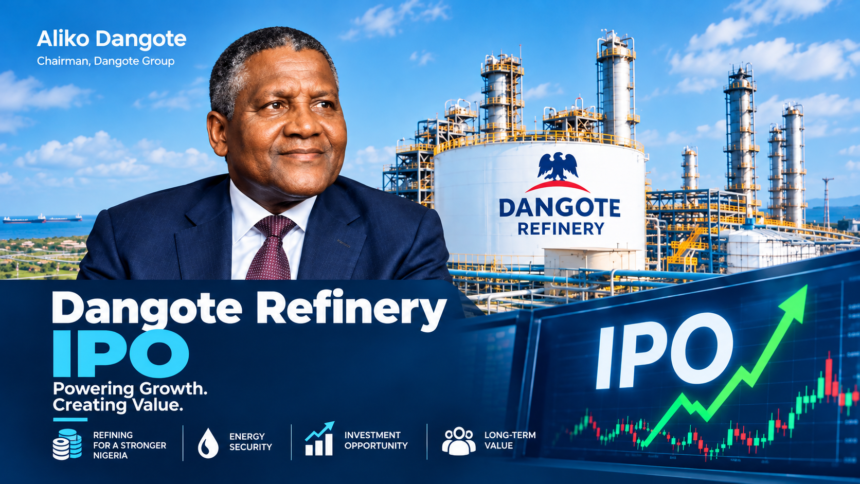
The Dangote IPO has attracted attention from Nigerians and investors across Africa, but understanding what the offer means is just as important as knowing its price. With Dangote Refinery shares offered at ₦525 each and the application deadline extended to October 27, 2026, prospective investors need to understand how the offer works, how to apply safely and the mistakes that could cost them money.
The offer gives eligible investors an opportunity to acquire shares in Dangote Petroleum Refinery and Petrochemicals FZE. However, buying shares is not the same as depositing money in a savings account. Investors must understand the potential benefits, the risks and the conditions attached to the offer before making a decision.
What Is the Dangote IPO?

IPO stands for Initial Public Offering. It is the process through which a company offers shares to the public, giving eligible investors an opportunity to acquire ownership interests in the business.
In simple terms, a share represents a unit of ownership in a company. When an investor applies for shares and receives an allocation, the investor becomes a shareholder, subject to the rights and conditions attached to those shares.
The Dangote Refinery IPO is significant because it offers eligible members of the public an opportunity to own a stake in one of Africa’s largest industrial projects.
The offer comprises 4.1 billion ordinary shares priced at ₦525 each. The minimum subscription is 10 shares, meaning an application for the minimum quantity costs ₦5,250 before any applicable charges.
However, submitting an application does not automatically make someone a shareholder. Applications must be processed, and shares must be allotted in accordance with the offer’s terms.
What Does Owning Dangote Refinery Shares Mean?
Owning shares means having an ownership interest in the company, rather than simply buying its products or doing business with it.
For investors, this creates the possibility of benefiting if the company’s business performs well and the value of its shares increases. Depending on the applicable terms and corporate decisions, shareholders may also receive dividends when declared.
But neither outcome is guaranteed.
A company can generate significant revenue without necessarily paying dividends. It may need to retain its earnings to finance expansion, repay obligations or meet other business expenses.
Similarly, a company’s reputation and size do not guarantee that its shares will increase in value. Market conditions, operating costs, debt, competition, profitability and investor expectations can all influence how shares are valued.
The important distinction is that an investor is buying into a business, not purchasing a guaranteed return.
Prospective investors should therefore read the approved prospectus, particularly its financial information, share rights and risk factors, before deciding whether to participate.
Why the Dangote IPO Matters
The offer could broaden public participation in a major Nigerian industrial business while providing the company with a route to raise capital through equity.
The refinery has a stated processing capacity of 650,000 barrels per day in its initial design, although its actual throughput and operating performance can vary. Its operations are important to discussions about Nigeria’s petroleum supply, industrial development and energy security.
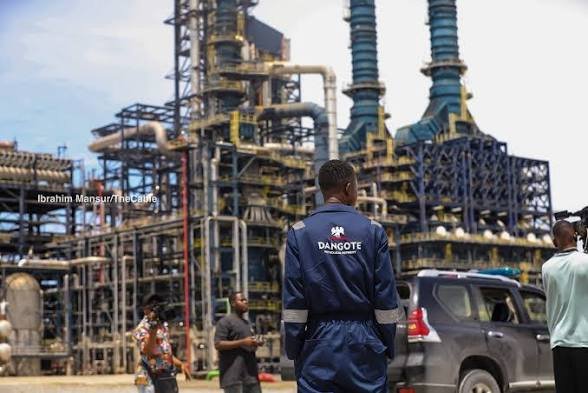
The IPO also reflects a wider effort to attract retail investors into African capital markets.
Reuters reported on October 12 that the offer aims to attract as many as 10 million investors. Citi’s head of banking for sub-Saharan Africa, Akin Dawodu, also told Reuters that the transaction could help deepen African capital markets by encouraging greater mobilisation of domestic savings.
For ordinary investors, however, the importance of the offer does not mean everyone should buy shares. Its relevance to the economy and its suitability for an individual investor are two different questions.
A person should consider their financial circumstances, investment objectives and ability to tolerate losses before committing money.
How Much Do Dangote Refinery Shares Cost?
Each share is priced at ₦525, while the minimum subscription is 10 shares, costing ₦5,250.
The following examples show the cost of different application quantities before any applicable charges:
Number of shares| Application cost
10| ₦5,250
20| ₦10,500
50| ₦26,250
100| ₦52,500
200| ₦105,000
1,000| ₦525,000
These figures represent application amounts, not guaranteed profits or the future market value of the shares.
Investors should also remember that applying for a particular number of shares does not necessarily guarantee receiving that entire quantity. Allotment depends on the offer’s terms and the outcome of the application process.
Anyone considering the offer should choose an amount they can afford to invest without compromising essential expenses or emergency savings.
How to Apply for Dangote Refinery Shares
The first step is to visit the official Dangote IPO information website at ipo.dangote.com and read the approved prospectus.
The website explains the offer and directs prospective investors to approved receiving agents and electronic application channels. It is an information and routing platform; subscriptions and payments are processed through the designated channels.
Before applying, investors should confirm the latest closing date, eligibility requirements, documentation and payment instructions.
They should then select an authorised subscription channel listed through the official offer website. Depending on the channel, applicants may need identity verification and details that match their bank records.
The application should be completed through the selected authorised provider, following its instructions for choosing the number of shares and making payment.
Applicants should keep their confirmation and any transaction reference for future enquiries.
After the offer closes, applications will be processed and shares allotted according to the offer’s terms. Applicants should check official communications to find out whether shares have been allotted and what happens to any application money that is not allocated.
It is important to distinguish between applying successfully and receiving shares. Payment confirmation alone does not establish that an applicant has been allotted the requested quantity.
Mistakes Investors Should Avoid

One of the biggest mistakes is treating the Dangote IPO as a guaranteed opportunity to make money.
Even if a company is well known, its share price can fall, and investors may lose some or all of the money they invest. Dividends are also not guaranteed.
Another mistake is relying on messages circulating on WhatsApp, Facebook or other social media platforms without checking whether the information comes from an authorised source.
The Securities and Exchange Commission has specifically warned prospective investors to use approved subscription channels and avoid sending money to unauthorised individuals or entities.
Investors should be particularly cautious of people promising guaranteed allocations, preferential treatment or unusually quick profits. A social media account, investment website or company name does not automatically establish that a platform is authorised to receive subscriptions.
The SEC also advises investors to verify the registration status of relevant capital-market operators and to read the prospectus before investing.
Another common error is assuming that anyone who can raise the minimum ₦5,250 should automatically apply. Affordability is only one consideration. Investors must also understand the risks and whether the investment fits their financial circumstances.
Finally, prospective investors should not assume that applying for shares means they can immediately sell them. The applicable listing arrangements and timetable should be confirmed through official disclosures.
Can Investors Outside Nigeria Participate?
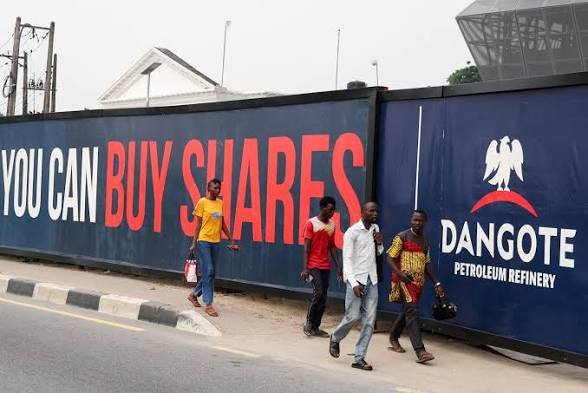
The offer has attracted interest beyond Nigeria, but international participation is not necessarily as straightforward as applying through a Nigerian investment platform.
Reuters reported on October 9 that the IPO exposed barriers to cross-border investing in Africa, including differences in national regulations and limited access to authorised brokers.
The company has said it wants to widen participation across African markets, and the extension is intended to give prospective investors more time to complete the necessary procedures.
However, eligibility and access arrangements may differ from country to country. Investors outside Nigeria should confirm that the offer is available to them through an authorised channel in their jurisdiction rather than assuming that every platform can accept their application.
The additional time does not remove the need to comply with applicable regulations.
Why Was the Dangote IPO Deadline Extended?
The offer opened on September 14, 2026, and was originally scheduled to close on October 13.
On October 12, the refinery announced that the application period would be extended by two weeks, moving the deadline to October 27, following approval from the SEC.
The company said the additional time would support efforts to broaden access for eligible investors, particularly across African markets, and give prospective applicants more time to complete the necessary procedures.
The extension is therefore not simply an announcement of a new date. It also reflects the practical difficulties involved in opening a major share offer to investors across different countries.
Before applying, prospective investors should confirm the current timetable through the official IPO website and authorised receiving agents.
What Investors Should Remember Before Applying

The Dangote IPO offers eligible investors an opportunity to acquire shares in a major industrial business, but it is not a savings scheme or a promise of guaranteed returns.
Understanding the offer means looking beyond the ₦525 share price. Investors should consider the company’s business, read the prospectus, understand the risks, verify authorised application channels and ensure they can afford the amount they intend to invest.
The minimum subscription of ₦5,250 makes the offer accessible at a relatively low starting amount, but affordability alone does not make an investment suitable for everyone.
With the announced deadline extended to October 27, 2026, prospective investors have additional time to examine the offer rather than rushing into a decision.
The most important step is to understand what is being purchased, how the application process works and what could happen if the investment does not perform as expected.