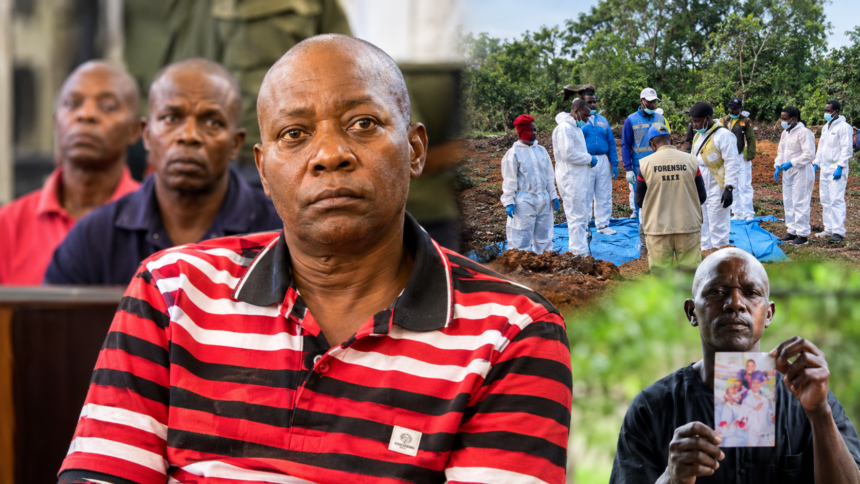
Paul Mackenzie has been convicted of 191 murders, including 190 children, in Kenya’s Shakahola massacre, bringing a major development in one of the country’s most disturbing religious tragedies. The Kenyan High Court found the self-proclaimed preacher and 28 co-defendants guilty after a trial examining allegations that followers were directed to starve themselves and their children to death in the belief that they would meet Jesus.
The verdict, delivered on Monday, October 19, 2026, follows the discovery of hundreds of bodies in shallow graves in Shakahola Forest, near Malindi, in Kenya’s coastal Kilifi County. Among the families devastated by the tragedy is that of Stephen Mwiti, who says he lost all six of his children after his family became involved with Mackenzie’s church.
Paul Mackenzie and 28 Co-Defendants Found Guilty
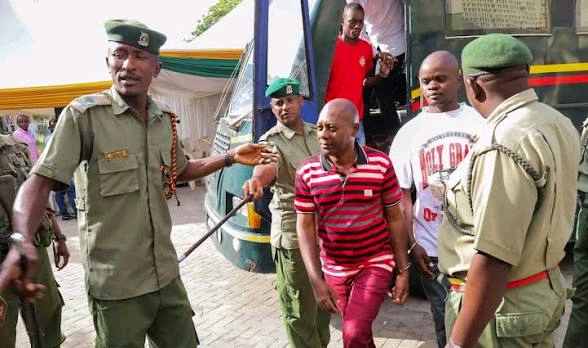
The High Court, presided over by Justice Diana Kavedza Mochache, found Mackenzie and 28 other defendants guilty of the 191 murder counts connected to deaths in Shakahola Forest.
The victims comprised 190 children and one adult. The prosecution argued that the deaths resulted from an organised system of religious radicalisation and enforced fasting, rather than the voluntary religious choices described by the defence.
The defendants had denied the allegations, maintaining that nobody had been forced to die.
However, the court rejected the argument that the victims had voluntarily fasted to death. The judgment examined how religious teachings, the group’s leadership structure and the enforcement of fasting contributed to the deaths.
The ruling marks a significant development in the criminal proceedings arising from the Shakahola tragedy. It also distinguishes the 191 murder convictions from the broader investigation into the hundreds of bodies recovered from the forest.
Father Loses All Six Children in Shakahola Tragedy
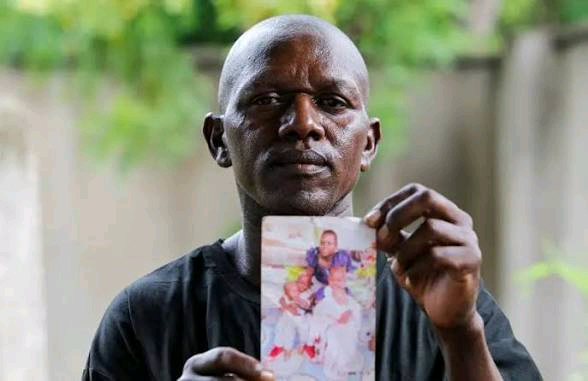
Among the most painful accounts connected to the case is that of Stephen Mwiti, a father who says all six of his children died after his family became involved with Mackenzie’s religious movement.
Mwiti has reportedly managed to find and bury the remains of only one of his children, his son Samuel.
Holding a photograph of his family, the grieving father recalled how Mackenzie’s teachings first entered his household through a television set.
Pointing to the television and cable box in his home in Malindi, Mwiti said: “This little thing here was the start of all my misery.”
His account illustrates how the tragedy affected families beyond the isolated forest settlement. What began as exposure to a preacher’s religious messages eventually became a devastating personal loss for Mwiti, who is still unable to account for the remains of five of his children.
The case has also raised questions about the vulnerability of children within religious groups where adults exercise extensive influence over family decisions, education and access to healthcare.
Mwiti’s former wife was among those convicted alongside Mackenzie in the murder case, according to reports of the proceedings.
How Mackenzie’s Teachings Led Followers to Shakahola Forest
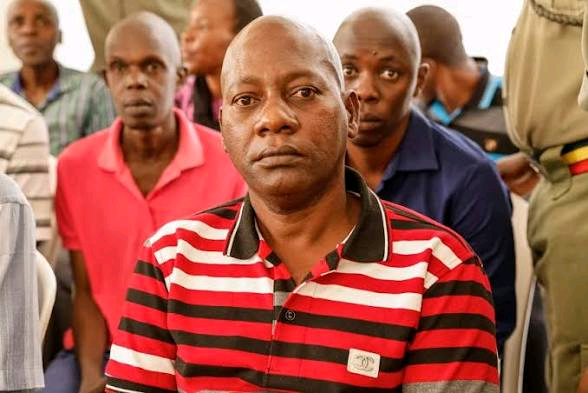
Mackenzie established Good News International Ministries in 2003 and built a following through church branches across Kenya. His ministry also operated Times TV, which broadcast his sermons from Malindi.
His teachings reportedly discouraged formal education and conventional medical treatment, while portraying aspects of modern life as incompatible with his religious beliefs.
After the church’s main branch closed in 2019, Mackenzie relocated to Shakahola Forest and encouraged followers to move there.
The isolated settlement became central to the investigation into the deaths. Members lived in mud houses scattered across the forest, where accounts from survivors described fasting and restricted access to medicine.
Peter Shukrani, who joined the church as a child and later moved to the forest with his mother, said he became seriously ill while living there. He said his mother discarded the medicines he needed because she believed God alone could heal him.
“My mother believed Pastor Mackenzie’s doctrine that medicine was evil. I would have died if I wasn’t rescued from Shakahola forest,” Shukrani said.
His account highlights the consequences of teachings that discourage medical treatment, particularly when children and other vulnerable people depend on family members to make healthcare decisions.
Shallow Graves Exposed the Scale of the Massacre
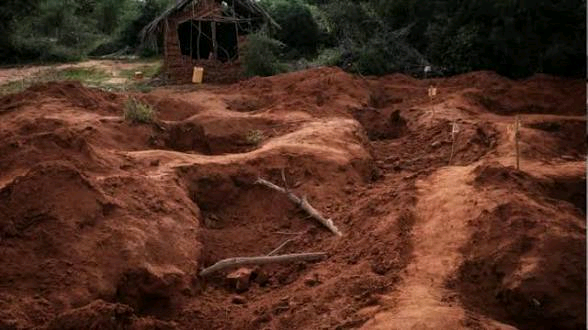
The first bodies were discovered in March 2023, after local herders raised concerns about deaths in the area. Subsequent investigations led authorities to uncover mass graves across Shakahola Forest.
More than 400 bodies have since been recovered, although many victims remain unidentified. The condition of some remains has made identification difficult, leaving families without confirmation of what happened to their relatives.
The 191 murder counts addressed in the October 19 judgment represent only part of the wider tragedy.
Accounts from people involved in excavating graves described finding multiple bodies in individual graves, including the remains of very young children. Other accounts described victims whose bodies had been wrapped in bedsheets.
Residents of neighbouring communities also recalled seeing members of the group travelling to obtain supplies and water, without knowing the full extent of what was happening inside the forest.
The discoveries transformed Shakahola into the centre of a major investigation into religious extremism, the treatment of children and the protection of people living within isolated religious communities.
Survivors Reveal the Human Cost of the Teachings
Despite his experience, Shukrani continued to describe Mackenzie as his spiritual father before the verdict, demonstrating the complicated relationships that can persist between followers and influential religious leaders.
He maintained that people had made their own decisions to fast, while Mackenzie’s son, Dan Paul Mackenzie, argued that his father should bear responsibility because of his position as the group’s leader.
“He was the leader, he was someone who they were looking [up to]. So he is a murderer of mass killing,” Dan said.
The contrasting accounts underline a central issue in the case: whether followers’ actions could genuinely be considered voluntary when religious authority, group pressure and restrictions on everyday life shaped their decisions.
The court’s verdict found Mackenzie and his co-defendants criminally responsible for the 191 murders covered by the trial.
What Happens Next After the Shakahola Verdict?
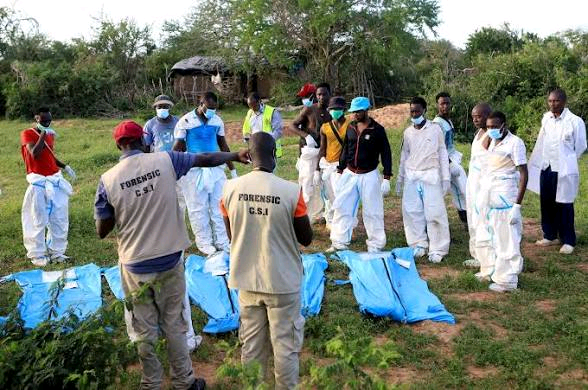
The convictions are a major development for families who have spent years seeking answers about their missing relatives.
However, the ruling does not mean that every death linked to Shakahola has been resolved. Authorities have recovered more than 400 bodies, and the circumstances surrounding other deaths remain subject to separate investigations and legal proceedings.
Mackenzie also faces other legal cases connected to alleged offences associated with his activities. Those proceedings must be distinguished from the 191 murder convictions.
A mitigation hearing for Mackenzie and his co-defendants is scheduled for October 30, 2026, with sentencing expected on November 6.
For families such as Mwiti’s, the verdict represents a significant step in the search for accountability, but it cannot undo the loss of their loved ones or resolve the anguish of families still waiting to identify the dead.
The Shakahola tragedy has left Kenya confronting difficult questions about religious authority, child protection, medical neglect and the responsibility of authorities to intervene when vulnerable people face serious harm.
The conviction of Mackenzie and his co-defendants establishes criminal accountability for the deaths covered by the judgment. The wider task of identifying victims, investigating additional deaths and supporting affected families remains unfinished.